
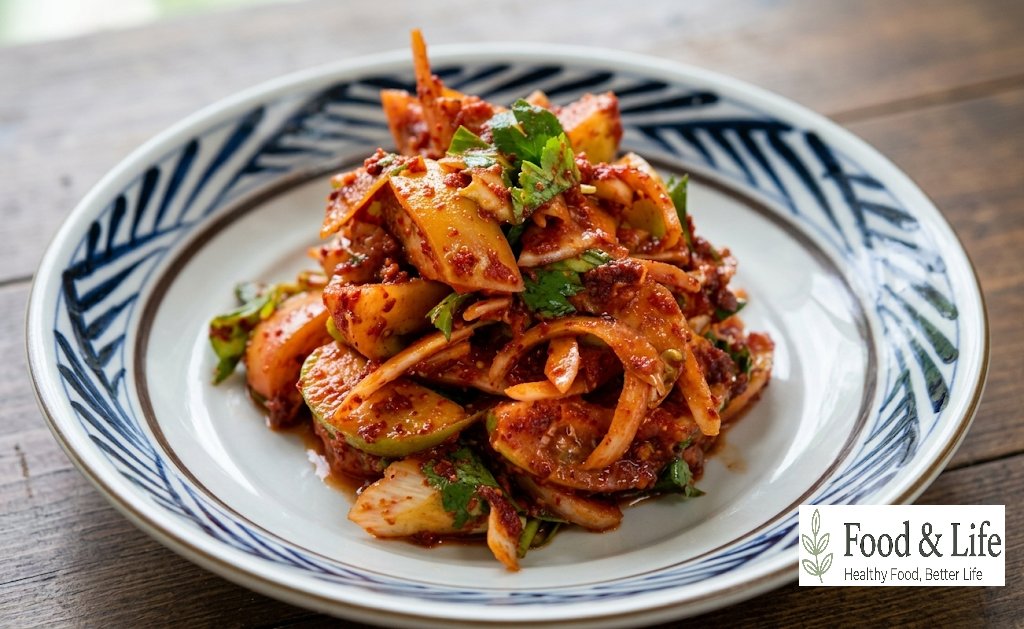
When you want to use fresh tomatoes for something a little different than simply eating them as-is, tomato kimchi makes a quick and flavorful side dish. Firm tomatoes are gently tossed with gochugaru, fish sauce, maesil syrup, and garlic to create a sweet, savory, and spicy seasoning that comes together in just 5 minutes. Juicy tomatoes, crisp onion, and fragrant chamnamul give this fresh kimchi a bright flavor and texture that feels quite different from traditional fermented kimchi.
Serve this refreshing, spicy tomato kimchi with rice or alongside rich grilled meats for an easy Korean-style side dish.
⏱️ Cooking Time: About 5 minutes
🍳 Difficulty: ★☆☆☆☆
✓ Ingredients
🥣 Main Ingredients
- 5 tomatoes
- 1/4 onion
- 1 handful chamnamul (Korean wild greens)
🧂 Sauce & Seasonings
- 1 tbsp gochugaru (Korean red pepper flakes)
- 1 tbsp sand lance fish sauce, or anchovy fish sauce
- 1 tbsp maesil syrup (Korean green plum syrup)
- 1 tbsp sugar
- 1/2 tbsp minced garlic
(Measurement guide: 1 tbsp = 15 ml, 1 tsp = 5 ml, 1 Korean paper cup = 180 ml / 6.1 fl oz)
✓ How to Make Tomato Kimchi
- Make the seasoning: Add 1 tbsp gochugaru, 1 tbsp sand lance fish sauce, 1 tbsp maesil syrup, 1 tbsp sugar, and 1/2 tbsp minced garlic to a mixing bowl. Stir until evenly combined.
- Prepare the tomatoes: Remove the stems, wash the tomatoes thoroughly, and cut them into bite-size cubes.
- Prepare the remaining vegetables: Thinly slice 1/4 onion and cut the chamnamul into 3–4 cm (1.2–1.6 inch) lengths.
- Gently toss everything together: Add the tomatoes, onion, and chamnamul to the bowl with the seasoning. Toss gently with your fingertips so the tomato flesh does not get crushed. Mixing lightly helps prevent too much juice from being released and preserves the vegetables’ fresh texture.
- Serve immediately: Transfer the finished tomato kimchi to a serving plate and enjoy right away.
✓ Key Tips for Success
- Use firm tomatoes rather than overly ripe ones: Very soft tomatoes can burst and release too much juice while being mixed, leaving the seasoning watery. Firm tomatoes hold their shape better and give the finished dish a fresher texture.
✓ Serving Tips
- Try different aromatic greens: You can replace the chamnamul with a small amount of garlic chives, scallions, or basil for a different aromatic note.
- Serve with rich grilled meats: Tomato kimchi works especially well as a fresh side dish with fatty meats such as samgyeopsal (Korean pork belly) or grilled beef, where its bright, spicy flavor provides a refreshing contrast.
✓ How to Choose Good Tomatoes
- Shape and uniformity: Choose tomatoes that are evenly rounded and full-looking, without unusual dents, sharp angles, or misshapen areas.
- Surface and color: Look for smooth, glossy skin without fine wrinkles or visible damage. The tomato should have an even, naturally vivid red color.
- Firmness and weight: Choose tomatoes that feel firm with a slight spring when gently held. For their size, they should also feel pleasantly heavy and dense.
Source: Nongsaro – How to Choose Good Tomatoes
✓ Tomato Nutrition per 100 g (3.5 oz)
| Nutrient | Amount per 100 g (3.5 oz) |
|---|---|
| Calories | 19.00 kcal |
| Carbohydrates | 4.27 g |
| Protein | 0.77 g |
| Fat | 0.19 g |
| Sodium | 2.00 mg |
Based on 100 g (3.5 oz) of raw tomato. Actual nutrition may vary depending on the variety, product, and preparation method.
Source: Ministry of Food and Drug Safety Food Nutrition Database – Raw Food Ingredients
✓ Frequently Asked Questions (FAQ)
Q1. Can I use cherry tomatoes or Daejeo tomatoes instead of regular ripe tomatoes?
Yes. Cut cherry tomatoes in half before using them. Daejeo tomatoes, which have firm flesh and a distinctive salty-sweet flavor, also work well and provide a pleasant bite.
Q2. Why does tomato kimchi become watery after it sits, and how should I store it?
Fish sauce and sugar naturally draw moisture out of the tomatoes, so this dish is best tossed together just before serving. Store any leftovers in an airtight container in the refrigerator and eat them within 2–3 days.
Q3. Can I use anchovy fish sauce or tuna extract instead of sand lance fish sauce?
Yes. Anchovy fish sauce can be substituted in the same amount. If you prefer a milder fermented seafood aroma, you can also use tuna extract sauce or regular soy sauce instead.
Fresh tomatoes tossed with a simple kimchi-style seasoning and chamnamul make a bright, savory tomato kimchi without any lengthy salting or fermentation process. It works well as an easy side dish with rice and pairs especially nicely with rich grilled meats such as Korean pork belly or beef.
Save or bookmark this recipe for the next time you have extra tomatoes, and share it with someone who enjoys easy Korean side dishes.
More approachable recipes and practical cooking tips will continue to be shared here. 😊
If there is a dish you have been curious about or a recipe you would like to see next, feel free to leave a comment. 😊