
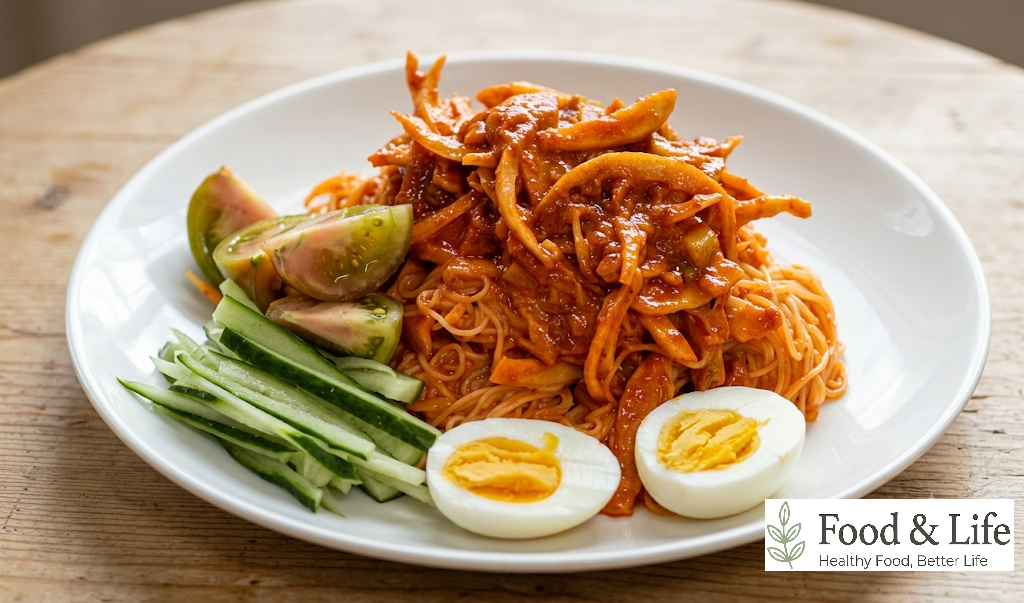
When you want something a little different from everyday pasta or Korean spicy noodles, this cho-gochujang pasta is a fun and easy option. The sauce combines sweet, tangy, and spicy cho-gochujang with tomato sauce and peanut butter for a familiar yet surprisingly distinctive flavor. Thin, tender angel hair pasta is tossed with crisp cucumber, onion, and fresh tomato, creating a light but satisfying meal.
Try this quick Korean-style cold pasta with a creamy, nutty twist and a refreshing sweet-and-spicy sauce.
⏱️ Cooking Time: About 15 minutes
🍳 Difficulty: ★☆☆☆☆
✓ Ingredients
🥣 Main Ingredients
- 160 g (5.6 oz) angel hair pasta (capellini)
- 1 tomato
- 1/2 cucumber
- 1/2 onion
- 1/4 large green onion
- 1 egg
🧂 Sauce & Seasonings
- 8 tbsp tomato sauce
- 4 tbsp cho-gochujang (Korean sweet and tangy chili sauce)
- 3 tbsp peanut butter
- 1/2 tbsp sugar
- 1 pinch MSG
- 1 tbsp sesame oil
(Measurement guide: 1 tbsp = 15 ml, 1 tsp = 5 ml, 1 Korean paper cup = 180 ml / 6.1 fl oz)
✓ How to Make Cho-Gochujang Pasta
- Cook the egg: Place the egg in a pot of water and cook it to your preferred doneness, either hard-boiled or soft-boiled. Peel and cut it in half.
- Prepare the vegetables: Thinly slice the onion and cucumber into strips. Finely chop the green onion and cut the tomato into bite-size cubes.
- Make the sauce: In a large bowl, combine 8 tbsp tomato sauce, 4 tbsp cho-gochujang, 3 tbsp peanut butter, 1/2 tbsp sugar, and a pinch of MSG. Mix thoroughly until the peanut butter is completely incorporated. This helps distribute the nutty flavor and spicy sauce evenly without any lumps.
- Cook the pasta: Bring a pot of water to a boil and add a little salt. Cook the angel hair pasta for about 2–3 minutes. Because capellini is very thin, be careful not to cook it longer than necessary.
- Rinse and drain the pasta: Drain the cooked pasta and immediately rinse it under cold water or in ice water. Transfer to a colander and drain as thoroughly as possible. Rinsing away the surface starch helps maintain a springy, pleasantly chewy texture.
- Toss and serve: Add the cooked pasta, prepared vegetables, and sauce to a large bowl. Drizzle with 1 tbsp sesame oil and toss gently until everything is evenly coated. Transfer to a serving bowl and top with the boiled egg.
✓ Key Tips for Success
- Drain the pasta as thoroughly as possible: Excess water will dilute the sauce and prevent it from coating the noodles properly. Shake off as much moisture as possible before mixing.
- Fully blend the peanut butter into the sauce: Make sure there are no lumps before adding the pasta. A smooth sauce gives the dish a more even, creamy texture and balanced flavor.
✓ Serving Tips
- Add canned sea snails or tuna: Drain chilled canned Korean sea snails (golbaengi) or canned tuna and toss them with the pasta for a more substantial meal or drinking snack.
- Add sesame seeds or fresh chili: Sprinkle generously with toasted sesame seeds or add finely chopped Cheongyang chili pepper if you prefer a cleaner, sharper heat.
✓ How to Choose Good Tomatoes
- Color and shine: Choose tomatoes with an even, vivid red color and smooth, glossy skin.
- Firmness and weight: Look for tomatoes that feel firm with a slight spring when gently held. For their size, they should also feel relatively heavy.
- Stem condition: Choose tomatoes with stems that are still firmly attached, fresh-looking, and bright green rather than dried or wilted.
✓ Tomato Nutrition per 100 g (3.5 oz)
| Nutrient | Amount per 100 g (3.5 oz) |
|---|---|
| Calories | 19.00 kcal |
| Carbohydrates | 4.27 g |
| Protein | 0.77 g |
| Fat | 0.19 g |
| Sodium | 2.00 mg |
Based on 100 g (3.5 oz) of raw tomato. Actual nutrition may vary depending on variety, product, and preparation method.
Source: Ministry of Food and Drug Safety Food Nutrition Database – Raw Food Ingredients
✓ Frequently Asked Questions (FAQ)
Q1. Does angel hair pasta cook faster than regular pasta?
Yes. Angel hair, or capellini, is extremely thin and usually cooks in about 2–3 minutes in boiling water for this recipe. Avoid overcooking it, as the noodles can become too soft very quickly.
Q2. Why does the pasta become watery after I mix it with the vegetables?
Moisture from the cucumber and onion can be drawn out after they are mixed with the sauce. Dry the vegetables and pasta thoroughly, and toss everything together just before serving.
Q3. Can I use regular spaghetti or somyeon instead of angel hair pasta?
Yes. You can substitute regular spaghetti or somyeon (thin Korean wheat noodles). If using spaghetti, cook it about 1–2 minutes longer than you normally would before rinsing it in cold water so it blends more naturally with the cold sauce.
The sweet, tangy heat of cho-gochujang combined with creamy peanut butter gives this pasta a flavor that is completely different from a typical tomato or cream-based pasta. The thin capellini, crisp vegetables, and nutty-spicy sauce make it refreshing yet satisfying.
You can also use somyeon instead of capellini or add golbaengi or tuna to turn it into a heartier meal or an easy Korean-style drinking snack.
Save or bookmark this cho-gochujang pasta recipe for later, and share it with someone who enjoys creative Korean-inspired dishes.
More easy-to-follow recipes and practical cooking tips will continue to be shared here. 😊
If there is a dish you have been curious about or a recipe you would like to see next, feel free to leave a comment. 😊