
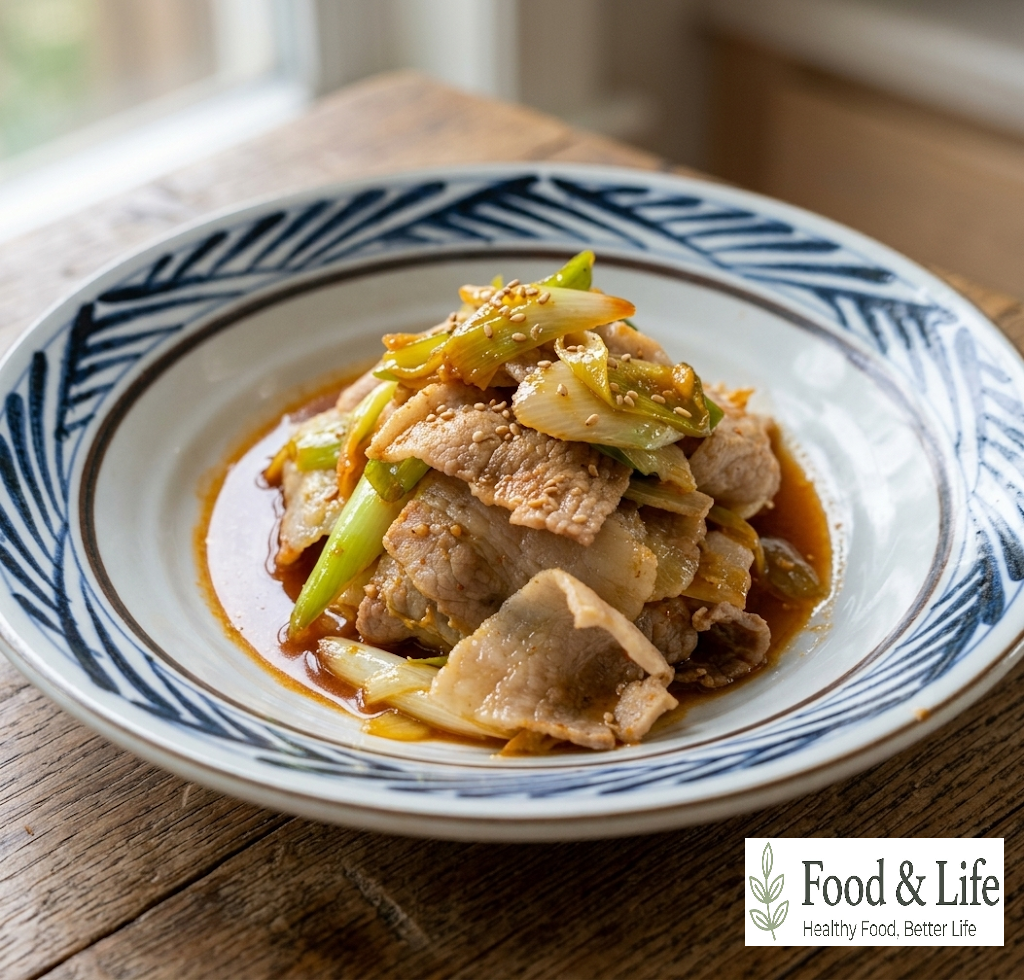
When you want a quick pork dish that feels satisfying without being overly greasy, this Korean pork belly and scallion salad is an easy option. Instead of pan-frying the thinly sliced pork belly, the meat is briefly blanched in boiling water, then tossed with plenty of scallions and a sweet, tangy, spicy gochujang dressing. Lightly blanching the scallions also softens their sharp bite while keeping a pleasantly crisp texture.
Tender pork belly, crunchy scallions, and a bold gochujang dressing come together in one simple dish that takes only about 15 minutes to make.
⏱️ Cooking Time: About 15 minutes
🍳 Difficulty: ★☆☆☆☆
✓ Ingredients
🥣 Main Ingredients
- 400 g (14.1 oz) thinly sliced frozen pork belly (daepae samgyeopsal)
- 3 large green onions
- 90 ml (3 fl oz) soju
🧂 Sauce & Seasonings
- 1 tbsp soy sauce
- 1 tbsp sugar
- 1 tbsp vinegar
- 1 tbsp sesame oil
- 1/2 tbsp gochujang
- 2/3 tbsp minced garlic
- 1 tbsp sesame seeds
(Measurement guide: 1 tbsp = 15 ml, 1 tsp = 5 ml, 1 Korean paper cup = 180 ml / 6.1 fl oz)
✓ How to Make Korean Pork Belly & Scallion Salad
- Make the dressing: Add the soy sauce, sugar, vinegar, sesame oil, gochujang, minced garlic, and sesame seeds to a bowl. Mix well until the sugar is dissolved.
- Slice the green onions: Cut the 3 green onions in half lengthwise, then slice them into thin strips about 5–6 cm (2–2.4 inches) long.
- Blanch the pork belly: Fill a pot with plenty of water and add 90 ml (3 fl oz) of soju. Bring it to a rolling boil, add the thinly sliced pork belly, and blanch just until the meat is no longer pink. As the alcohol in the soju evaporates, it helps reduce the pork’s strong odor.
- Drain the pork: Immediately transfer the blanched pork belly to a colander and shake off as much hot steam and excess water as possible.
- Blanch the green onions: Add the prepared green onions to the same boiling water and blanch for only 10–15 seconds. Remove them immediately. Brief blanching softens the sharp onion flavor while bringing out a mild sweetness.
- Toss everything together: Place the drained pork belly and blanched green onions in a bowl. Pour over the prepared dressing and gently toss until evenly coated.
✓ Key Tips for Success
- Drain the pork and scallions thoroughly: Do not rinse them under cold water after blanching. Letting excess moisture and steam escape in a colander keeps the dressing from becoming watery and helps preserve the warm flavor of the pork.
- Do not overcook the green onions: Blanch them for no more than 10–15 seconds. Cooking them too long will make them limp and remove the crisp texture that works so well with the pork.
✓ Serving Tips
- For a sharper scallion flavor: If you enjoy a stronger bite and crunch, skip blanching the green onions and toss the raw scallion strips directly with the pork.
- Add perilla leaves: Thinly slice 5–6 perilla leaves and toss them with the green onions for an extra layer of fresh, aromatic flavor.
- Serve with Korean spicy noodles: Spoon the finished pork and scallion salad over bibim ramyeon or jjolmyeon for a flavorful topping and side dish in one.
✓ How to Choose Thinly Sliced Pork Belly
- Color of the meat and fat: Choose pork with clear, light pink lean meat and clean, milky-white fat.
- Cut and shape: Look for slices that remain neatly rolled or evenly shaped while frozen, without excessive crumbling or broken pieces.
- Check for frost and discoloration: Avoid packages with heavy ice crystals inside or pork that shows yellow or brown discoloration on the surface.
✓ Pork Belly Nutrition per 100 g (3.5 oz)
| Nutrient | Amount per 100 g (3.5 oz) |
|---|---|
| Calories | 372.00 kcal |
| Carbohydrates | 0.00 g |
| Protein | 13.90 g |
| Fat | 33.31 g |
| Sodium | 56.00 mg |
Based on 100 g of raw pork belly. Actual nutrition may vary depending on breed, cut, product, and cooking method.
Source: Ministry of Food and Drug Safety Food Nutrition Database – Raw Food Ingredients
✓ Frequently Asked Questions (FAQ)
Q1. Why does the dressing become watery after the pork and scallions are mixed?
The pork or scallions may still contain too much water after blanching, or the scallions may have been cooked too long and released additional moisture. Drain both thoroughly in a colander before tossing them with the dressing.
Q2. Can I use thinly sliced beef brisket or beef short plate instead of pork belly?
Yes. Both are thinly sliced meats that can be briefly blanched using the same method, and their rich beef flavor works well with the sweet, tangy gochujang dressing.
Q3. Do I have to blanch the green onions?
No. If you prefer a sharper scallion flavor and a crunchier texture, you can use the thinly sliced green onions raw and toss them directly with the pork.
With no pan-frying required, this easy Korean pork belly and scallion salad comes together by simply blanching the pork and green onions, then tossing them with a flavorful gochujang dressing. It works well as a warm side dish with rice, a simple drinking snack, or a topping for bibim noodles and jjolmyeon.
Save or bookmark this recipe for the next time you need a quick Korean meat dish, and share it with someone who enjoys Korean food.
More approachable Korean recipes and practical cooking tips will be coming your way. 😊
If there is a Korean dish you would like to see next, feel free to leave a comment. 😊