
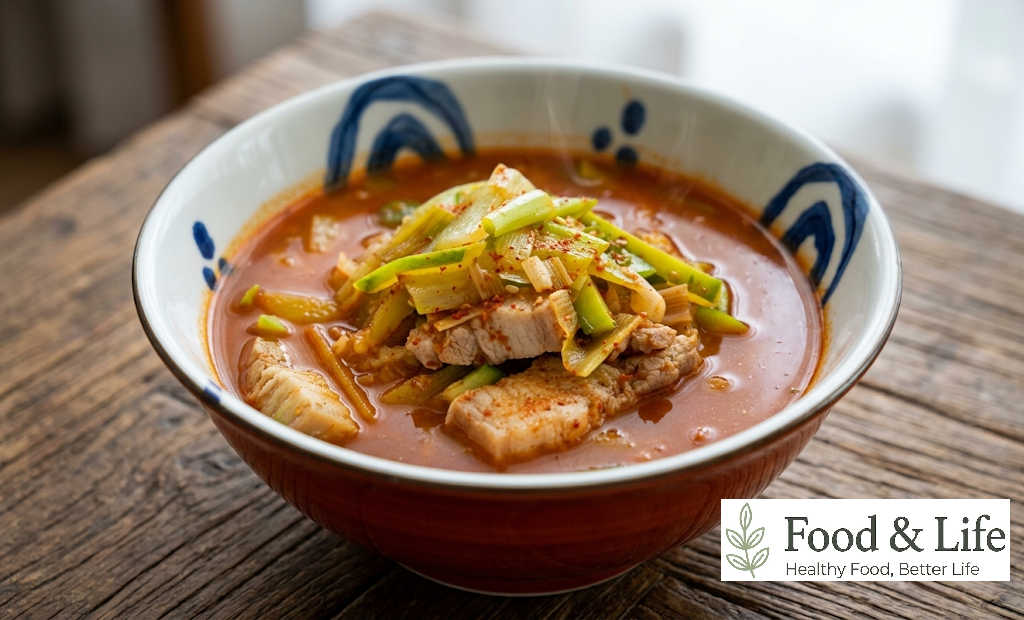
Craving a hot, spicy bowl of soup with rice that is hearty enough to be a full meal? This Korean pork zucchini stew is made by stir-frying pork shoulder and gochugaru in fragrant green onion oil, creating a rich red pepper oil base before plenty of tender zucchini is simmered in the broth. Fish sauce, gochujang, oyster sauce, and beef Dashida add layers of savory depth, making it satisfying even without extra side dishes. Spoon the spicy broth, tender pork, and soft zucchini generously over steaming rice for a comforting Korean-style gukbap.
⏱️ Cooking Time: About 20 minutes
🍳 Difficulty: ★★☆☆☆
✓ Ingredients
🥣 Main Ingredients
- 2 Korean zucchini
- 200 g (7 oz) pork shoulder
- 1/2 onion
- 1 green onion
- 1 Cheongyang chili pepper
- 2 tbsp cooking oil
- 1 L (33.8 fl oz) water
🧂 Sauce & Seasonings
- 3 tbsp gochugaru (Korean red pepper flakes)
- 3 tbsp Korean anchovy fish sauce (or sand lance fish sauce)
- 1 tbsp oyster sauce
- 1.5 tbsp gochujang
- 1 tbsp beef Dashida
- 1 tbsp minced garlic
- 2 tbsp cooking wine
(Measurement guide: 1 tbsp = 15 ml, 1 tsp = 5 ml, 1 Korean paper cup = 180 ml / 6.1 fl oz)
✓ How to Make Korean Pork Zucchini Stew
- Prep the ingredients: Cut the zucchini into thick julienne-style strips, thinly slice the onion, and slice the green onion and Cheongyang chili pepper into rounds.
- Make the green onion oil: Heat the cooking oil in a pot and add the sliced white part of the green onion. Sauté over medium heat until fragrant. Cooking the green onion in oil first adds subtle sweetness and savory flavor to the broth.
- Cook the pork and gochugaru: Once the green onion becomes fragrant, add the pork shoulder and sauté until the outside is cooked. Add 3 tbsp gochugaru, reduce the heat to low, and stir quickly so the chili flakes do not burn. Blooming the gochugaru in the oil creates a flavorful red pepper oil that gives the broth a deeper spicy taste.
- Add the water and seasonings: Pour in 1 L (33.8 fl oz) water. Add the fish sauce, oyster sauce, gochujang, beef Dashida, and minced garlic, then stir until evenly combined.
- Add the vegetables and simmer: Once the broth comes to a boil, add the prepared zucchini and onion. Simmer over medium heat until the zucchini becomes soft and tender.
- Finish the stew: Add the sliced Cheongyang chili pepper, the green part of the green onion, and 2 tbsp cooking wine. Let everything boil vigorously for another 2–3 minutes.
- Serve over rice: Place hot rice in a bowl and generously ladle the finished stew, pork, zucchini, and broth over the top to serve it gukbap-style.
✓ Key Tips for Success
- When adding the gochugaru, make sure to reduce the heat to low. Korean red pepper flakes can burn quickly over high heat, which can make the entire broth taste bitter. Stir them briefly with the pork and oil just until the color and aroma are released.
✓ Serving Tips
- Serve the stew over rice as gukbap, or pair it with cooked kalguksu noodles or somyeon (thin wheat noodles).
- For a sharper, more peppery finish, sprinkle a little ground black pepper over the stew just before serving.
✓ How to Choose Good Korean Zucchini
- Shape and thickness: Choose zucchini that is evenly thick from end to end, with a straight shape rather than a sharply curved or misshapen top.
- Skin and color: Look for smooth, unblemished skin with a vivid deep light-green color and a natural sheen.
- Stem and firmness: The cut stem should look fresh, and the zucchini should feel firm and springy rather than soft when gently held.
✓ Korean Zucchini Nutrition per 100 g (3.5 oz)
| Nutrient | Amount per 100 g (3.5 oz) |
|---|---|
| Calories | 22.00 kcal |
| Carbohydrates | 5.14 g |
| Protein | 1.07 g |
| Fat | 0.09 g |
| Sodium | 0.00 mg |
Based on 100 g (3.5 oz) of raw Korean zucchini. Actual nutrition values may vary depending on the variety, portion, product, and cooking method.
Source: Ministry of Food and Drug Safety Food Nutrition Database – Raw Agricultural Foods
✓ Frequently Asked Questions (FAQ)
Q1. How thick should I cut the zucchini, and how long should I cook it?
If the zucchini is sliced too thinly, it can easily fall apart while simmering. Cut it into thick strips about 0.5–0.7 cm (0.2–0.3 in) thick, then simmer for about 5–7 minutes over medium heat after the broth comes to a boil, until the zucchini looks slightly translucent and becomes tender.
Q2. Why does my broth taste burnt or bitter?
The most common cause is burning the gochugaru while stir-frying it with the pork. Reduce the heat to low just before adding the gochugaru and stir gently and quickly so it releases its color and aroma without scorching.
Q3. Can I use pork belly or pork neck instead of pork shoulder?
Yes. Pork belly, pork neck suitable for stews, or pork hind leg can be used instead. If using pork belly, reduce the amount of cooking oil slightly at the beginning because the meat will release more fat as it cooks.
When you’re craving something spicy and warming, this Korean pork zucchini stew makes a hearty meal with plenty of tender zucchini, savory pork, and steaming rice. It also works well with kalguksu or somyeon noodles, making it a versatile recipe worth keeping on hand.
If you enjoyed this recipe, save or bookmark it and share it with someone who loves comforting Korean food.
I’ll continue sharing approachable, flavorful recipes and practical cooking tips that are easy to make at home. 😊
If there is a dish you’ve been curious about or a recipe you’d like to see next, feel free to leave a comment. 😊