
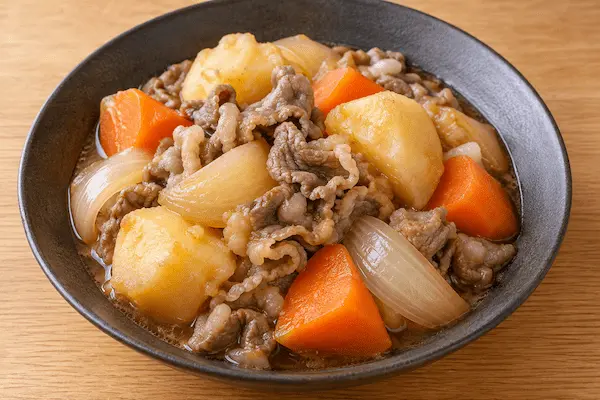
If you’re looking for a sweet and savory side dish that brings meat and potatoes together, this nikujaga recipe is a great place to start. Thin-sliced beef brisket is stir-fried first, then simmered with potatoes, onion, and carrot in a soy-based sauce for a classic Japanese beef and potato stew. A parchment drop lid and a gentle low simmer, plus one stir halfway through, help the vegetables soak up the sauce evenly. Serve the tender potatoes and rich beef over a bowl of warm rice.
⏱️ Cooking Time: About 40 minutes
🍳 Difficulty: ★★☆☆☆
✓ Ingredients (Serves 2)
🥣 Main Ingredients
- 200 g (7 oz) thin-sliced beef brisket (chadolbagi), or thin-sliced pork belly
- 3 potatoes (400–450 g / 14.1–15.9 oz)
- 1/2 onion
- 1/2 carrot
🧂 Sauce & Seasonings
- 200 ml (6.8 fl oz) water
- 2 tbsp sugar
- 2 tbsp brewed soy sauce
- 2 tbsp Chungha (Korean rice wine)
- 2 tbsp mirin
- 1/2 tbsp Hondashi (Japanese dashi granules), or anchovy Dashida (Korean anchovy stock powder)
- Cooking oil (for the pan)
(Measurement guide: 1 tbsp = 15 ml, 1 tsp = 5 ml, 1 Korean paper cup = 180 ml)
✓ How to Make Nikujaga
- Prep the onion: Peel 1/2 onion and cut it into large pieces.
- Prep the potatoes and carrot: Peel 3 potatoes (400–450 g / 14.1–15.9 oz) and 1/2 carrot, then cut them into large chunks. Don’t cut them too small, so they hold their shape during the long simmer.
- Make the simmering sauce: In 200 ml (6.8 fl oz) water, mix 2 tbsp sugar, 2 tbsp brewed soy sauce, 2 tbsp Chungha, 2 tbsp mirin, and 1/2 tbsp Hondashi. You can use anchovy Dashida instead of Hondashi.
- Stir-fry the beef: Heat cooking oil in a pan over medium heat. Spread out 200 g (7 oz) beef brisket and stir-fry. When the beef is about halfway cooked, move on to the next step.
- Add the vegetables and sauce: Add the potatoes, onion, and carrot and stir-fry with the beef, then pour in all of the simmering sauce.
- Make a parchment drop lid: Fold a sheet of parchment paper, cut it to fit just inside the pan, and cut a hole in the center. Skim off the foam that forms as the sauce boils, then lay the parchment lid over the ingredients.
- Simmer on low for 10 minutes: With the parchment lid in place, simmer over low heat for 10 minutes.
- Stir once and simmer again: Lift the parchment lid briefly, stir the ingredients once, then cover again and simmer over low heat for another 10 minutes.
- Check the potatoes and let it rest: Test a potato with a chopstick to make sure it’s cooked through. Once done, turn off the heat and let it sit for 10 minutes, then remove the parchment lid and transfer to a serving bowl.
✓ Key Tips for Success
- Potato size and shape: Potatoes cut too small break apart easily while simmering. Cut them into large chunks and stir gently halfway through so they keep their shape.
- Don’t rush it over high heat: High heat can reduce the sauce too quickly. Keep the parchment lid on, simmer over low heat, and check the potatoes for doneness at the end.
✓ Serving Tips
- Pick up a piece of potato and beef together and enjoy it with warm rice.
- The rich beef and sweet-savory sauce pair well with a refreshing side like kimchi.
- Finish with the full 10-minute rest after turning off the heat, and spoon a little of the leftover simmering sauce into the bowl.
✓ How to Choose Good Potatoes
- Shape and firmness: Choose potatoes that are firm, have few blemishes, and feel heavy for their size.
- Skin surface: Look for thin, smooth skin with shallow, sparse eyes.
- Color: Pick potatoes with their natural yellowish-brown color and no green discoloration.
Source: Korea.kr (Korean Government Policy Briefing) Ingredient Guide
✓ Potato Nutrition per 100 g (3.5 oz)
| Nutrient | Amount per 100 g (3.5 oz) |
|---|---|
| Calories | 70.00 kcal |
| Carbohydrates | 16.07 g |
| Protein | 1.93 g |
| Fat | 0.03 g |
| Sodium | 1.00 mg |
Basis: Raw potato (Sumi variety), per 100 g. Actual nutrition may vary by variety, part, product, and cooking method.
Source: Ministry of Food and Drug Safety (Korea) Food Nutrient Database
✓ Frequently Asked Questions (FAQ)
Q1. How long should nikujaga simmer on low heat?
Simmer it on low heat with a parchment drop lid for 10 minutes, stir once, then simmer for another 10 minutes. After checking that the potatoes are cooked, turn off the heat and let it rest for 10 minutes.
Q2. Why do my potatoes fall apart while simmering?
Potatoes break apart easily when they’re cut too small or stirred too roughly as they cook. Cut them into large chunks and stir gently halfway through to keep their shape.
Q3. Can I substitute the beef brisket or Hondashi?
You can use thin-sliced pork belly instead of beef brisket, and anchovy Dashida instead of Hondashi. Beef and pork, as well as the two seasonings, each have a different flavor, so the final taste will vary.
Nikujaga is a comforting home-style dish where a sweet and savory sauce meets rich, tender beef. Large chunks of potato add a soft, cozy texture, while onion and carrot bring their own contrast to every bite. The lightly browned potatoes and bright orange carrots make even a simple dinner table look inviting.
When you’re planning a family dinner, cooking the meat and vegetables together in one pan keeps things easy. Eating a bite of potato with thin-sliced beef gives you two textures at once. If you love sweet-and-savory sides, it’s especially good with a bowl of warm rice. For family meals, serve the big chunks family-style for everyone to share. After you make it, jot down your favorite flavor tweaks and how your family liked it to start your own cooking story.
If you’d like to enjoy a Japanese beef and potato stew at home, give this 2-serving nikujaga recipe a try.
If this recipe was helpful, save or bookmark it for later, and share it with someone who loves home cooking.
We’ll keep sharing easy, delicious recipes and useful cooking tips anyone can follow. 😊
Is there a dish you’ve been curious about or a recipe you’d like us to cover? Let us know in the comments. 😊
※ This recipe was inspired by one introduced on the Korean YouTube channel “일식예보.” We cooked it ourselves and wrote this post based on our process and results.