
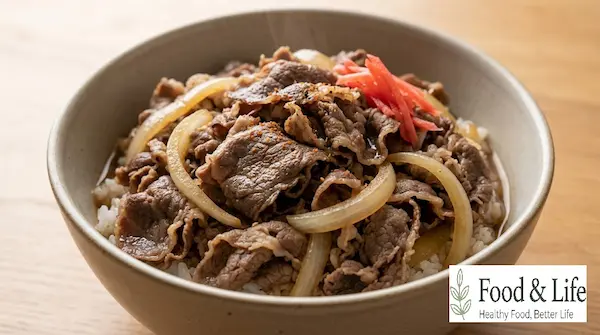
Making a delicious Japanese beef rice bowl at home comes down to balancing tender, thinly sliced beef with a rich, sweet, and savory sauce. The beef should stay moist and tender while the onions absorb the flavorful broth.
Gyudon (牛丼), or Japanese beef rice bowl, is a classic Japanese dish made by simmering thinly sliced beef and onions in a soy sauce-based broth called tsuyu, then serving everything over a bowl of warm rice.
This easy gyudon recipe adds red wine and beef Dashida seasoning for extra umami and depth of flavor. The onions are simmered first to release their natural sweetness, followed by the beef, which cooks gently over medium-low heat for about 10 minutes.
With tender beef, soft and sweet onions, and a flavorful soy sauce broth, this comforting rice bowl makes a satisfying meal in just about 20 minutes.
⏱️ Cooking Time: Approximately 20 minutes
🍳 Difficulty: ★☆☆☆☆
✓ Ingredients (2 Servings)
🥣 Main Ingredients
- 250 g (8.8 oz) thinly sliced beef for bulgogi (shabu-shabu beef also works)
- 1/2 onion
- Warm cooked rice, enough for 2 rice bowls
🧂 Sauce & Seasonings
- 200 ml (6.8 fl oz) water
- 2 tbsp Korean soup soy sauce (guk-ganjang)
- 3 tbsp Mirim (Korean cooking wine)
- 1 tbsp sugar
- 1/2 tsp grated ginger
- 2 tbsp red wine (can be substituted with Cheongha, Korean rice wine)
- 1 tsp beef Dashida (Korean beef stock seasoning)
- Beni shoga (Japanese red pickled ginger), to taste
- Shichimi togarashi (Japanese seven-spice blend), to taste
Measurement Guide: 1 tbsp = 15 ml (0.5 fl oz), 1 tsp = 5 ml, and 1 Korean paper cup = 180 ml (6.1 fl oz).
✓ How to Make Gyudon (Japanese Beef Rice Bowl)
- Prepare the Beef: Cut 250 g (8.8 oz) of thinly sliced beef into bite-sized pieces. Using thinly sliced beef, such as meat prepared for bulgogi or shabu-shabu, allows it to cook quickly while maintaining a tender texture.
- Slice the Onion: Cut 1/2 onion into slices approximately 5 mm thick. Keeping the slices at a moderate thickness allows the onions to release their natural sweetness into the broth while becoming soft without completely falling apart.
- Prepare the Gyudon Tsuyu Sauce: In a skillet, combine 200 ml (6.8 fl oz) of water, 2 tablespoons of Korean soup soy sauce, 3 tablespoons of Mirim, 1 tablespoon of sugar, 1/2 teaspoon of grated ginger, 2 tablespoons of red wine, and 1 teaspoon of beef Dashida. Stir thoroughly until the sugar and beef seasoning are evenly dissolved. This mixture forms the sweet and savory tsuyu broth that gives gyudon its distinctive flavor.
- Add the Onions and Bring to a Boil: Add the sliced onion to the prepared tsuyu sauce and turn on the heat. Bring the mixture to a boil, allowing the onions to release their natural sweetness into the broth.
- Reduce the Heat: Once the tsuyu begins to boil, reduce the heat to low and simmer the onions for 3 minutes. Keep the heat gentle to prevent the broth from reducing too quickly. This step helps soften the onions while allowing their sweetness to develop.
- Add the Beef: Place the prepared 250 g (8.8 oz) of thinly sliced beef into the simmering broth. Use chopsticks to gently separate and spread the slices throughout the liquid so they do not clump together. This helps the beef cook evenly and absorb the sauce.
- Simmer Over Medium-Low Heat: After adding the beef, simmer over medium-low heat for approximately 10 minutes. As the beef cooks through, its savory flavor blends with the sweetness of the onions and the soy sauce-based broth. Gentle simmering helps maintain the beef’s moist, tender texture.
- Skim the Surface: During simmering, use a fine-mesh strainer or ladle to remove any foam and impurities that rise to the surface. Skimming the broth helps create a cleaner, more balanced flavor.
- Assemble the Gyudon Rice Bowls: Once the beef is fully cooked and has turned brown, and the onions are soft and tender, turn off the heat. Divide the warm cooked rice between two serving bowls, then generously spoon the simmered beef and onions over the rice.
- Add the Garnishes: Finish with Japanese red pickled ginger (beni shoga) and shichimi togarashi, according to your preference. The pickled ginger adds a refreshing, tangy contrast to the rich beef, while shichimi provides a fragrant aroma and gentle heat.
✓ Key Tips for Success
- Separate the Beef Slices to Prevent Clumping: Adding thinly sliced beef to simmering broth all at once without separating the pieces can cause them to stick together and cook unevenly. Gently loosen the beef slices with chopsticks immediately after adding them to the tsuyu. Continue cooking over medium-low heat to help the beef remain tender and absorb the flavorful broth evenly.
- Skim the Foam and Control the Heat: As the beef simmers, proteins and other impurities may form foam on the surface of the broth. Leaving too much foam can make the sauce taste heavier and appear cloudy. Skim the surface with a ladle or fine-mesh strainer, and maintain medium-low heat during the 10-minute simmer. This helps the beef and onions cook gently without allowing the broth to reduce too quickly.
✓ Serving Tips
- Serve with Beni Shoga (Japanese Pickled Ginger): The tangy, refreshing flavor of Japanese red pickled ginger provides a pleasant contrast to the rich beef and sweet soy sauce broth. Enjoying a little pickled ginger between bites helps balance the flavors and keeps the rice bowl from tasting too heavy.
- Add Shichimi Togarashi for Extra Flavor: Shichimi togarashi is a traditional Japanese seasoning blend that adds a fragrant, mildly spicy finish. Sprinkle a small amount over the finished gyudon to complement the savory beef and soy sauce without overpowering their flavors.
- Enjoy Over Freshly Cooked Rice: Gyudon tastes especially good when the simmered beef and onions are served immediately over warm rice. The tender beef and soft onions blend naturally with the rice, while the flavorful tsuyu provides moisture and seasoning. Be sure to enjoy the onions along with the beef to appreciate their gentle sweetness.
✓ How to Choose Good Beef for Gyudon
- Look for Bright Color and Natural Sheen: Choose beef with a bright, fresh red color and a natural-looking sheen. Avoid meat that appears excessively dry or has noticeable discoloration on the surface.
- Check the Fat Color and Marbling: Good-quality beef should have fat that is relatively creamy white rather than excessively yellow. Beef with fat distributed evenly throughout the lean meat can provide a tender, flavorful texture when simmered.
- Consider Texture and Cut: Look for beef with a firm, springy texture and fine muscle fibers. For gyudon, thinly sliced beef prepared for bulgogi or shabu-shabu is particularly convenient because it cooks quickly and absorbs the sauce evenly.
✓ Beef Nutrition per 100 g (3.5 oz)
| Nutrient | Amount per 100 g |
|---|---|
| Calories | 162.00 kcal |
| Carbohydrates | 0.00 g |
| Protein | 23.00 g |
| Fat | 6.92 g |
| Sodium | 50.00 mg |
Note: These nutritional values are based on 100 g of raw Korean Hanwoo beef (Grade 1, round cut), not the finished gyudon dish. Actual nutritional values may vary depending on the breed, cut, grade, and cooking method of the beef used.
Source: Ministry of Food and Drug Safety (MFDS) – Food Nutrition Database, Raw Hanwoo Beef (Grade 1, Round)
✓ Frequently Asked Questions (FAQ)
Q1. Should I cook the onions or the beef first when making gyudon?
Cook the onions in the tsuyu broth before adding the beef. Simmering the onions first allows their natural sweetness to flavor the broth, while adding the beef afterward and cooking it over medium-low heat for approximately 10 minutes helps keep the meat tender.
Q2. Why does foam form on the surface of the gyudon broth?
Foam forms when proteins and other substances from the beef coagulate during simmering. Use a fine-mesh strainer or ladle to skim off the foam as it rises for a cleaner, clearer broth.
Q3. Can I substitute Cheongha for red wine in gyudon?
Yes. You can replace 2 tablespoons of red wine with 2 tablespoons of Cheongha, a Korean rice wine. Red wine gives the broth a deeper, richer flavor, while Cheongha produces a relatively cleaner and lighter taste, so choose according to your preference and available ingredients.
A homemade gyudon rice bowl brings together tender beef, sweet onions, and a rich soy sauce-based tsuyu in one comforting dish. The thinly sliced beef gently simmers in the seasoned broth, absorbing the sweet and savory flavors while remaining moist and tender. Meanwhile, the onions soften and become slightly translucent, contributing their natural sweetness to the sauce.
What makes this version particularly flavorful is the addition of red wine and beef Dashida. These ingredients enhance the savory depth of the broth while complementing the saltiness of the soy sauce and the sweetness of the Mirim. The glossy beef and soft onions look especially appetizing when generously arranged over warm rice. With beef, vegetables, and a flavorful sauce all in one bowl, gyudon makes a satisfying meal without requiring several side dishes.
Personally, I enjoy Japanese rice bowls when the seasoning is neither overly sweet nor excessively salty, allowing the sauce to blend naturally with the rice. This gyudon recipe suited that preference particularly well. Rather than stir-frying the beef, simmering it directly in the tsuyu kept the meat moist and tender, making every bite easy to enjoy with the rice.
I especially liked how the onions developed a gentle sweetness as they softened in the broth. Their flavor complemented the beef beautifully, creating a well-balanced combination. My family also enjoyed the tender beef and sweet, savory sauce, particularly how well everything paired with freshly cooked rice.
Another advantage is the simplicity of the preparation. The ingredients require very little prep work, and the entire dish can be made in a single skillet. That makes it a practical choice for a busy weeknight dinner. Adding beni shoga gave the finished rice bowl a refreshing contrast, and I enjoyed the combination enough to want to prepare it the same way again.
If you’ve been wanting to make an authentic-style Japanese beef rice bowl at home, try this easy gyudon recipe using 250 g (8.8 oz) of thinly sliced beef and 1/2 onion. It makes 2 servings and takes approximately 20 minutes, making it a convenient option whenever you want a warm, comforting meal without spending too much time in the kitchen.
Save or bookmark this recipe for later, and share it with someone who enjoys Japanese home cooking. Your support helps me continue sharing practical recipes and useful cooking tips.
I’ll keep introducing delicious recipes that anyone can easily prepare at home, along with helpful techniques for making everyday cooking more enjoyable. 😊
Is there a Japanese dish or another recipe you’d like to learn how to make? Feel free to leave a comment with your suggestions or requests! 😊
Recipe Note: This recipe was inspired by a dish featured on the YouTube channel “일식예보.” I prepared and tested it myself, and this article is based on my own cooking process and results.