
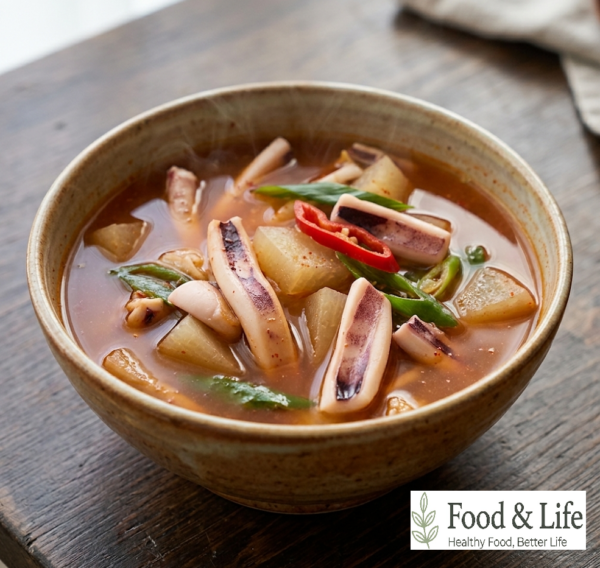
This Korean squid and radish soup recipe, known as Ojingeo Muguk, starts with 400 g (14.1 oz) of Korean radish and dried kelp to create a clean, flavorful broth. Gochugaru, Korean soup soy sauce, tuna extract, and doenjang add savory depth and a pleasantly spicy kick, while the squid is added at the very end and cooked for only 2–3 minutes.
The radish should simmer until translucent and tender so its natural sweetness infuses the broth. Squid, on the other hand, can become tough when overcooked, so add it only after the radish is fully cooked and simmer just until the flesh turns opaque and plump.
With the heat of Cheongyang chili and the subtle savory flavor of doenjang, this warming soup comes together in about 20 minutes with tender, chewy squid and soft, flavorful radish.
⏱️ Cooking Time: About 20 minutes
🍳 Difficulty: ★★☆☆☆
✓ Ingredients
🥣 Main Ingredients
- 1 squid, about 300 g (10.6 oz)
- 1.2 L (40.6 fl oz) water
- 1 piece dried kelp, 4 g (0.14 oz)
- 1/3 Korean radish, about 400 g (14.1 oz)
- 1 Cheongyang chili pepper
- 1 red chili pepper
- 20 g (0.7 oz) green onion
🧂 Seasonings
- 1 tbsp gochugaru (Korean red pepper flakes)
- 2 tbsp Korean soup soy sauce
- 1 tbsp Korean tuna extract
- 1 tbsp minced garlic
- 2/3 tbsp doenjang (Korean fermented soybean paste)
(Measurement guide: 1 tbsp = 15 ml, 1 tsp = 5 ml, 1 Korean paper cup = 180 ml / 6.1 fl oz)
✓ How to Make Korean Squid and Radish Soup
- Prepare the vegetables and squid: Cut the Korean radish into bite-size pieces. Slice the Cheongyang chili, red chili, and green onion diagonally. Cut the squid into bite-size pieces.
- Make the radish and kelp broth: Add 1.2 L (40.6 fl oz) water, the sliced radish, and dried kelp to a pot. Bring to a boil over high heat.
- Remove the kelp: As soon as the water comes to a boil, remove the kelp to prevent it from releasing too much slimy residue into the broth.
- Season and simmer the soup: Add 1 tbsp gochugaru, 2 tbsp Korean soup soy sauce, 1 tbsp Korean tuna extract, 1 tbsp minced garlic, the sliced Cheongyang chili, and 2/3 tbsp doenjang. Stir until the seasonings are evenly dissolved, then simmer over medium heat for about 15 minutes, or until the radish is tender.
- Add the squid and garnishes: Once the radish is translucent and tender, add the sliced squid, green onion, and red chili.
- Finish the soup: Cook over high heat for just 2–3 minutes, until the squid turns opaque and plump. Remove from the heat and serve immediately.
✓ Key Tips for Success
- Add the squid at the end: If squid is added at the beginning and cooked for too long, it loses moisture, shrinks, and becomes tough. Let the radish and seasonings develop the broth first, then add the squid at the end and cook it for only 2–3 minutes to keep it tender and pleasantly chewy.
- Use only a small amount of doenjang: Adding 2/3 tbsp of doenjang helps mellow the squid’s seafood aroma while giving the broth a deeper, more savory flavor without making it too heavy.
✓ Serving Tips
- Serve the soup with freshly cooked white rice. Spoon some broth over the rice and enjoy it with the tender radish and chewy squid.
- If you prefer a spicier broth, add a little extra gochugaru or Cheongyang chili according to your taste.
- This clean, spicy soup pairs well with well-fermented baechu kimchi, kkakdugi (cubed radish kimchi), or crispy roasted seaweed.
✓ How to Choose Fresh Squid
- Skin color: Look for squid with a vivid reddish-brown or deep chocolate-colored surface. A strong, distinct color is a good sign of freshness.
- Firmness and sheen: Fresh squid should have a clear, glossy surface and feel firm. When lightly pressed, the flesh should quickly spring back.
- Suckers: Check the tentacles and choose squid with intact suckers that are still firmly attached.
✓ Squid Nutrition per 100 g (3.5 oz)
| Nutrient | Amount per 100 g (3.5 oz) |
|---|---|
| Calories | 94.00 kcal |
| Carbohydrates | 0.16 g |
| Protein | 18.84 g |
| Fat | 1.44 g |
| Sodium | 199.00 mg |
Values are based on 100 g (3.5 oz) of raw squid. Actual nutrition may vary depending on the species, cut, product, and cooking method.
Source: Ministry of Food and Drug Safety Food Nutrition Database
✓ Frequently Asked Questions (FAQ)
Q1. How long should I cook squid so it doesn’t become tough?
Wait until the radish is fully tender, then add the squid to the boiling broth and cook it over high heat for only about 2–3 minutes, just until the flesh turns opaque and plump.
Q2. Why does my squid soup taste muddy or overly fishy?
The broth can become heavy if the kelp is boiled for too long or if too much doenjang is added. Remove the kelp as soon as the water reaches a boil and keep the doenjang to the specified 2/3 tbsp for a cleaner, more balanced broth.
After simmering the radish and kelp first and adding the squid for only the final 2–3 minutes, the broth develops a clean natural sweetness from the radish along with the savory flavor of the squid. The 2/3 tbsp of doenjang adds depth without making the soup too heavy, while the Cheongyang chili and gochugaru provide a pleasantly spicy finish that pairs especially well with hot rice.
Because the squid is cooked briefly, it stays tender and pleasantly chewy, making this Korean squid and radish soup an easy choice for a comforting family meal. When you want a warm, clean-tasting, and slightly spicy soup on a chilly day, follow the seasoning ratios and squid cooking time closely for the best texture and flavor.
Save or bookmark this recipe so you can easily find it later, and share it with someone who enjoys Korean food.
I’ll continue sharing practical, flavorful recipes that are easy to make at home. If there’s a dish you’d like to see next, feel free to leave a comment. 😊