
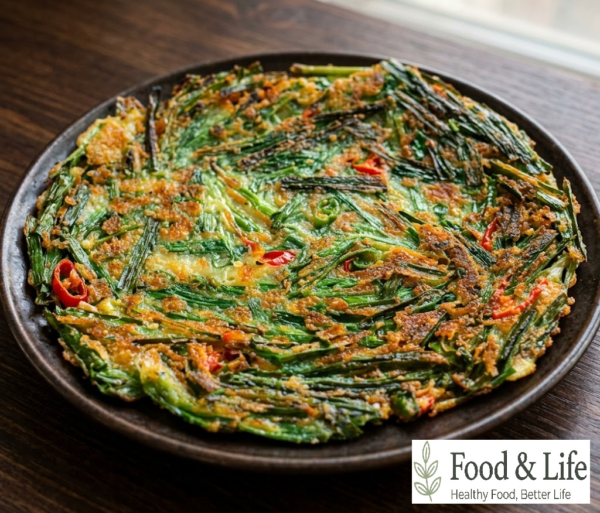
The key to making a crispy Korean chive pancake (Buchujeon) is spreading the batter thinly in a well-preheated skillet. This recipe also adds soju and breadcrumbs to the batter to create a lighter, crispier texture.
Mix 200 g (7 oz) of buchu (Korean garlic chives) with 1 Korean paper cup of pancake mix, 1/3 cup potato starch, 1/3 cup soju, and 5 tbsp breadcrumbs. The result is a pancake that turns golden and crispy on the outside while the chives stay soft and tender inside. Using plenty of oil and rotating the skillet as the pancake cooks over medium heat helps the center and edges brown evenly.
Cheongyang chili and red chili add a pleasantly spicy kick that complements the fresh aroma of the chives. Ready in about 15 minutes, this easy Buchujeon works well as a snack, side dish, or Korean-style drinking snack.
⏱️ Cooking Time: About 15 minutes
🍳 Difficulty: ★★☆☆☆
✓ Ingredients
🥣 Main Ingredients
- 200 g (7 oz) buchu (Korean garlic chives)
- 1 Cheongyang chili pepper
- 1 red chili pepper
🧂 Batter & Seasonings
- 1 Korean paper cup pancake mix, 180 ml (6.1 fl oz)
- 1/3 Korean paper cup potato starch, 60 ml (2 fl oz)
- 1/5 tbsp seasoned salt
- 1 Korean paper cup water, 180 ml (6.1 fl oz)
- 1/3 Korean paper cup soju, 60 ml (2 fl oz)
- 5 tbsp breadcrumbs
(Measurement guide: 1 tbsp = 15 ml, 1 tsp = 5 ml, 1 Korean paper cup = 180 ml / 6.1 fl oz)
✓ How to Make Crispy Korean Chive Pancake
- Prep and rinse the chives: Cut 200 g (7 oz) of buchu into short pieces so they do not tangle while cooking. Rinse thoroughly in a bowl, then drain well in a colander.
- Slice the chilies: Thinly slice 1 Cheongyang chili into rounds and slice 1 red chili diagonally.
- Make the batter: Add the drained chives to a bowl along with 1 Korean paper cup pancake mix, 1/3 cup potato starch, 1/5 tbsp seasoned salt, 1 cup water, 1/3 cup soju, 5 tbsp breadcrumbs, and the sliced chilies. Gently mix until evenly combined.
- Spread the batter in the skillet: Add a generous amount of oil to a skillet and preheat it thoroughly. Add the batter and spread it into a thin, even layer.
- Rotate the skillet while cooking: Cook over medium heat while gently rotating the skillet so the heat reaches the entire pancake evenly. Cook until the bottom is golden brown.
- Flip and finish: Once the bottom is firm and well browned, flip the pancake with a spatula. Cook the other side until crisp, then transfer to a plate.
✓ Key Tips for Success
- Use soju and breadcrumbs for a crispier texture: The alcohol in the soju evaporates quickly when heated, creating tiny air pockets that help give the pancake a lighter, crispier texture. The coarse breadcrumbs also absorb oil and help the surface stay crisp longer.
- Rotate the skillet as it cooks: Home stovetops often heat the center and edges of a skillet unevenly. After spreading the batter thinly, rotate the skillet as it cooks so one area does not burn while the rest remains pale.
✓ Serving Tips
- For a tangy dipping sauce, combine 2 tbsp regular soy sauce, 1 tbsp vinegar, 1/2 tbsp sugar, and 1/3 tbsp gochugaru with a small amount of finely chopped onion and Cheongyang chili. The acidity helps balance the richness of the fried pancake.
- Avoid stacking freshly cooked pancakes directly on top of each other. Trapped steam can make the bottom pancakes soggy, so spread them out on a wire rack or large plate and let some of the steam escape.
- The spicy flavor of Cheongyang chili cuts through the richness of the oil, making this pancake a good match for chilled makgeolli or a carbonated drink.
✓ How to Choose Fresh Korean Chives
- Leaf condition and firmness: Choose chives with straight leaves and tips that are not dried out or brown. They should feel tender but still have some spring when touched.
- Color and sheen: Look for a vivid deep green color with a natural sheen. Avoid bunches with wilted leaves or stems that are bent in the middle.
- Stems and cut ends: The cut ends near the base should look fresh rather than dried out. The stems should also be tender instead of overly tough or fibrous.
Source: FoodNuri Seasonal Produce – Korean Chives
✓ Korean Chive Nutrition per 100 g (3.5 oz)
| Nutrient | Amount per 100 g (3.5 oz) |
|---|---|
| Calories | 22.00 kcal |
| Carbohydrates | 4.10 g |
| Protein | 1.80 g |
| Fat | 0.30 g |
| Sodium | 3.00 mg |
Values are based on 100 g (3.5 oz) of raw, traditional Korean chives. Actual nutrition may vary depending on the variety, part used, product, and cooking method.
Source: Ministry of Food and Drug Safety Food Nutrition Database
✓ Frequently Asked Questions (FAQ)
Q1. Why add soju to Korean chive pancake batter?
The alcohol in soju evaporates quickly during cooking, helping the batter develop a lighter and crispier texture.
Q2. Why does my Buchujeon turn soggy instead of crispy?
If the oil and skillet are not hot enough before the batter goes in, or if the batter is spread too thickly, the pancake can absorb too much oil and become soggy. Use enough oil, preheat the skillet well, and spread the batter into a thin layer.
Q3. Can I use tempura flour or all-purpose flour instead of potato starch?
You can replace the potato starch with the same amount of tempura flour. However, potato starch gives the pancake a particularly good balance of a crisp exterior and slightly chewy interior.
With the batter spread thinly and cooked in a well-preheated skillet, the soju and breadcrumbs help this crispy Korean chive pancake turn golden and crunchy from the edges all the way through the center. Cutting the chives into shorter pieces also keeps them from tangling and helps the pancake cook more evenly.
If your homemade Korean pancakes often turn soft or soggy, try keeping the batter thin, using enough oil, and rotating the skillet as it cooks. You’ll get a crisp surface, tender chives, and a pleasantly spicy bite from the Cheongyang chili.
Buchujeon makes an easy side dish, snack, or Korean-style appetizer, especially when served fresh from the skillet. Save or bookmark this recipe so you can quickly find it again, and share it with someone who enjoys Korean food.
I’ll continue sharing practical recipes and cooking tips that are easy to follow at home. If there’s another Korean dish you’d like to see, feel free to leave a comment. 😊