
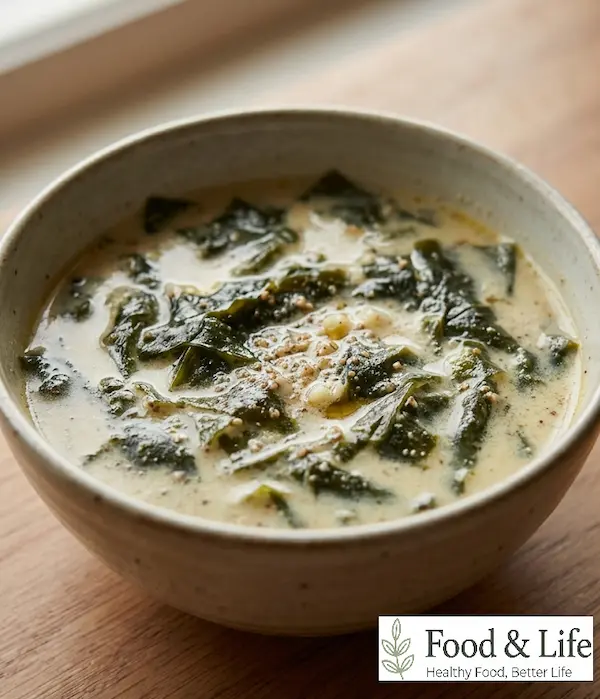
The key to making Korean perilla seaweed soup (Deulkkae Miyeokguk) is to first sauté the soaked seaweed with perilla oil and seasonings, then add 2 L (67.6 fl oz) of water and simmer for 10 minutes over medium-high heat before stirring in 5 tbsp of ground perilla seeds at the very end.
Soak 20 g (0.7 oz) of dried seaweed until fully rehydrated, squeeze out the excess water, and sauté it with Korean soup soy sauce, tuna seasoning sauce, and cooking wine. This helps the seasoning penetrate the seaweed and gives the broth a deeper savory flavor. Add the ground perilla seeds only during the final stage and simmer for another 2–3 minutes over medium-low heat to preserve their nutty aroma and create a smooth, milky-looking broth.
With no meat required, this perilla seaweed soup recipe combines tender seaweed with a warm, rich, and nutty broth for a comforting Korean meal.
⏱️ Cooking Time: About 30 minutes
🍳 Difficulty: ★★☆☆☆
✓ Ingredients
🥣 Main Ingredients
- 20 g (0.7 oz) dried miyeok (Korean seaweed)
- Lukewarm water, for soaking
- 1 tbsp fine salt, for soaking the seaweed
🧂 Seasonings
- 1 tbsp cooking oil
- 1 tbsp perilla oil
- 3 tbsp Korean soup soy sauce (guk-ganjang)
- 3 tbsp tuna seasoning sauce
- 3 tbsp cooking wine
- 2 L (67.6 fl oz / about 8.5 US cups) water
- 1/3 tbsp fine salt
- 1 tbsp minced garlic, optional
- 5 tbsp ground perilla seeds
(Measurement guide: 1 tbsp = 15 ml, 1 tsp = 5 ml, 1 Korean paper cup = 180 ml)
✓ How to Make Korean Perilla Seaweed Soup
- Soak the seaweed: Place 20 g (0.7 oz) of chopped dried seaweed in a bowl and cover generously with lukewarm water. Add 1 tbsp fine salt and soak for about 15 minutes. Rinse the rehydrated seaweed lightly under running water, then squeeze out as much excess water as possible.
- Sauté the seaweed: Add 1 tbsp cooking oil and 1 tbsp perilla oil to a pot. Add the drained seaweed and sauté briefly over medium heat.
- Season and continue sautéing: Add 3 tbsp Korean soup soy sauce, 3 tbsp tuna seasoning sauce, and 3 tbsp cooking wine. Continue sautéing so the seasonings are evenly absorbed into the seaweed.
- Add the water and simmer: Pour in 2 L (67.6 fl oz) of water. Add 1/3 tbsp fine salt and 1 tbsp minced garlic, if using. Bring to a boil over high heat, then reduce to medium-high and simmer for 10 minutes.
- Finish with ground perilla seeds: Gradually sprinkle in 5 tbsp ground perilla seeds while stirring so they do not clump. Reduce the heat to medium-low and simmer for another 2–3 minutes. Once the broth turns creamy and evenly blended, remove from the heat.
✓ Key Tips for Success
- Add the ground perilla seeds at the end: If ground perilla seeds are added too early and cooked for too long, their distinctive aroma can fade and they may settle and stick to the bottom of the pot. Add them only after the seaweed has simmered sufficiently, then cook briefly to maintain their rich, nutty flavor.
- Sauté and season the seaweed first: Adding water immediately without seasoning the seaweed can make the broth and seaweed taste separate. Sautéing the seaweed first with cooking oil, perilla oil, 3 tbsp Korean soup soy sauce, 3 tbsp tuna seasoning sauce, and 3 tbsp cooking wine helps the seaweed absorb deeper savory flavor.
✓ Serving Tips
- Serve with well-fermented napa cabbage kimchi or crunchy kkakdugi (Korean cubed radish kimchi). Their tangy flavor pairs especially well with the rich, nutty perilla broth.
- For a cleaner, lighter flavor, omit the minced garlic. If you prefer a little more aromatic depth, add the optional 1 tbsp minced garlic.
- Add freshly cooked rice directly to the finished soup for a warm and satisfying meal that highlights the deep, savory flavor of the perilla broth.
✓ How to Choose Good Dried Seaweed
- Color: Choose seaweed with an even, deep dark brown color and a slight sheen. Avoid pieces with noticeable reddish or yellow discoloration.
- Texture and elasticity: Look for leaves that are relatively even and not excessively broken. Once soaked, good seaweed should retain some firmness rather than becoming overly mushy.
- Aroma: Choose seaweed with a mild, fresh ocean aroma and no damp, stale, or unusual smell.
✓ Seaweed Nutrition per 100 g (3.5 oz)
| Nutrient | Amount per 100 g (3.5 oz) |
|---|---|
| Calories | 12.00 kcal |
| Carbohydrates | 3.70 g |
| Protein | 1.68 g |
| Fat | 0.29 g |
| Sodium | 361.00 mg |
Values are based on 100 g of raw seaweed. Actual nutrition may vary depending on the variety, product, and cooking method.
Source: Ministry of Food and Drug Safety Food Nutrition Database
✓ Frequently Asked Questions (FAQ)
Q1. When should I add ground perilla seeds to seaweed soup?
Add the ground perilla seeds after the seaweed soup has already simmered for 10 minutes. Adding them at the end and cooking for only another 2–3 minutes helps preserve their nutty aroma while giving the broth a smooth, rich texture.
Q2. Should I use regular or hulled ground perilla seeds?
Hulled ground perilla seeds are better suited for this soup if you want a smoother texture and a lighter, creamier-looking broth without noticeable bits of seed hull.
Sautéing the seaweed first with perilla oil and seasonings, then adding the ground perilla seeds at the very end, creates a creamy-looking broth with a clean, rich perilla aroma. Korean soup soy sauce and tuna seasoning sauce add savory depth to the seaweed, so the soup tastes full-bodied even without meat or a separate broth.
When you’re craving a warm and nutty Korean soup, try this Korean perilla seaweed soup recipe by sautéing the seaweed first and adding 5 tbsp of ground perilla seeds only for the final 2–3 minutes. The mild, comforting flavor makes it an easy choice for breakfast or a simple home-cooked meal.
Save or bookmark this recipe for later, and share it with someone who enjoys Korean food.
More easy-to-follow recipes and practical cooking tips are coming soon. 😊
If there’s a dish you’d like to see featured next, feel free to leave a comment. 😊