
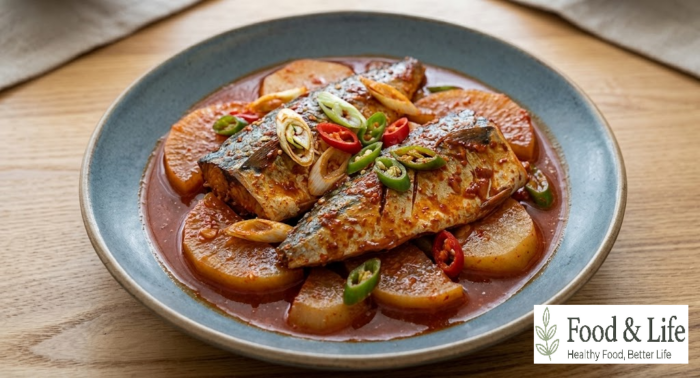
When making braised fish, the key is reducing the strong fishy smell of mackerel while cooking the radish until tender enough to absorb the flavorful sauce.
This Korean braised mackerel with radish recipe briefly blanches the mackerel fillets in boiling water to remove blood and surface impurities, then uses both doenjang and gochujang for a savory, spicy braising sauce. Thinly sliced Korean radish is first simmered in 500 ml (16.9 fl oz) rice-rinsing water, then topped with the mackerel and gently braised over medium-low heat until the seasoning penetrates both the fish and radish.
The moist, tender mackerel, soft radish, and spicy-sweet braising sauce make this a satisfying Korean side dish to serve with hot steamed rice.
⏱️ Cooking Time: About 25 minutes
🍳 Difficulty: ★★☆☆☆
✓ Ingredients
🥣 Main Ingredients
- 2 mackerel fillets
- 500 g (17.6 oz) Korean radish
- 1/2 onion
- 1 green onion
- 1 green chili pepper
- 1 red chili pepper
- 500 ml (16.9 fl oz) rice-rinsing water
🧂 Sauce & Seasonings
- 2 tbsp gochujang (Korean red pepper paste)
- 1 tbsp doenjang (Korean fermented soybean paste)
- 2 tbsp soy sauce
- 1 tbsp cooking wine
- 3 tbsp gochugaru (Korean red pepper flakes)
- 2 tbsp sugar
- 2 tbsp tuna fish sauce
- 1 tbsp minced garlic
- 1/2 tbsp minced ginger
- Black pepper, to taste
(Measurement guide: 1 tbsp = 15 ml, 1 tsp = 5 ml, 1 Korean paper cup = 180 ml / 6.1 fl oz)
✓ How to Make Korean Braised Mackerel with Radish
- Blanch the mackerel: Briefly dip the 2 mackerel fillets into boiling water, then remove them. This helps wash away blood and surface impurities and reduces the fishy smell.
- Cook the radish first: Slice 500 g (17.6 oz) Korean radish into pieces that are not too thick and arrange them evenly across the bottom of a pot. Pour in 500 ml (16.9 fl oz) rice-rinsing water and bring to a simmer over medium heat.
- Add the seasonings: Stir 2 tbsp gochujang and 1 tbsp doenjang into the broth until dissolved. Add 2 tbsp soy sauce, 1 tbsp cooking wine, 3 tbsp gochugaru, 2 tbsp sugar, 2 tbsp tuna fish sauce, 1 tbsp minced garlic, and 1/2 tbsp minced ginger. Continue simmering so the seasoning begins to soak into the radish.
- Add the onion and mackerel: Once the seasoned broth begins to simmer, add 1/2 sliced onion and place the blanched mackerel fillets on top of the radish.
- Skim the foam: As the broth comes to a boil, use a spoon to remove any foam that rises to the surface for a cleaner-tasting braising liquid.
- Add the remaining vegetables and pepper: When the sauce is bubbling, add 1 diagonally sliced green onion, 1 sliced green chili pepper, 1 sliced red chili pepper, and black pepper to taste. Bring everything back to a gentle simmer.
- Braise until the radish is tender: Reduce to medium-low heat and continue braising until the radish is soft, occasionally spooning the sauce over the mackerel and radish. Transfer to a serving dish when done.
✓ Key Tips for Success
- Reduce the fishy smell: Briefly blanching the mackerel in boiling water before braising helps remove blood and surface impurities. Doenjang and minced ginger in the sauce also help balance the characteristic aroma of the fish.
- Slice the radish relatively thin and control the heat: Arrange radish slices that are not too thick on the bottom of the pot and simmer them in the rice-rinsing water before adding the fish. This shortens the cooking time, helps the radish cook through, and allows it to absorb more seasoning.
✓ Serving Tips
- Break off a generous piece of mackerel, dip it into the braising sauce, and serve it over hot steamed rice.
- Mash the tender braised radish slightly with a spoon and mix it with rice and some of the sauce for a sweet, savory, and spicy bite.
- Serve with dried roasted seaweed or napa cabbage leaves and wrap the mackerel together with the seasoned radish.
✓ How to Choose Fresh Mackerel
- Eyes: Look for mackerel with clear, transparent eyes that are slightly raised rather than cloudy or sunken.
- Skin color and markings: Choose fish with vivid blue-green wave-like markings across the back, a glossy surface, and a shiny silver-white belly.
- Firm flesh: When gently pressed, the flesh should feel firm rather than soft and should spring back quickly.
✓ Mackerel Nutrition per 100 g (3.5 oz)
| Nutrient | Amount per 100 g (3.5 oz) |
|---|---|
| Calories | 183.00 kcal |
| Carbohydrates | 0.00 g |
| Protein | 20.20 g |
| Fat | 10.40 g |
| Sodium | 75.00 mg |
Values are based on 100 g (3.5 oz) of raw mackerel. Actual nutritional values may vary depending on variety, portion, product, and cooking method.
Source: Ministry of Food and Drug Safety Food Nutrition Database – Raw Food Ingredient
✓ Frequently Asked Questions (FAQ)
Q1. Why should I briefly blanch the mackerel before braising it?
A quick dip in boiling water firms up the surface proteins and helps separate blood and impurities from the fish. This reduces the strong fishy smell before the mackerel goes into the braising sauce.
Q2. Why does the braising sauce sometimes taste bitter or overly heavy?
This can happen if you do not skim off the foam that rises during cooking or if the seasonings are reduced too quickly over high heat and begin to burn. Skim the surface carefully and keep the heat at medium-low while braising.
Q3. Can I use plain water instead of rice-rinsing water?
Yes. Plain water can be used instead. You can also substitute kelp-infused water if you want to add more savory depth to the broth.
Briefly blanching the mackerel before braising helps keep the fishy aroma in check while preserving the moist texture of the flesh. The combination of doenjang and gochujang creates a savory, spicy sauce that soaks deeply into the tender radish, making both the fish and radish especially good with hot rice.
If your homemade mackerel braise often smells too fishy or the radish does not absorb enough seasoning, try this Korean braised mackerel with radish recipe by blanching the fish first and simmering the radish in rice-rinsing water before adding the mackerel. The spicy-sweet, deeply savory sauce makes it a comforting dinner dish to enjoy with steamed rice.
Save or bookmark this recipe so you can easily find it later, and share it with someone who enjoys Korean home cooking.
More approachable recipes and practical cooking tips are coming. If there is a dish or recipe you would like to see next, feel free to leave a comment. 😊