
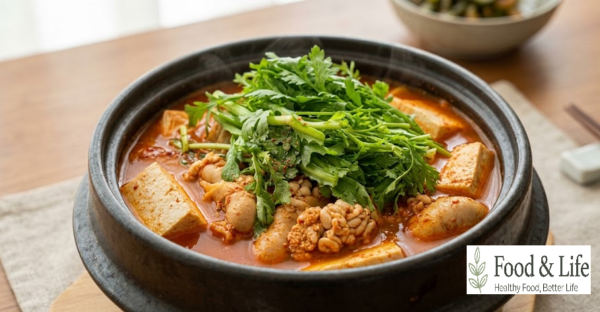
When you’re craving a hot, spicy soup with a clean and refreshing broth, Korean pollock roe soup made with frozen pollock, roe, and milt is a satisfying choice.
The key to reducing the fishy smell is thoroughly cleaning the frozen pollock, especially the dark membrane and any blood clots inside the cavity. Doenjang, gochujang, cooking wine, and ginger are then added to create a savory, spicy broth. Simmering the pollock, roe, milt, and Korean radish in 1 L (33.8 fl oz) of water and skimming off the foam as it rises helps keep the soup clean-tasting rather than heavy or cloudy.
Tender pollock, rich roe and milt, and a spicy, warming broth come together in a hearty Korean soup that is especially comforting on chilly days.
⏱️ Cooking Time: About 20 minutes
🍳 Difficulty: ★★☆☆☆
✓ Ingredients
🥣 Main Ingredients
- 1 whole frozen pollock
- Pollock roe and milt, to taste
- 200 g (7.1 oz) Korean radish
- 1/2 block tofu
- 1 green onion
- 1 handful crown daisy greens
🧂 Broth & Seasonings
- 1 L (33.8 fl oz) water
- 2 tbsp gochujang (Korean red pepper paste)
- 1 tbsp doenjang (Korean fermented soybean paste)
- 4 tbsp Korean soup soy sauce
- 1 tbsp cooking wine
- 4 tbsp gochugaru (Korean red pepper flakes)
- 2 tbsp minced garlic
- 1/2 tbsp minced ginger
- 2 tbsp tuna seasoning sauce
- Black pepper, to taste
(Measurement guide: 1 tbsp = 15 ml, 1 tsp = 5 ml, 1 Korean paper cup = 180 ml / 6.1 fl oz)
✓ How to Make Spicy Korean Pollock Roe Soup
- Clean the pollock: Rinse 1 whole frozen pollock thoroughly under running water. Carefully remove the dark membrane and any blood clots from inside the cavity.
- Add the water and radish: Pour 1 L (33.8 fl oz) water into a pot and add the Korean radish cut into thin rectangular slices.
- Add the pollock, roe, and milt: Add the cleaned pollock along with as much roe and milt as you like. Lightly score the surface of the roe so the broth and seasoning can penetrate more evenly as it cooks and the roe stays tender.
- Add the tofu: Cut 1/2 block tofu into bite-size pieces and add it before boiling so the seasoning can soak into the tofu.
- Add the seasonings and boil: Add 2 tbsp gochujang, 1 tbsp doenjang, 4 tbsp Korean soup soy sauce, 1 tbsp cooking wine, 4 tbsp gochugaru, 2 tbsp minced garlic, 1/2 tbsp minced ginger, and 2 tbsp tuna seasoning sauce. Bring everything to a vigorous boil over high heat.
- Skim the foam: As the soup boils, periodically remove any foam and impurities that rise to the surface with a spoon.
- Add the green onion: Once the ingredients are cooked and the broth has developed flavor, add 1 diagonally sliced green onion and simmer once more over medium heat.
- Finish with black pepper and crown daisy: Just before turning off the heat, add black pepper to taste and top with 1 handful of crown daisy greens.
✓ Key Tips for Success
- Remove the dark membrane and blood clots thoroughly: If the dark membrane and coagulated blood around the bones and inner cavity are not completely removed, the broth can develop a bitter, muddy, or fishy taste. Scrape them away carefully with a brush or spoon under running water.
- Skim the foam as soon as the soup begins to boil: Protein and other impurities rise to the surface as foam. Leaving them in the pot can make the broth cloudy and heavy, so skim the surface carefully for a cleaner, more refreshing flavor.
✓ Serving Tips
- After eating most of the pollock and other ingredients, add ramen noodles or sujebi dough pieces to the remaining broth and simmer for a filling second course.
- The spicy, full-flavored broth pairs especially well with hot steamed rice.
✓ How to Choose Good Frozen Pollock
- Skin and scales: Choose pollock with scales that remain evenly attached to the skin, a slightly glossy surface, and no noticeable discoloration.
- Firmness of the flesh: The frozen flesh should feel firm and solid rather than dried out or severely dehydrated.
✓ Frozen Pollock Nutrition per 100 g (3.5 oz)
| Nutrient | Amount per 100 g (3.5 oz) |
|---|---|
| Calories | 72.00 kcal |
| Carbohydrates | 0.10 g |
| Protein | 15.90 g |
| Fat | 0.50 g |
| Sodium | 210.00 mg |
Values are based on 100 g (3.5 oz) of frozen pollock. Actual nutritional values may vary depending on variety, portion, product, and cooking method.
Source: Ministry of Food and Drug Safety Food Nutrition Database
✓ Frequently Asked Questions (FAQ)
Q1. Why should I score the pollock roe before cooking it?
Lightly scoring the surface helps the broth and seasoning penetrate the roe more evenly as it cooks. It also helps prevent the roe from becoming too dense, giving it a softer texture.
Q2. Why does the broth sometimes taste heavy or fishy?
This usually happens when the dark membrane and blood clots inside the pollock are not completely removed, or when the foam that forms during boiling is not skimmed off promptly. Thorough cleaning and careful skimming help keep the broth clear and refreshing.
Q3. What can I use instead of tuna seasoning sauce?
You can substitute the same amount, 2 tbsp, of anchovy fish sauce or sand lance fish sauce to add a similar savory depth to the broth.
Following this method helps reduce the characteristic fishy smell of frozen pollock while allowing the doenjang, gochujang, and ginger to create a clean, spicy, and deeply savory broth. The tender pollock pairs well with the rich roe and milt, making every spoonful satisfying alongside steamed rice.
If you’re craving a hot and spicy Korean soup, try this spicy Korean pollock roe soup recipe using the same cleaning method and seasoning ratio. It makes a hearty family meal or a comforting dinner when you want something warm with plenty of broth and generous ingredients.
Save or bookmark this recipe so you can easily find it later, and share it with someone who enjoys Korean home cooking.
More approachable recipes and practical cooking tips are coming. If there is a dish or recipe you would like to see next, feel free to leave a comment. 😊