
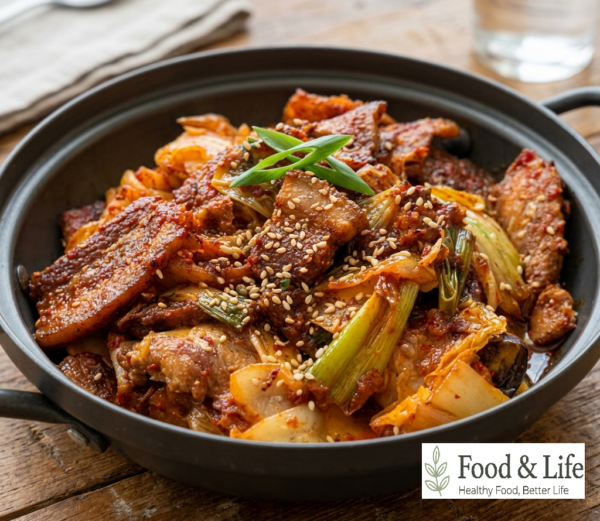
Sometimes plain grilled pork belly just doesn’t feel quite satisfying enough, especially when you’re craving something bold and hearty. This Korean pork belly with kimchi recipe cooks green onion and well-fermented kimchi directly in the rich pork fat, creating deep, savory flavor without needing a long list of ingredients. Everything comes together quickly in one pan, making it an easy option for dinner or a flavorful dish to serve with drinks.
Enjoy golden-brown pork belly with spicy, tangy kimchi, all coated in the rich flavor released from the pork as it cooks.
⏱️ Cooking Time: About 20 minutes
🍳 Difficulty: ★★☆☆☆
✓ Ingredients
🥣 Main Ingredients
- 500 g (17.6 oz / 1.1 lb) pork belly slices for grilling
- 500 g (17.6 oz / 1.1 lb) well-fermented sour kimchi
- 1 green onion
🧂 Sauce & Seasonings
- 3 tbsp tuna extract sauce
- 1 tbsp gochugaru (Korean red pepper flakes)
- 1 tbsp sugar
(Measurement guide: 1 tbsp = 15 ml, 1 tsp = 5 ml, 1 Korean paper cup = 180 ml / 6.1 fl oz)
✓ How to Make Korean Pork Belly with Kimchi
- Cook the pork belly: Place the pork belly in a preheated pan and cook both sides until nicely golden brown.
- Cut the pork: Cut the cooked pork belly into bite-size pieces, then move it to one side of the pan.
- Cook the green onion: Split the green onion lengthwise, cut it into large pieces, and add it to the rendered pork fat. Cook for about 2 minutes. This allows the green onion aroma to infuse the pork fat and deepen the overall flavor.
- Combine the pork and green onion: Mix the cooked pork belly and green onion evenly, then move them back to one side of the pan.
- Cook the kimchi: Add the bite-size pieces of kimchi to the remaining pork fat and cook until thoroughly softened and browned. Cooking the kimchi in pork fat mellows its sharp sourness and brings out its savory flavor.
- Season and finish: Mix all the ingredients together, then add the tuna extract sauce, gochugaru, and sugar. Stir-fry quickly over high heat for about 2 minutes to finish.
✓ Key Tips for Success
- Cook the pork belly first until it is well browned and has released enough fat. Using that rendered pork fat to cook the green onion and kimchi helps the seasonings cling to the ingredients and gives the entire dish a deeper, richer flavor.
✓ Serving Tips
- If your kimchi tastes especially sour, add about 1/2 tsp more sugar to soften the acidity.
- For extra nutty aroma, drizzle 1/2 tbsp sesame oil over the dish at the end and sprinkle with sesame seeds.
- Chop any leftover pork and kimchi into smaller pieces with kitchen scissors, then stir-fry them with rice and roasted seaweed flakes to make Korean-style fried rice.
✓ How to Choose Good Pork Belly
- Meat and fat color: Choose pork belly with bright light-pink to reddish-pink meat. The fat should be firm, evenly textured, and milky white.
- Firmness and surface condition: Fresh pork should feel springy when lightly pressed and quickly return to its original shape. Avoid meat with excessive surface moisture, liquid seepage, or a sticky texture.
- Balance of fat and lean meat: Look for pork belly with evenly alternating layers of lean meat and fat. Avoid pieces that appear overly coarse or dry.
✓ Pork Belly Nutrition per 100 g (3.5 oz)
| Nutrient | Amount per 100 g (3.5 oz) |
|---|---|
| Calories | 372.00 kcal |
| Carbohydrates | 0.00 g |
| Protein | 13.90 g |
| Fat | 33.31 g |
| Sodium | 56.00 mg |
Values are based on 100 g (3.5 oz) of raw pork belly. Actual nutrition values may vary depending on breed, cut, product, and cooking method.
Source: Ministry of Food and Drug Safety Food Nutrition Database – Raw Ingredients
✓ Frequently Asked Questions (FAQ)
Q1. Can I cook the pork belly, kimchi, and green onion all together from the beginning?
It is better to cook them separately at first. If everything goes into the pan at once, the kimchi releases moisture and the pork can steam instead of browning, resulting in less flavor and a softer texture.
Q2. Why does the seasoning burn while the kimchi becomes too watery?
Too much kimchi liquid can create excess moisture, while leaving the seasoned kimchi over high heat for too long can cause the gochugaru-based seasoning to burn. Shake off some of the excess kimchi liquid first, then cook the kimchi directly in the pork fat while stirring as needed.
Golden-brown pork belly served with kimchi cooked in savory pork fat and fragrant green onion makes a satisfying meal even without many side dishes. If you have leftovers, chop the pork and kimchi into smaller pieces and stir-fry them with rice and roasted seaweed flakes for an easy fried rice finish.
This Korean pork belly with kimchi recipe is a simple way to turn a few familiar Korean ingredients into a rich and flavorful one-pan meal.
If you found this recipe helpful, save or bookmark it for later and share it with someone who enjoys Korean food.
More approachable recipes and practical cooking tips will continue to be added. 😊
If there is a dish you have been curious about or a recipe you would like to see next, feel free to leave a comment. 😊