
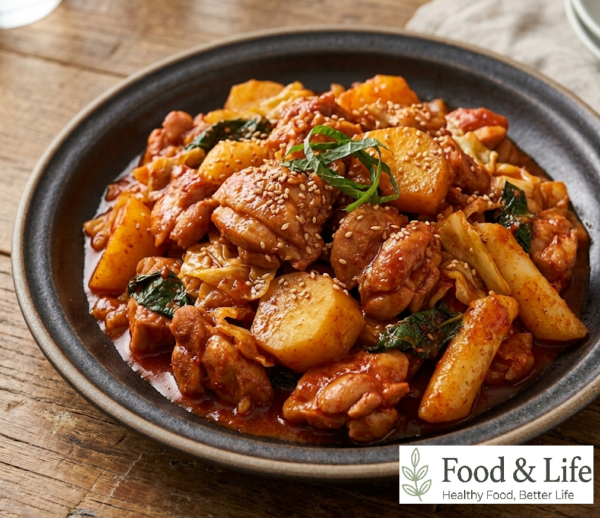
Making dakgalbi at home can be tricky when the sauce burns too quickly or the chicken turns dry before everything is fully cooked. This easy dakgalbi recipe uses a generous layer of cabbage to release natural moisture into the pan, helping the spicy-sweet sauce stay rich and glossy while keeping the chicken thighs tender. Add sweet potato and tteok (Korean rice cakes) if you like for an even more satisfying one-pan dinner.
Enjoy tender, chewy chicken and crisp-tender cabbage coated in a deeply reduced, spicy-sweet Korean sauce.
⏱️ Cooking Time: About 30 minutes (excluding marinating time)
🍳 Difficulty: ★★☆☆☆
✓ Ingredients
🥣 Main Ingredients
- 500 g (17.6 oz / 1.1 lb) boneless chicken thighs
- 300 g (10.6 oz) cabbage
- 1/2 stalk green onion
- 3 tbsp cooking oil
- Sweet potato, as desired (optional)
- Tteok (Korean rice cakes), as desired (optional)
🧂 Sauce & Seasonings
- 2.5 tbsp soy sauce
- 2.5 tbsp cooking wine
- 2.5 tbsp gochujang
- 2.5 tbsp gochugaru (Korean red pepper flakes)
- 2.5 tbsp corn syrup
- 1 tbsp minced garlic
- 1 tbsp oyster sauce
- 0.5 tbsp curry powder
- 0.5 tbsp ginger juice (or ginger powder)
(Measurement guide: 1 tbsp = 15 ml, 1 tsp = 5 ml, 1 Korean paper cup = 180 ml / 6.1 fl oz)
✓ How to Make Dakgalbi
- Make the sauce: Add the soy sauce, cooking wine, gochujang, gochugaru, corn syrup, minced garlic, oyster sauce, curry powder, and ginger juice to a bowl. Mix until evenly combined.
- Prep the chicken thighs: Lightly score both sides of the chicken thighs so the marinade can penetrate more evenly.
- Marinate the chicken: Coat the prepared chicken thoroughly with the sauce and let it marinate for at least 30 minutes. Allowing enough marinating time helps the seasoning penetrate the chicken and gives it a deeper savory flavor.
- Prep the vegetables: Cut the cabbage into large bite-size pieces and slice the green onion diagonally.
- Layer the ingredients in the pan: Heat a large pan over medium heat and add 3 tbsp cooking oil. Spread the cabbage evenly across the bottom, then layer the sweet potato, tteok, and marinated chicken on top in that order. Keeping the cabbage underneath allows it to release moisture as it cooks, which helps prevent the sauce from burning.
- Let the cabbage soften: Cover the pan, or leave it uncovered, and let everything cook undisturbed for about 3 minutes until the cabbage begins to soften.
- Stir-fry over medium heat: Gently toss the ingredients from bottom to top and cook over medium heat for about 15 minutes, mixing occasionally so everything cooks evenly.
- Cut and reduce the sauce: Once the chicken is cooked, use kitchen scissors to cut it into bite-size pieces. Continue cooking over medium-low heat for another 5 minutes until the sauce reduces and coats the ingredients.
✓ Key Tips for Success
- Marinated chicken can burn quickly over high heat. Spread plenty of cabbage across the bottom of the pan and keep the heat at medium. Wait until the vegetables naturally release some moisture before mixing everything together so the sauce stays moist instead of sticking and burning.
✓ Serving Tips
- After finishing the chicken, add cooked rice, finely chopped kimchi, roasted seaweed flakes, and sesame oil to the remaining sauce and stir-fry everything together for Korean-style fried rice.
- For a milder, creamier finish, add plenty of mozzarella cheese at the end, cover the pan, and let it melt before serving.
- Serve the dakgalbi with perilla leaves or ssam-mu (Korean pickled radish wraps) for a fresh aroma and crisp, refreshing contrast.
✓ How to Choose Fresh Chicken
- Skin and meat color: Choose chicken with pale apricot-colored skin that has a slight sheen. The meat should look clear pink rather than pale or dull.
- Firm texture: Fresh chicken should feel firm and spring back when lightly pressed with a finger rather than remaining soft or mushy.
- Surface and packaging: Look for refrigerated chicken without bruising, damaged skin, discoloration, excessive liquid collecting in the package, or an unusual odor.
Source: Rural Development Administration Nongsaro – Tips for Choosing and Storing Livestock Products
✓ Chicken Thigh Nutrition per 100 g (3.5 oz)
| Nutrient | Amount per 100 g (3.5 oz) |
|---|---|
| Calories | 144.00 kcal |
| Carbohydrates | 0.0 g |
| Protein | 19.41 g |
| Fat | 7.67 g |
| Sodium | 84.00 mg |
Based on 100 g of raw chicken thigh. Actual nutrition values may vary depending on breed, cut, product, and cooking method.
Source: Food Safety Korea Food Nutrition Database – Chicken, Thigh, Raw
✓ Frequently Asked Questions (FAQ)
Q1. How do I know when the chicken thighs are fully cooked?
Cut through the thickest part of a chicken thigh with kitchen scissors. The chicken is cooked when there is no red or pink meat inside, the juices run clear, and the center has turned completely white.
Q2. Why does the dakgalbi sauce keep burning on the bottom of the pan?
This usually happens when there is not enough moisture-rich cabbage on the bottom or the heat is too high. Reduce the heat to medium and add 1–2 tbsp of water while stir-frying to restore moisture.
Q3. Can I use ginger powder instead of ginger juice?
Yes. The original recipe allows ginger powder to be used in place of ginger juice. Keep the same amount listed in the recipe.
Tender chicken thighs coated in spicy-sweet sauce pair perfectly with cabbage that turns naturally sweet as it cooks. Once the dakgalbi is gone, use the flavorful sauce left in the pan to make fried rice for a hearty finish.
This dakgalbi recipe makes an easy and satisfying one-pan dinner to enjoy with family at home.
If you found this recipe helpful, save or bookmark it for later and share it with someone who loves Korean food.
More approachable Korean recipes and practical cooking tips will be coming your way. If there is a dish you would like to see next, feel free to leave a comment. 😊