
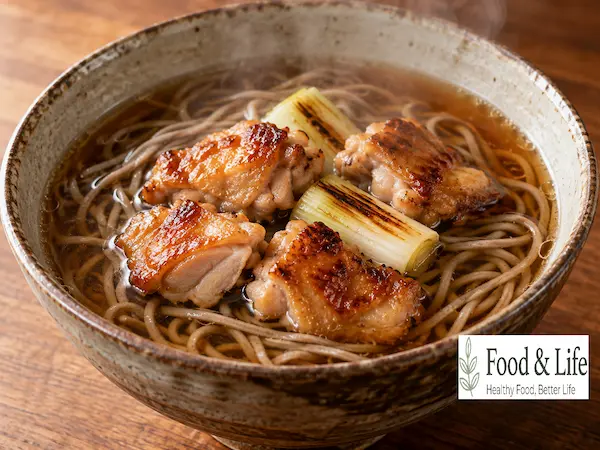
When you want a warm bowl of Japanese soba at the end of the year, this chicken and green onion soba is simple to prepare while still making a satisfying meal.
This Toshikoshi Soba recipe starts by browning chicken thighs skin-side down, then grilling green onion in the rendered chicken fat. A savory tsuyu is made with soy sauce, mirin, Cheongha, and katsuobushi. The bonito flakes are microwaved for 30 seconds to remove excess moisture, then finely crushed before being added to the broth. The cooked soba noodles are rinsed in cold water, drained well, and gently reheated in the broth just until warm.
The result is a comforting bowl of Japanese hot soba with tender chicken, lightly charred green onion, savory bonito umami, and springy buckwheat noodles.
⏱️ Cooking Time: 20 minutes
🍳 Difficulty: ★★☆☆☆
✓ Ingredients
🥣 Main Ingredients
- 1 serving soba noodles
- 90 g (3.2 oz) chicken thigh
- 20 cm (about 8 in) white part of a green onion
🧂 Sauce & Seasonings
- 3 g (0.1 oz) katsuobushi (dried bonito flakes)
- 2 tbsp soy sauce
- 2 tbsp mirin
- 2 tbsp Cheongha (Korean rice wine)
- 2 tsp sugar
- 300 ml (10.1 fl oz) water
(Measurement guide: 1 tbsp = 15 ml, 1 tsp = 5 ml, 1 Korean paper cup = 180 ml)
✓ How to Make Toshikoshi Soba
- Prepare the katsuobushi: Place 3 g of katsuobushi in the microwave and heat at 700W for 30 seconds to remove excess moisture. Crush it finely with your hands.
- Mix the tsuyu seasoning: Combine 2 tbsp soy sauce, 2 tbsp mirin, 2 tbsp Cheongha, and 2 tsp sugar. Stir until the sugar dissolves.
- Cut the green onion and chicken: Cut the 20 cm white section of green onion into pieces about 5 cm (2 in) long. Cut 90 g of chicken thigh into bite-size pieces.
- Brown the chicken: Place the chicken thigh skin-side down in a skillet and cook until golden brown. Flip and brown the other side as well.
- Grill the green onion: Once the chicken is browned on both sides, add the green onion. Turn the pieces in the rendered chicken fat and cook until lightly browned on the surface.
- Cook the seasoning mixture: Pour the prepared seasoning mixture into the skillet and cook for another 2 minutes.
- Finish the tsuyu: Add 300 ml (10.1 fl oz) water and the finely crushed katsuobushi. Once the broth returns to a boil, reduce the heat to low and let it gently simmer.
- Cook the soba noodles: Cook 1 serving of soba according to the package directions. Rinse thoroughly under cold water, then drain very well.
- Warm the soba: Add the cooked soba noodles to the gently simmering tsuyu over low heat. Heat only until the noodles are warmed through.
- Assemble the bowl: Transfer the warm soba noodles to a serving bowl. Top with the browned chicken thigh and grilled green onion, then pour over the hot tsuyu.
✓ Key Tips for Success
- Brown the chicken and green onion before adding the tsuyu: Adding the liquid before the chicken is properly browned makes it harder to develop the roasted flavor. Start with the chicken skin-side down, brown it well, then cook the green onion in the rendered chicken fat before adding the seasoning mixture.
- Drain the cooked soba thoroughly: Too much water left on the rinsed noodles can dilute the tsuyu. Rinse the soba well in cold water to maintain its springy texture, drain thoroughly, and reheat it in the broth only until warm.
✓ Serving Tips
- Soba noodles vary in buckwheat content and texture depending on the product. Choose the type you prefer and follow the cooking time listed on the package.
- After rinsing the cooked noodles in cold water, avoid simmering them for too long in the hot tsuyu. Reheat them only until warm to help preserve the characteristic springy texture of soba.
- Rolling the green onion in the rendered chicken fat as it cooks adds roasted flavor to both the chicken and onion without needing additional cooking oil.
✓ How to Choose Good Chicken Thighs
- Skin and meat color: Look for chicken with lightly peach-colored, glossy skin and clear pink meat rather than pale or dull-looking flesh.
- Firm texture: When gently pressed, the meat should feel firm and spring back rather than remaining soft or indented.
- Surface and packaging: Choose chicken without bruising, visible damage, or discoloration. Avoid packages with excessive liquid pooled inside.
✓ Chicken Thigh Nutrition per 100 g (3.5 oz)
| Nutrient | Amount per 100 g (3.5 oz) |
|---|---|
| Calories | 144.00 kcal |
| Carbohydrates | 0.00 g |
| Protein | 19.41 g |
| Fat | 7.67 g |
| Sodium | 84.00 mg |
Based on 100 g of raw chicken thigh. Actual nutrition may vary depending on the breed, cut, product, and cooking method.
Source: Food Safety Korea Food Nutrition Database – Chicken, Thigh, Raw
✓ Frequently Asked Questions (FAQ)
Q1. How long should I cook soba noodles?
Cook the soba according to the time listed on the package. Cooking times vary depending on noodle thickness and buckwheat content, so the package directions are the best guide.
Q2. Why do my soba noodles become too soft?
Soba can soften quickly if it simmers too long in hot broth. Cook the noodles according to the package directions, rinse them in cold water, then warm them briefly in the tsuyu over low heat.
Golden-brown chicken thigh brings a savory roasted flavor and tender texture that pairs naturally with the warm soba broth. The green onion, cooked in the rendered chicken fat, develops lightly charred edges that add another layer of aroma to the soup.
The tsuyu combines soy sauce, mirin, Cheongha, and katsuobushi for a salty, savory broth with plenty of umami. Because the soba noodles are rinsed in cold water before being gently reheated, they retain a springier texture instead of becoming overly soft. The clear brown broth topped with chicken and thick pieces of grilled green onion also makes this a satisfying complete noodle bowl.
I especially enjoyed having plenty of toppings along with the noodles and broth. Browning the chicken first and then using the rendered fat to cook the green onion created a rich roasted aroma without adding extra oil. Drying the katsuobushi briefly in the microwave before crushing it also helped its flavor stand out clearly in the soy-based tsuyu.
Gently reheating the cold-rinsed noodles at the very end made it possible to enjoy both a hot broth and springy soba. My family also enjoyed the combination of grilled chicken, green onion, and savory broth, making this a comforting bowl I would gladly prepare again during the year-end season.
If you are looking for a warm Toshikoshi Soba recipe with savory bonito-soy tsuyu, browned chicken, and grilled green onion, this version is simple enough to make at home without a long ingredient list.
Save or bookmark this recipe so you can easily find it again, and share it with anyone who enjoys Japanese noodle dishes.
I’ll continue sharing approachable recipes and practical cooking tips that are easy to follow at home. If there is a dish or recipe you would like to see next, feel free to leave a comment. 😊
※ This recipe was prepared with reference to a recipe introduced by the YouTube channel ‘일식예보’, then written based on my own cooking process and results.