
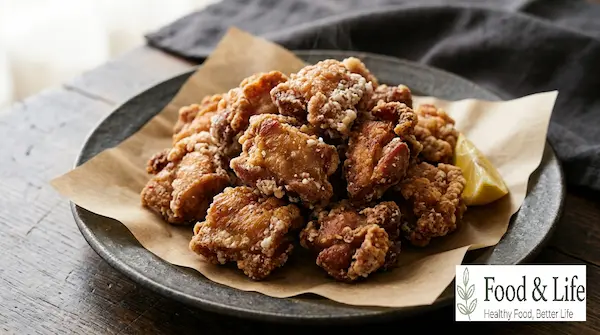
When making Japanese fried chicken at home, two things make the biggest difference: letting the chicken thighs absorb the seasoning and keeping the frying oil at the right temperature.
This chicken karaage recipe marinates 300 g (10.6 oz) of chicken thigh with garlic, ginger, Cheongha, and soy sauce for 30 minutes to build flavor. The chicken is first coated with flour to hold the marinade in place, then covered with starch before being fried at 170°C (338°F) for 4 minutes. This two-step coating creates the rough, crispy exterior that makes karaage so satisfying.
Inside the golden crust, the chicken thigh stays tender and juicy. It works well as a main dish with rice or as an easy Japanese-style meal.
⏱️ Cooking Time: About 45 minutes
🍳 Difficulty: ★★☆☆☆
✓ Ingredients for 2 Servings
🥣 Main Ingredient
- 300 g (10.6 oz) chicken thigh
🧂 Seasonings & Coating
- 1 tsp minced garlic
- 1 tsp minced ginger
- 1 pinch salt
- 1 pinch black pepper
- 1 tbsp Cheongha (Korean rice wine)
- 1 tbsp regular soy sauce
- 1 tsp sesame oil
- 2 tbsp all-purpose flour
- 2 tbsp starch
- Cooking oil, for frying
(Measurement guide: 1 tbsp = 15 ml, 1 tsp = 5 ml, 1 Korean paper cup = 180 ml)
✓ How to Make Chicken Karaage
- Prepare the chicken: Trim any obvious excess fat from 300 g (10.6 oz) chicken thigh. Cut the meat into similar bite-size pieces, then pat both sides dry with paper towels.
- Add the first seasonings: Add 1 tsp minced garlic and 1 tsp minced ginger to the chicken and mix well. Add 1 pinch each of salt and black pepper, then massage the seasonings evenly into the meat.
- Finish seasoning and marinate: Add 1 tbsp Cheongha and 1 tbsp regular soy sauce. Massage the chicken thoroughly again, then mix in 1 tsp sesame oil. Let it marinate at room temperature for 30 minutes.
- Coat with flour: Add 2 tbsp all-purpose flour to the marinated chicken. Mix until the flour evenly coats the chicken and holds the marinade against the surface.
- Coat with starch: Spread 2 tbsp starch on a wide plate. Press each piece of chicken into the starch so the outside is evenly coated.
- Heat the frying oil: Heat the cooking oil to 170°C (338°F). If you do not have a thermometer, dip the tip of a wooden chopstick into the oil. The oil is ready when small bubbles steadily rise around the submerged tip.
- Fry for 4 minutes: Carefully add the coated chicken to the 170°C (338°F) oil and fry for a total of 4 minutes. After 2 minutes, turn the pieces over so they cook evenly on both sides.
- Finish until crispy: During the final minute, occasionally lift the chicken briefly above the oil so the surface is exposed to air before lowering it back in. Once the karaage is evenly golden and crisp, remove it and drain on a wire rack.
✓ Key Tips for Success
- Keep the oil at 170°C (338°F): If the oil is too hot, the coating can brown before the chicken cooks through. If the temperature is too low, the coating may absorb excess oil and become greasy. Maintain 170°C (338°F) and fry for the full 4 minutes.
- Use flour and starch in the correct order: Coat the seasoned chicken with 2 tbsp flour first, then press 2 tbsp starch onto the outside. The starch should form a slightly uneven, textured surface, which helps create the crisp exterior after frying.
✓ Serving Tips
- Let the freshly fried karaage drain briefly on a wire rack, then serve it while still warm. This is when the contrast between the crispy coating and juicy chicken thigh is at its best.
- Because the chicken is seasoned with soy sauce, ginger, and garlic, it pairs especially well with a bowl of warm rice as a main dish.
✓ How to Choose Good Chicken Thighs
- Skin and meat color: Look for chicken with lightly peach-colored, glossy skin. The meat should have a clear pink color rather than looking pale.
- Firm texture: When gently pressed with a finger, the meat should feel firm and spring back instead of remaining soft or indented.
- Surface and packaging: Choose chicken without bruising, visible damage, or discoloration. Avoid packages with an excessive amount of liquid pooled inside.
✓ Chicken Thigh Nutrition per 100 g (3.5 oz)
| Nutrient | Amount per 100 g (3.5 oz) |
|---|---|
| Calories | 144.00 kcal |
| Carbohydrates | 0.00 g |
| Protein | 19.41 g |
| Fat | 7.67 g |
| Sodium | 84.00 mg |
Based on 100 g of raw chicken thigh. Actual nutrition may vary depending on the breed, cut, product, and cooking method.
Source: Food Safety Korea Food Nutrition Database – Chicken, Thigh, Raw
✓ Frequently Asked Questions (FAQ)
Q1. What temperature and how long should I fry chicken karaage?
Heat the oil to 170°C (338°F) and fry the chicken for a total of 4 minutes. Turn the pieces after 2 minutes, and during the final minute, briefly expose them to the air a few times to help crisp the surface.
Q2. Why is my karaage greasy instead of crispy?
If the frying oil is too cool, the coating can absorb too much oil and become greasy. Keep the oil at 170°C (338°F), and coat the chicken with flour first and starch second for a crispier exterior.
Q3. Can I use freshly grated ginger instead of minced ginger?
Yes. Use 1 tsp freshly grated ginger in place of the minced ginger and mix it evenly into the chicken thigh.
Finished karaage has a rough, craggy coating that turns deep golden as it fries, making the crisp texture visible even before the first bite. Underneath that crunchy exterior, the chicken thigh stays moist and tender, creating a satisfying contrast in texture.
Soy sauce, garlic, and ginger season the chicken with a savory, aromatic flavor that carries into the meat itself. Sesame oil adds a subtle nutty richness to the marinade without overpowering the soy-based seasoning. The golden exterior and juicy interior make this a simple chicken dish that still looks especially appetizing on the table.
I prefer fried chicken with a light, crisp coating rather than a thick layer of batter, so this method worked particularly well for me. Seasoning the chicken step by step with garlic and ginger, then letting it marinate for 30 minutes, gives the chicken enough flavor to enjoy without an additional dipping sauce.
The flour-and-starch coating is also straightforward enough for making karaage at home. My family enjoyed the combination of the crunchy exterior and juicy chicken, especially the balance of savory soy sauce with the subtle aroma of ginger and garlic. It works well with rice and is also easy to enjoy piece by piece while still warm.
If you want to make crispy chicken karaage with juicy chicken thigh at home, follow the seasoning order and keep the frying oil at 170°C (338°F). With familiar ingredients and a simple coating method, you can prepare Japanese-style fried chicken that is easy to enjoy with the whole family.
Save or bookmark this recipe so you can easily find it again, and share it with anyone who enjoys Japanese home cooking.
I’ll continue sharing approachable recipes and practical cooking tips that are easy to follow at home. 😊
If there is a dish you are curious about or a recipe you would like to see next, feel free to leave a comment. 😊
※ This recipe was prepared with reference to a recipe introduced by the YouTube channel ‘일식예보’, then written based on my own cooking process and results.