
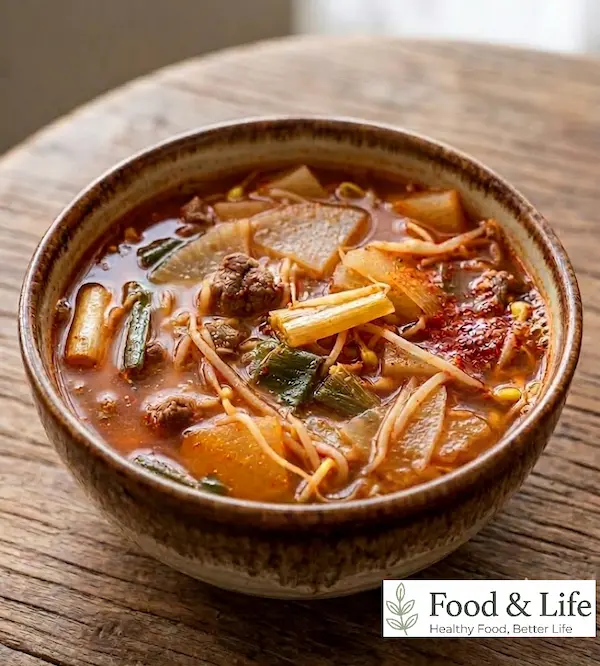
The key to this spicy Korean beef radish soup recipe is to sauté 250 g (8.8 oz) of soup-cut beef in sesame oil and cooking oil, add 3 tbsp gochugaru to create a flavorful chili oil, then thoroughly stir-fry the seasoned Korean radish and green onions before adding the water.
The 300 g (10.6 oz) of Korean radish and 2 green onions are first seasoned with 2 tbsp soup soy sauce, 2 tbsp tuna extract, and 2 tbsp anchovy fish sauce. After adding 1.5 L (50.7 fl oz) of water, the soup is simmered over medium heat for 20 minutes to develop the broth. Finally, add 150 g (5.3 oz) soybean sprouts, cover, and cook for another 5 minutes. The result is a Gyeongsang-style beef radish soup with rich beef flavor, naturally sweet radish, and the clean, crisp taste of soybean sprouts.
With its spicy, warming broth and tender beef, this soup is especially satisfying when you want a hearty Korean soup to serve with rice or enjoy with rice mixed directly into the broth.
⏱️ Cooking Time: About 35 minutes
🍳 Difficulty: ★★☆☆☆
✓ Ingredients
🥣 Main Ingredients
- Soup-cut beef 250 g (8.8 oz)
- Korean radish 300 g (10.6 oz)
- 2 green onions
- Soybean sprouts 150 g (5.3 oz)
- 1 Cheongyang chili pepper
🧂 Sauce & Seasonings
- Soup soy sauce 2 tbsp
- Tuna extract 2 tbsp
- Anchovy fish sauce 2 tbsp
- Cooking oil 2 tbsp
- Sesame oil 1 tbsp
- Gochugaru (Korean red pepper flakes) 3 tbsp
- Water 1.5 L (50.7 fl oz)
- Minced garlic 1 tbsp
- Black pepper, a little
- Beef Dashida seasoning 1/2 tbsp
(Measurement guide: 1 tbsp = 15 ml, 1 tsp = 5 ml, 1 Korean paper cup = 180 ml / 6.1 fl oz)
✓ How to Make Spicy Korean Beef Radish Soup
- Prep and season the vegetables: Cut 300 g (10.6 oz) Korean radish into long pieces, then cut into square pieces suitable for soup. Split the white parts of 2 green onions lengthwise and cut them into finger-length pieces. Place the radish and green onions in a bowl, add 2 tbsp soup soy sauce, 2 tbsp tuna extract, and 2 tbsp anchovy fish sauce, and toss evenly to season.
- Sauté the beef: Add 2 tbsp cooking oil and 1 tbsp sesame oil to a pot. Add 250 g (8.8 oz) soup-cut beef and sauté until the beef is thoroughly cooked.
- Add the gochugaru to make chili oil: Once the beef is cooked, add 3 tbsp gochugaru and stir-fry it with the meat. Cook briefly to remove the raw flavor of the chili flakes and create a red chili-infused oil.
- Stir-fry the seasoned vegetables: Add the seasoned radish and green onions to the pot, including all of the seasoning liquid left in the bowl. Stir-fry thoroughly so the vegetables absorb the seasoning and begin releasing their flavor.
- Add the water and remaining seasonings: Pour in 1.5 L (50.7 fl oz) water. Add 1 tbsp minced garlic, 1 sliced Cheongyang chili pepper, a little black pepper, and 1/2 tbsp beef Dashida seasoning. Bring to a boil over high heat.
- Simmer and cook the soybean sprouts: Once the soup comes to a boil, reduce to medium heat and simmer for 20 minutes. Add 150 g (5.3 oz) soybean sprouts, cover the pot, and cook for another 5 minutes to finish.
✓ Key Tips for Success
- Season and stir-fry the radish and green onions first: Tossing the radish and green onions with soup soy sauce, tuna extract, and anchovy fish sauce before cooking allows the seasoning to penetrate the vegetables. Stir-frying them thoroughly afterward also helps draw out their flavor, giving the broth a deeper savory taste.
- Control the heat when cooking the gochugaru: Add the 3 tbsp gochugaru only after the beef is fully cooked, then stir-fry it briefly to create chili oil. If the heat is too high, the chili flakes can burn and give the broth a bitter taste, so cook carefully until fragrant without scorching.
✓ Serving Tips
- Add freshly cooked warm rice directly to the soup and serve with well-fermented kkakdugi (cubed radish kimchi) or napa cabbage kimchi. The spicy, savory broth pairs especially well with both.
- After adding the soybean sprouts, cover the pot and cook them for 5 minutes. This helps prevent their characteristic raw aroma from affecting the broth while maintaining their crisp texture.
- The soup is delicious immediately after cooking, but you can also let it cool slightly and gently reheat it once more. This allows the flavors of the radish, beef, and green onions to blend even more deeply into the broth.
✓ How to Choose a Good Korean Radish
- Surface and shape: Choose a radish with a smooth, white surface, no cracks or visible damage, and a firm cylindrical shape.
- Weight: A radish that feels heavy for its size is less likely to be hollow inside and tends to contain plenty of moisture.
- Green upper section: Choose a radish with a vivid green upper section covering about one-third of its length. This indicates that the radish received sufficient sunlight and has good sweetness and texture.
Source: Rural Development Administration Nongsaro – How to Choose a Good Radish
✓ Korean Radish Nutrition per 100 g (3.5 oz)
| Nutrient | Amount per 100 g (3.5 oz) |
|---|---|
| Calories | 21.00 kcal |
| Carbohydrates | 4.72 g |
| Protein | 0.77 g |
| Fat | 0.15 g |
| Sodium | 13.00 mg |
Based on 100 g of raw Korean radish. Actual nutrition values may vary depending on variety, plant part, product, and preparation method.
Source: Ministry of Food and Drug Safety Food Nutrition Database
✓ Frequently Asked Questions (FAQ)
Q1. Why should I season the radish and green onions with soup soy sauce, tuna extract, and anchovy fish sauce before cooking?
Pre-seasoning allows the vegetables themselves to absorb the seasoning. Stir-frying them afterward also draws out their juices and savory flavor, helping create a deeper, more balanced broth.
Q2. Why does my spicy beef radish soup taste bitter or overly harsh?
The gochugaru may have burned after being added to the cooked beef. Once the beef is done, adjust the heat and stir-fry the chili flakes only briefly, making sure they do not scorch while the chili oil develops.
Tender beef, softly cooked Korean radish, green onions, and crisp soybean sprouts come together in a spicy broth flavored with gochugaru for a hearty Gyeongsang-style beef radish soup. Pre-seasoning the radish and green onions with soup soy sauce, tuna extract, and anchovy fish sauce before stir-frying gives the broth a deeper savory flavor, while the beef adds richness.
If you are in the mood for something spicier than the usual clear Korean beef radish soup, try this Gyeongsang-style version made with gochugaru chili oil and soybean sprouts. It is especially satisfying served with warm rice and a side of kimchi or kkakdugi.
Save or bookmark this recipe so you can easily find it again later.
I’ll continue sharing approachable recipes and practical cooking tips that are easy to follow at home. 😊
If there is a dish you have been curious about or a recipe you would like to see next, feel free to leave a comment. 😊