
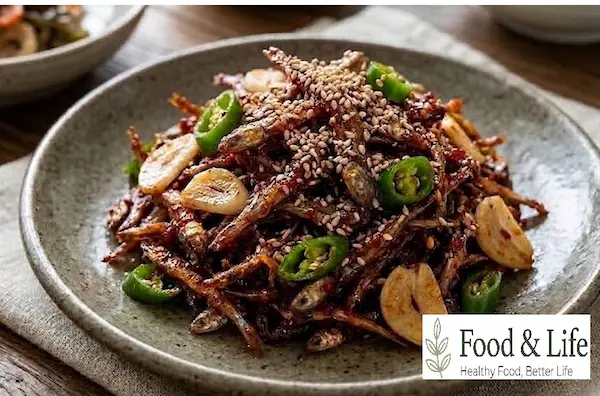
The key to making crispy Gochujang Myeolchi Bokkeum without the anchovies turning hard is to skip the starch syrup and quickly toss the toasted anchovies with the cooked sauce only after turning off the heat.
Start by lightly toasting 180 g (6.3 oz) of medium dried anchovies in a dry skillet to remove excess moisture and reduce their fishy aroma. Then make a sweet and spicy sauce with 5 tbsp gochujang, 1.5 tbsp gochugaru, 2 tbsp soy sauce, 2 tbsp sugar, and 100 ml (3.4 fl oz) water. Once the sauce comes to a boil, cook the sliced garlic and Cheongyang peppers for just 30 seconds, turn off the heat, and quickly toss in the anchovies. This helps keep the sauce from burning while preserving the anchovies’ crisp texture.
In about 15 minutes, you can make a flavorful Korean side dish with spicy-sweet gochujang, savory dried anchovies, aromatic garlic, and the sharp heat of Cheongyang peppers.
⏱️ Cooking Time: About 15 minutes
🍳 Difficulty: ★★☆☆☆
✓ Ingredients
🥣 Main Ingredients
- 180 g (6.3 oz) medium dried anchovies
- 2 Cheongyang peppers
- 10 garlic cloves
🧂 Sauce & Seasonings
- 5 tbsp cooking oil
- 5 tbsp gochujang (Korean red chili paste)
- 1.5 tbsp gochugaru (Korean red pepper flakes)
- 2 tbsp soy sauce
- 2 tbsp sugar
- 100 ml (3.4 fl oz) water
- 2 tbsp sesame oil
- A small amount of sesame seeds
(Measurement guide: 1 tbsp = 15 ml (0.5 fl oz), 1 tsp = 5 ml, 1 Korean paper cup = 180 ml (6.1 fl oz))
✓ How to Make Gochujang Myeolchi Bokkeum
- Prepare the garlic and peppers: Slice 2 Cheongyang peppers diagonally and thinly slice 10 garlic cloves.
- Toast the anchovies: Add 180 g (6.3 oz) dried anchovies to a dry skillet and lightly toast until crisp. This helps remove excess moisture and the strong fishy aroma. Transfer them to a sieve and shake out any small crumbs.
- Cook the gochujang sauce: Add 5 tbsp cooking oil, 5 tbsp gochujang, 1.5 tbsp gochugaru, 2 tbsp soy sauce, and 2 tbsp sugar to the skillet. Stir and cook until evenly combined, then add 100 ml (3.4 fl oz) water and bring the sauce to a boil.
- Cook the garlic and peppers: Once the sauce is bubbling, add the sliced garlic and Cheongyang peppers. Cook for exactly 30 seconds, then turn off the heat.
- Toss with the anchovies: With the heat completely off, add the toasted anchovies and quickly toss until evenly coated with the sauce. Finish with 2 tbsp sesame oil and a light sprinkle of sesame seeds.
✓ Key Tips for Success
- Skip the starch syrup: Adding a large amount of starch syrup to a gochujang-based sauce can cause the anchovies to become very hard after cooling. Leaving it out helps the anchovies stay pleasantly crisp without becoming overly firm.
✓ Serving Tips
- Serve the spicy-sweet anchovies with warm nurungji (Korean scorched rice) or over rice lightly mixed with water. The bold gochujang seasoning pairs especially well with mild rice dishes.
- Because this recipe does not use starch syrup, the anchovies are less likely to become overly hard or stiff after refrigeration, making them convenient for lunchboxes or weekday Korean side dishes.
✓ How to Choose Good Garlic
- Shape and appearance: For peeled garlic, choose plump cloves with slightly pointed tips. For whole garlic bulbs, look for bulbs with well-formed cloves and thin outer skin that fits closely around the bulb.
- Color and surface: Choose garlic with a clear, light color rather than a cloudy, milky appearance. Avoid cloves with discoloration or spots.
- Root end: Look for garlic with a relatively small root plate that is dry, firm, and not soft.
Source: Rural Development Administration Nongsaro – How to Choose Good Garlic
✓ Garlic Nutrition per 100 g (3.5 oz)
| Nutrient | Amount per 100 g (3.5 oz) |
|---|---|
| Calories | 128.00 kcal |
| Carbohydrates | 26.42 g |
| Protein | 7.45 g |
| Fat | 0.16 g |
| Sodium | 3.00 mg |
Based on 100 g of raw garlic. Actual nutrition values may vary depending on the variety, part used, product, and cooking method.
Source: Ministry of Food and Drug Safety Food Nutrition Database – Raw Food Ingredients
✓ Frequently Asked Questions (FAQ)
Q1. Why should I toast the dried anchovies before adding the sauce?
Lightly toasting the anchovies in a dry skillet helps remove excess moisture and reduce their strong fishy aroma. It also gives them a crisper texture before they are coated with the sauce.
Q2. Do I really need to turn off the heat before adding the anchovies?
Yes. Tossing the anchovies into the sauce while the heat is still on can cause the gochujang sauce to burn and develop a bitter taste. Turn off the heat first, then quickly toss the anchovies in the residual heat for a glossy coating and better texture.
Toasting the dried anchovies first and then quickly tossing them in the boiled gochujang sauce with the heat turned off allows the seasoning to coat them evenly while preserving their crisp texture. Using sugar instead of starch syrup for sweetness also helps prevent the anchovies from becoming excessively hard after refrigeration.
My family especially liked the combination of the spicy-sweet gochujang sauce with the sharp flavor of garlic and Cheongyang peppers, which pairs well with warm rice. Another advantage of this method is that the anchovies are not continuously heated with the sauce, reducing the chance of burning the gochujang or making the anchovies overly firm.
If your Korean spicy stir-fried anchovies usually become hard in the refrigerator or the sauce tends to burn, try boiling the sauce first, turning off the heat, and then tossing in the anchovies without using starch syrup. With just a few simple ingredients, you can prepare a crispy, spicy-sweet Korean side dish that keeps well for everyday meals.
If you found this recipe helpful, save or bookmark it for later and share it with someone who enjoys Korean food.
I’ll continue sharing practical recipes and cooking tips that are easy to follow at home. 😊
If there’s a dish you’re curious about or a recipe you’d like to see next, feel free to leave a comment. 😊
※ This recipe was adapted from a recipe featured on the YouTube channel “요리왕비룡 셰프TV.” I prepared the dish myself and wrote this post based on the cooking process and results.