
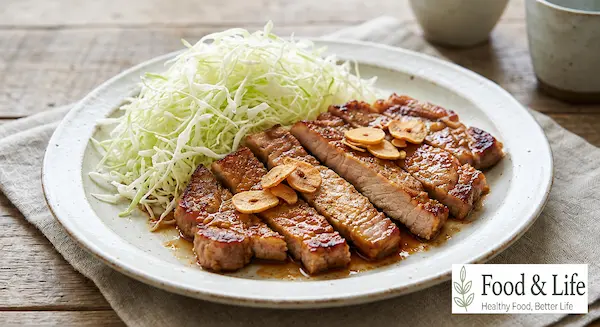
Tonteki is a Japanese-style pork steak made by pan-searing pork collar until golden brown, then simmering it briefly in a sweet and savory tare sauce.
For this Tonteki recipe, the connective tissue around the pork collar is scored first, then the meat is seasoned with salt and pepper and lightly coated with cake flour. The pork is seared in garlic-infused oil, covered, and gently cooked through to keep it tender and juicy. A tare sauce made with 1 tbsp soy sauce, 2 tbsp Cheongha, 2 tbsp mirin, 1/2 tbsp sugar, 1/2 tbsp oyster sauce, and 1 tsp minced garlic is then reduced around the pork, giving the surface a glossy finish and rich savory flavor.
Serve the pork with finely shredded cabbage and crispy garlic chips for a balanced combination of juicy meat, crunchy vegetables, and sweet-savory sauce.
⏱️ Cooking Time: About 20 minutes
🍳 Difficulty: ★★☆☆☆
✓ Ingredients
🥣 Main Ingredients
- 300 g (10.6 oz) pork collar, divided into 2 pieces of 150 g (5.3 oz) each
- 2 garlic cloves
- Cabbage, as needed
🧂 Sauce & Seasonings
- 2 pinches salt, for seasoning the pork
- 2 pinches black pepper, for seasoning the pork
- 1 tbsp cake flour (potato starch can be substituted)
- 1 tbsp soy sauce
- 2 tbsp Cheongha
- 2 tbsp mirin
- 1/2 tbsp sugar
- 1/2 tbsp oyster sauce
- 1 tsp minced garlic
- 2 tbsp cooking oil
Measurement guide: 1 tbsp = 15 ml, 1 tsp = 5 ml, 1 Korean paper cup = 180 ml (6.1 fl oz)
✓ How to Make Tonteki
- Prepare the vegetables: Remove the tough core from the cabbage, shred it thinly, rinse it in cold water, and drain well. Thinly slice the 2 garlic cloves, then use a toothpick to remove the center germ, which can contribute bitterness and burn easily.
- Prep and season the pork: Let the 300 g (10.6 oz) pork collar, divided into two 150 g (5.3 oz) steaks, sit at room temperature before cooking. Use the tip of a knife to make small cuts through the tough connective tissue where the lean meat meets the fat. Season both sides evenly with 2 pinches each of salt and black pepper, then lightly coat both sides with 1 tbsp cake flour. Potato starch can be used instead.
- Make the tare sauce: In a bowl, combine 1 tbsp soy sauce, 2 tbsp Cheongha, 2 tbsp mirin, 1/2 tbsp sugar, 1/2 tbsp oyster sauce, and 1 tsp minced garlic. Stir until the sugar dissolves.
- Make the garlic chips: Add 2 tbsp cooking oil and the sliced garlic to a skillet with a lid. Tilt the skillet slightly so the oil pools around the garlic, then cook until the slices are golden and crisp. Remove the garlic chips and set them aside.
- Cook the pork: Place the seasoned pork collar directly into the garlic-infused oil. Cook for 2 minutes on each side until golden brown. Reduce the heat to low, cover the skillet, and cook for another 2 minutes so the pork cooks through.
- Remove excess oil and reduce the sauce: Remove the lid and carefully wipe away the excess oil from the skillet with paper towels. Pour in the prepared tare sauce. Tilt the skillet as needed and briefly simmer the pork in the sauce, turning it so both sides are evenly coated.
- Slice and serve: Cut the cooked pork into bite-size slices and arrange it on a plate. Serve with the drained shredded cabbage and crispy garlic chips.
✓ Key Tips for Success
- Cut the connective tissue and use a thin flour coating: If the tough connective tissue between the lean meat and fat is not cut, the pork can curl and cook unevenly. A thin coating of cake flour helps retain moisture and allows the tare sauce to cling more evenly to the surface.
- Remove excess oil before adding the sauce: If a large amount of rendered fat remains in the skillet, the sauce and oil can separate, leaving the pork greasy and making the sauce more likely to burn. Wipe the skillet clean first, then quickly reduce the sauce over low heat for a glossy finish.
✓ Serving Tips
- Serve with shredded cabbage and garlic chips: Let the finely shredded cabbage soak up some of the rich Tonteki sauce, then enjoy it with the pork and crispy garlic chips for a combination of crunchy, juicy, sweet, and savory textures.
- Make a Tonteki rice bowl: Place the sliced pork and some of the reduced sauce over freshly cooked white rice for a filling one-bowl meal.
- Add wasabi or Japanese mustard: A small amount of wasabi or karashi-style mustard can be served alongside the pork if you prefer a sharper flavor to balance the richness of the meat.
✓ How to Choose Good Pork Collar
- Color and sheen: Look for pork with a bright pinkish-red color and a naturally moist sheen on the cut surface.
- Fat quality: Choose pork with firm, milky-white fat and evenly distributed intramuscular fat throughout the lean meat.
- Firmness: The meat should feel firm when lightly pressed and quickly return toward its original shape.
✓ Pork Collar Nutrition per 100 g (3.5 oz)
| Nutrient | Amount per 100 g (3.5 oz) |
|---|---|
| Calories | 227.00 kcal |
| Carbohydrates | 0.00 g |
| Protein | 17.21 g |
| Fat | 16.36 g |
| Sodium | 51.00 mg |
Based on 100 g of raw pork collar. Actual nutrition may vary depending on breed, cut, product, and cooking method.
Source: Ministry of Food and Drug Safety Food Nutrition Database – Raw Food Ingredients
✓ Frequently Asked Questions (FAQ)
Q1. Why should I cut the connective tissue before cooking pork collar for Tonteki?
Cutting through the firm connective tissue between the lean meat and fat helps prevent the pork from shrinking, curling, or bending as it cooks. This keeps the steak flatter so it can cook more evenly.
Q2. Can I use a different starch or flour instead of cake flour?
Yes. Potato starch can be used instead of cake flour. A thin coating also helps retain moisture and allows the sweet-savory tare sauce to cling to the surface of the pork.
Tonteki is a Japanese pork dish made by cooking thick pork collar steaks until tender, then coating them in a rich, glossy tare sauce. Cutting the connective tissue and lightly coating the pork with flour before cooking helps reduce curling and allows the sauce to coat the meat more evenly.
Another important step is wiping away the excess oil after searing the pork before adding the tare sauce. This keeps the finished dish from becoming overly greasy while allowing the sweet and savory sauce to reduce into a glossy coating.
Serve the Tonteki with crunchy shredded cabbage and crispy garlic chips, or spoon the sliced pork and sauce over warm rice for a hearty Tonteki rice bowl.
Save or bookmark this recipe so you can easily find it later, and share it with someone who enjoys Japanese food.
More easy-to-follow recipes and practical cooking tips are coming soon. 😊
If there is a dish you would like to see featured, feel free to leave a comment. 😊
※ This recipe was prepared with reference to a recipe introduced on the YouTube channel “일식예보.” It was written based on the cooking process and results after making the dish.