
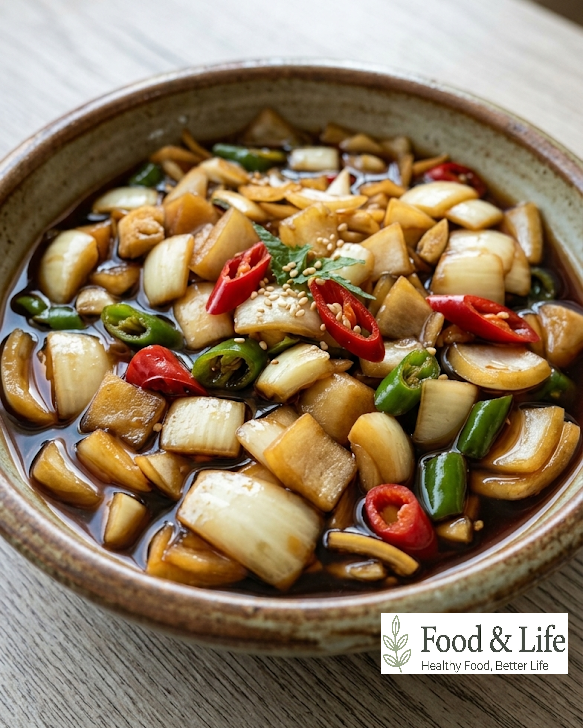
Korean pickled onions (Yangpa Jangajji) are made with 1 kg (2.2 lb) of onions, 540 ml (18.3 fl oz) soy sauce, 300 g (10.6 oz) sugar, and 360 ml (12.2 fl oz) vinegar—without adding any water. The key is preserving the onions’ crisp texture while giving them a balanced sweet-and-tangy flavor.
The soy sauce and sugar are heated only until just before boiling, when small bubbles begin to form around the edges of the pot. The hot soy sauce mixture is then poured directly over the onions. Once the liquid has cooled completely, the vinegar is added, and the onions are refrigerated for two days. As they rest, the onions naturally release moisture, diluting the pickling liquid so the finished jangajji is evenly seasoned without becoming overly salty.
Cheongyang chili peppers and red chili peppers add a pleasantly spicy kick, making these crunchy pickled onions an excellent side dish for rich foods such as samgyeopsal (Korean grilled pork belly) and jeon (Korean savory pancakes).
⏱️ Prep Time: About 15 minutes
🍳 Difficulty: ★☆☆☆☆
✓ Ingredients
🥣 Main Ingredients
- 1 kg (2.2 lb) onions
- 10 Cheongyang chili peppers
- 5 red chili peppers
🧂 Pickling Sauce
- 540 ml (18.3 fl oz) regular soy sauce
- 300 g (10.6 oz) sugar
- 360 ml (12.2 fl oz) vinegar
(Original measurement guide: 1 tbsp = 15 ml, 1 tsp = 5 ml, 1 Korean paper cup = 180 ml)
✓ How to Make Korean Pickled Onions
- Cut the vegetables: Peel and thoroughly wash 1 kg (2.2 lb) of onions. Cut them in half, then into bite-size pieces. Slice 10 Cheongyang chili peppers and 5 red chili peppers into rounds.
- Place the vegetables in a bowl: Transfer the onions to a large bowl and separate the overlapping layers by hand. Add all of the sliced Cheongyang and red chili peppers.
- Heat the soy sauce and sugar: Add 540 ml (18.3 fl oz) soy sauce and 300 g (10.6 oz) sugar to a saucepan. Heat only until just before boiling, then immediately turn off the heat. It is important to stop when small bubbles begin forming around the edges, as vigorously boiling the soy sauce can bring out a bitter taste.
- Pour the hot pickling liquid over the onions: As soon as the heat is turned off, immediately pour the hot soy sauce mixture over the onions. Mix evenly. Pouring the pickling liquid over the onions while it is still hot helps create their crisp texture.
- Add the vinegar: Let the pickling liquid cool completely. Add 360 ml (12.2 fl oz) vinegar and mix thoroughly.
- Refrigerate and let it pickle: Transfer the onions and pickling liquid to an airtight container, cover, and refrigerate for two days before serving.
✓ Key Tips for Success
- Do not overheat the soy sauce mixture: If the 540 ml soy sauce and 300 g sugar are boiled vigorously for too long, the soy sauce can develop a stronger bitter taste. Turn off the heat as soon as the sugar has dissolved and small bubbles begin appearing just before the liquid reaches a full boil.
- Add the vinegar only after the liquid has cooled: Do not heat the 360 ml vinegar together with the soy sauce mixture or add it while the liquid is still hot. Wait until the pickling liquid has cooled completely before mixing in the vinegar to preserve its bright, tangy flavor.
✓ Serving Tips
- Serve the pickled onions and Cheongyang peppers with crispy haemul pajeon (Korean seafood scallion pancakes) or gamja jeon (Korean potato pancakes). You can also use the pickling liquid as a dipping sauce instead of a separate soy sauce dip.
- Pair them with grilled meats such as samgyeopsal, pork shoulder, or grilled beef. The crisp onions add freshness and texture alongside rich meat dishes.
- Once the onions are gone, don’t discard the remaining sweet-and-tangy soy pickling liquid. It can be used as a dipping sauce for mandu (Korean dumplings) or savory pancakes.
✓ How to Choose Good Onions
- Outer skin: Choose onions with dry, papery outer skins that have a slight sheen and no visible cuts, damaged spots, or mold.
- Firmness: Fresh onions should feel heavy and firm throughout. Avoid onions that feel soft or give way when gently squeezed.
- Neck and sprouts: Look for onions with a narrow, dry, tightly closed neck and no visible green sprouts. This helps indicate that the inside is still firm.
Source: Rural Development Administration Nongsaro – Characteristics and Nutritional Value of Onions
✓ Onion Nutrition per 100 g (3.5 oz)
| Nutrient | Amount per 100 g (3.5 oz) |
|---|---|
| Calories | 29.00 kcal |
| Carbohydrates | 6.52 g |
| Protein | 0.96 g |
| Fat | 0.17 g |
| Sodium | 2.00 mg |
Based on 100 g of raw onion. Actual nutrition values may vary depending on the variety, product, and cooking method.
Source: Ministry of Food and Drug Safety Food Nutrition Database
✓ Frequently Asked Questions (FAQ)
Q1. Won’t the pickled onions be too salty if no water is added?
No. The 1 kg (2.2 lb) of onions naturally releases a significant amount of moisture as it rests. This gradually dilutes the pickling liquid, so the finished onions are not overly salty.
Q3. Can I use brewed soy sauce or Korean soup soy sauce instead of regular soy sauce?
Brewed soy sauce has a clean flavor and can be used in the same amount as a substitute. Korean soup soy sauce (guk-ganjang), however, has a much higher saltiness and a distinctly strong salty flavor, so it is not well suited to this pickling recipe.
Following the recipe without adding water—heating the soy sauce and sugar only until just before boiling, pouring the mixture over the onions, letting it cool completely, then adding the vinegar and refrigerating for two days—allows the sweet-and-tangy pickling liquid to season the onions evenly without making them too salty.
The onions stay pleasantly crunchy with every bite, while the Cheongyang peppers add a spicy kick and the red chili peppers bring a clean, fresh flavor. Served alongside jeon, the pickled onions help balance the richness and make an easy side dish for family meals.
If you’re looking for an easy Korean pickled onion recipe without added water, try this ratio of 540 ml soy sauce, 300 g sugar, and 360 ml vinegar. It is especially useful to keep in the refrigerator if you often serve samgyeopsal, grilled beef, or Korean savory pancakes.
Save or bookmark this recipe so you can easily find it again, and share it with someone who enjoys Korean food.
I’ll continue sharing easy-to-follow recipes and practical cooking tips. 😊
If there’s a dish you’d like to see next, feel free to leave a comment. 😊