
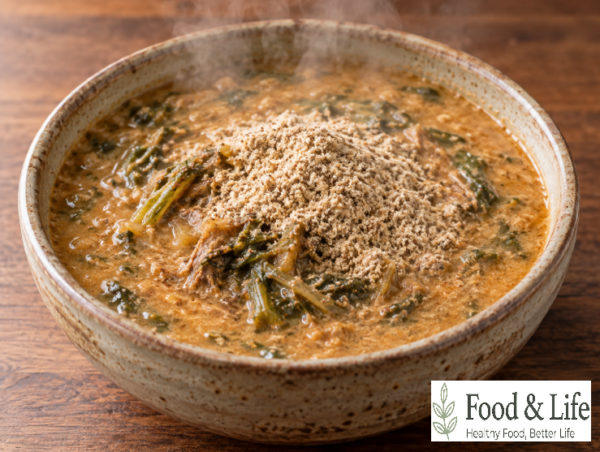
This Chueotang recipe from Yano Shiho is a rich Korean loach soup made by simmering 1 kg (2.2 lb) of loach until tender, blending it until smooth, then cooking it with 600 g (21.2 oz) of blanched siraegi (dried radish greens) and 2 L (67.6 fl oz) of store-bought beef bone broth.
The key is to clean the loach thoroughly with coarse salt, simmer it over medium-low heat for 30 minutes, and blend it very finely with its cooking liquid so the bones do not leave a coarse texture. The seasoned siraegi and perilla seed powder are simmered with the blended loach for 20 minutes, then minced garlic is added and everything cooks for another 10 minutes to create a thick, deeply savory broth.
Using prepared beef bone broth means you do not need to make a separate stock from scratch. The combination of loach, siraegi, doenjang, and perilla seed powder creates a hearty and deeply flavored bowl of traditional Korean chueotang.
⏱️ Cooking Time: About 80 minutes
🍳 Difficulty: ★★★☆☆
✓ Ingredients
🥣 Main Ingredients
- 1 kg (2.2 lb) loach
- 600 g (21.2 oz) blanched siraegi (dried radish greens)
- Coarse salt, as needed
🧂 Seasonings & Broth
- 1/2 cup gochugaru (Korean red pepper flakes)
- 1 cup doenjang (Korean fermented soybean paste)
- 2 L (67.6 fl oz) store-bought beef bone broth
- 1 cup perilla seed powder
- 1/2 cup minced garlic
(Measurement guide: 1 tbsp = 15 ml (0.5 fl oz), 1 tsp = 5 ml, 1 cup = 200 ml (6.8 fl oz))
✓ How to Make Chueotang
- Purge and prepare the loach: Place 1 kg (2.2 lb) loach in a large bowl. Sprinkle generously with coarse salt, immediately cover the bowl, and let it sit for 20–30 minutes.
- Clean the loach: Place the loach in cold water and rinse several times until the slippery mucus and impurities on the surface are thoroughly removed. Drain well in a colander.
- Cook the loach: Transfer the cleaned loach to a pot and add enough water to fully submerge it. Simmer over medium-low heat for 30 minutes until very tender.
- Blend the loach: Remove the cooked loach and cut each into 4–5 pieces. Transfer them to a blender along with the cooking liquid left in the pot. Blend very thoroughly until smooth so the bones do not leave a coarse texture.
- Prepare the siraegi: Gently squeeze excess water from 600 g (21.2 oz) blanched siraegi, then cut it into bite-size pieces.
- Season the siraegi: Place the prepared siraegi in a bowl. Add 1/2 cup gochugaru and 1 cup doenjang, then mix thoroughly by hand so the greens are evenly coated with the seasoning.
- Combine and bring to a boil: Add the blended loach, 2 L (67.6 fl oz) store-bought beef bone broth, 1 cup perilla seed powder, and the seasoned siraegi to a large pot. Bring everything to a boil over high heat.
- Simmer and adjust the seasoning: Once the soup reaches a full boil, reduce the heat to medium and simmer for another 20 minutes. Taste the broth and add coarse salt if needed.
- Add the garlic and finish: Add 1/2 cup minced garlic and stir well. Continue simmering for another 10 minutes, then turn off the heat.
✓ Key Tips for Success
- Wash away the mucus thoroughly: After using coarse salt to prepare the loach, rinse it carefully in cold water until the whitish surface mucus is removed. If this step is skipped, the soup may retain a muddy or fishy aroma.
- Blend the cooked loach until very smooth: If the loach is only roughly blended, small bone pieces may create an unpleasant texture in the soup. Cut the cooked loach into 4–5 pieces and blend it thoroughly with the cooking liquid until the mixture is as smooth as possible.
✓ Serving Tips
- If you prefer a sharper, spicier finish, add finely sliced Cheongyang chili pepper or a small amount of sancho or jepi powder (Korean prickly ash) at the end, according to taste.
- Add freshly cooked white rice directly to the hot soup and serve with well-fermented kkakdugi (cubed radish kimchi) or fresh geotjeori kimchi for a hearty meal.
- For a different way to enjoy leftovers, add cooked somyeon (thin Korean wheat noodles) or small pieces of sujebi dough to the remaining soup and bring it back to a boil.
✓ How to Choose Good Loach
- Surface and mucus: Choose loach with a glossy surface evenly coated in clear, slippery mucus.
- Appearance and color: Look for loach with a dark brown back, a distinct yellowish-brown or yellow underside, and no visible wounds on the body.
- Movement and firmness: Fresh loach should move actively in the water and feel firm rather than soft when handled.
✓ Loach Nutrition per 100 g (3.5 oz)
| Nutrient | Amount per 100 g (3.5 oz) |
|---|---|
| Calories | 138.00 kcal |
| Carbohydrates | 0.00 g |
| Protein | 15.88 g |
| Fat | 7.54 g |
| Sodium | 91.00 mg |
Based on loach per 100 g. Actual nutrition values may vary depending on variety, product, and preparation.
Source: Ministry of Food and Drug Safety Food Nutrition Database
✓ Frequently Asked Questions (FAQ)
Q1. Will blending the loach with the bones make the soup coarse or gritty?
If the loach is simmered over medium-low heat for 30 minutes until tender and then blended very thoroughly with its cooking liquid, the bones should not create a noticeably coarse texture. Blending until completely smooth is important for a thick but smooth broth.
Q2. Why does my chueotang have a muddy or fishy smell?
This can happen if the surface mucus released during the coarse-salt preparation is not washed away thoroughly, or if the doenjang and garlic are not cooked long enough. Rinse the loach carefully in cold water before cooking and follow the specified simmering times.
Q3. Can I use anchovy-kelp broth or rice-washing water instead of beef bone broth?
Yes, you can substitute anchovy broth or rice-washing water. However, the flavor will differ from this recipe, which uses store-bought beef bone broth for a heavier and deeper savory taste.
Yano Shiho’s Chueotang combines finely blended loach with beef bone broth to create a rich, smooth soup. The siraegi seasoned with doenjang and gochugaru adds hearty flavor, while the perilla seed powder gives the broth its distinctive nutty depth. Simmering the loach until tender and blending it together with the cooking liquid also helps minimize any coarse texture from the bones.
If you want to make a deeply flavored Chueotang recipe at home without preparing a separate stock from scratch, try following the ingredients and cooking steps as written. Using store-bought beef bone broth simplifies the broth preparation, and serving the hot soup with steamed rice, kkakdugi, or geotjeori makes it a satisfying meal.
Save or bookmark this recipe so you can easily find it again later, and share it with someone who enjoys Korean food.
I’ll continue sharing easy-to-follow recipes and practical cooking tips. 😊
If there is a dish or recipe you would like to see next, feel free to leave a comment. 😊