
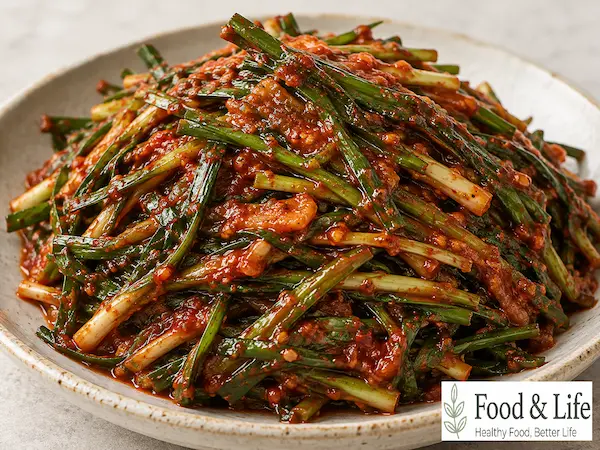
When you’re craving a fresh, aromatic kimchi with a pleasantly sharp bite, Buchu Kimchi (Korean Garlic Chive Kimchi) is an easy side dish you can make at home.
The key to this buchu kimchi recipe is skipping the traditional glutinous rice flour paste and using boiled sweet potato and fruit instead. The garlic chives are lightly brined in anchovy fish sauce for 20 minutes, then all of the flavorful liquid released during brining is blended directly into the seasoning. This creates a thick sauce that clings well to the chives while keeping their fresh aroma and crisp texture.
The spicy-sweet seasoning and savory depth make this kimchi especially good with steamed rice, grilled pork, and other rich meat dishes.
⏱️ Cooking Time: About 35 minutes
🍳 Difficulty: ★★☆☆☆
✓ Ingredients
🥣 Main Ingredients
- 600 g (21.2 oz) Korean garlic chives (buchu)
- 1/4 onion, 60 g (2.1 oz)
- 1/4 apple, 70 g (2.5 oz)
- 1 red chili pepper, 20 g (0.7 oz)
- 40 g (1.4 oz) boiled sweet potato
🧂 Seasonings & Sauce
- 1/2 cup anchovy fish sauce, 90 g (3.2 oz)
- 2 tbsp minced garlic, 40 g (1.4 oz)
- 1 piece ginger, 10 g (0.35 oz)
- 1 tbsp saeujeot (Korean salted shrimp), 20 g (0.7 oz)
- 3 tbsp maesil-cheong (Korean green plum syrup), 40 g (1.4 oz)
- All of the liquid released from brining the garlic chives
- 1 cup gochugaru (Korean red pepper flakes), 90 g (3.2 oz)
(Original measurement guide: 1 tbsp = 15 ml, 1 tsp = 5 ml, 1 Korean paper cup = 180 ml / 6.1 fl oz)
✓ How to Make Buchu Kimchi
- Wash and cut the garlic chives: Rinse 600 g (21.2 oz) of garlic chives thoroughly under running water. Drain well, place them on a cutting board, and cut them crosswise into four large sections. Transfer to a large mixing bowl.
- Brine the chives in anchovy fish sauce: Pour 1/2 cup (90 g / 3.2 oz) of anchovy fish sauce over the prepared chives. Gently toss with your hands and let them sit for exactly 20 minutes so they soften slightly.
- Blend the seasoning base: Add 1/4 onion (60 g / 2.1 oz), 1/4 apple (70 g / 2.5 oz), 1 red chili pepper (20 g / 0.7 oz), 2 tbsp minced garlic (40 g / 1.4 oz), 10 g (0.35 oz) ginger, 1 tbsp saeujeot (20 g / 0.7 oz), 3 tbsp maesil-cheong (40 g / 1.4 oz), and 40 g (1.4 oz) boiled sweet potato to a blender. Pour in all of the liquid released by the chives during the 20-minute brining time and blend until smooth.
- Add the gochugaru: Pour the blended seasoning into a bowl. Add 1 cup (90 g / 3.2 oz) gochugaru and mix thoroughly until smooth with no dry clumps remaining.
- Gently season the chives: Pour all of the seasoning over the brined garlic chives. Using a light touch, gently lift and toss the chives until evenly coated. Avoid squeezing or aggressively rubbing them, which can damage the leaves and create an overly grassy aroma.
- Seal and refrigerate: Arrange the seasoned buchu kimchi in an airtight container. Press plastic wrap directly against the surface to limit air exposure, cover tightly, and refrigerate for 1 day before serving.
✓ Key Tips for Success
- Brine for 20 minutes and handle gently: If the chives are seasoned without brining, their firm stems can prevent the seasoning from coating them evenly, and more liquid may be released later. On the other hand, squeezing or aggressively mixing the chives damages the leaves and can produce a strong grassy smell. Brine them gently in anchovy fish sauce for 20 minutes, then toss the seasoning through with a light touch.
- Use boiled sweet potato and the brining liquid instead of rice flour paste: There is no need to cook a separate glutinous rice or flour paste. Boiled sweet potato gives the seasoning enough thickness to cling to the chives. When blending the sauce, use all of the savory brining liquid released by the chives instead of adding water so the seasoning stays smooth and flavorful.
✓ Serving Tips
- On the day it is made, buchu kimchi has a fresh, pleasantly sharp flavor similar to freshly mixed geotjeori. Serve it with hot steamed white rice or freshly cooked ramen.
- After refrigerating for 1 day, serve it generously alongside golden-brown grilled samgyeopsal (Korean pork belly), thinly sliced beef brisket, or tender suyuk (Korean boiled pork). The fresh, spicy flavor pairs especially well with rich meats.
- Once the kimchi has fermented to your liking, cut it into small pieces with kitchen scissors and use it in fried rice with perilla oil, a fried egg, and crushed gim (roasted seaweed).
✓ How to Choose Good Korean Garlic Chives
- Leaves and texture: Choose chives with straight leaves and tips that are not dried out or browned. They should feel springy yet tender when touched.
- Color and appearance: Look for vivid, deep-green leaves with a fresh sheen. Avoid bunches with bent stems or noticeably wilted leaves.
- Stems and cut ends: The cut ends near the base should look fresh rather than dried out. Choose tender stems that are not excessively tough.
Source: Food Information Nuri – Seasonal Agricultural Products: Korean Garlic Chives
✓ Korean Garlic Chive Nutrition per 100 g (3.5 oz)
| Nutrient | Amount per 100 g |
|---|---|
| Calories | 22.00 kcal |
| Carbohydrates | 4.10 g |
| Protein | 1.80 g |
| Fat | 0.30 g |
| Sodium | 3.00 mg |
Based on 100 g of raw, traditional-variety Korean garlic chives. Actual nutrition values may vary depending on variety, part used, product, and cooking method.
Source: Ministry of Food and Drug Safety – Food Nutrition Database
✓ Frequently Asked Questions (FAQ)
Q1. Can I make buchu kimchi without brining the garlic chives first?
If you season the chives immediately, the stems remain firm and the seasoning may not coat them evenly. They can also release more liquid as they soften, so brining them in anchovy fish sauce for 20 minutes first gives more consistent results.
Q2. Why does my buchu kimchi smell too grassy?
Handling the chives too roughly while washing or seasoning can damage the delicate leaves and intensify their grassy aroma. Wash and toss them gently without squeezing or kneading them.
Q3. Can I use boiled sweet potato instead of glutinous rice flour paste in kimchi?
Yes. In this recipe, boiled sweet potato thickens the seasoning so it clings well to the garlic chives while also adding mild natural sweetness, eliminating the need to cook a separate rice flour paste.
Freshly finished buchu kimchi has a striking contrast between the deep red gochugaru seasoning and vibrant green garlic chives. The anchovy fish sauce and saeujeot give the seasoning savory depth, while the apple and maesil-cheong add gentle sweetness. Because the chives are tossed carefully instead of being squeezed or kneaded, they retain their fresh aroma and pleasantly crisp stems without developing an overpowering grassy smell.
Using boiled sweet potato and the reserved brining liquid also makes the process much simpler than preparing and cooling a separate rice flour paste. Brining the chives in anchovy fish sauce for exactly 20 minutes helps them soften just enough while allowing the seasoning to coat them evenly. Served alongside freshly grilled samgyeopsal, the sharp, spicy chives provide a refreshing contrast to the richness of the pork.
If you have been putting off homemade kimchi because cooking a rice flour paste feels like too much work, try this easy buchu kimchi recipe with its 20-minute brining method and boiled sweet potato seasoning. Keep the ingredient ratios the same and handle the garlic chives gently, and you can make crisp, deeply savory chive kimchi right at home.
Save or bookmark this recipe so you can easily find it later, and share it with someone who enjoys Korean food.
I’ll continue sharing practical recipes and useful cooking tips that are easy to follow at home. 😊
If there is a dish you would like to see next, feel free to leave a comment. 😊
※ This recipe was prepared with reference to a recipe introduced on the YouTube channel ‘츄츄의 한끼식사’, then written based on the actual cooking process and results.