
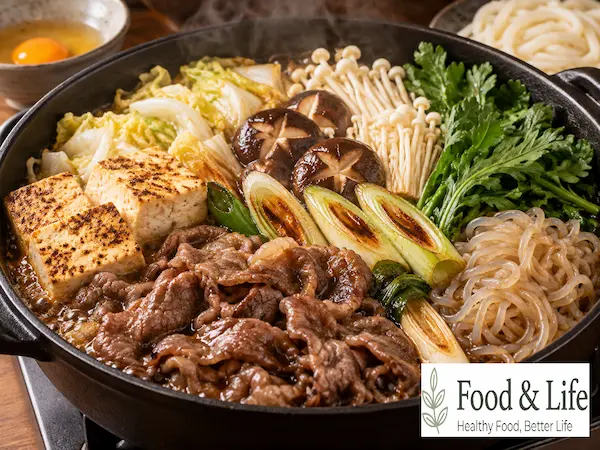
Making authentic Japanese-style beef hot pot at home comes down to two things: getting the sweet and savory sauce ratio right and adding the ingredients in the proper order.
The secret to this sukiyaki recipe is a homemade warishita sauce made with equal parts brewed soy sauce, Cheongha (Korean rice wine), and mirin, plus sugar for sweetness. Searing the thinly sliced beef and green onion first develops a rich, savory flavor before the napa cabbage, mushrooms, tofu, and shirataki noodles are added.
The result is a comforting Japanese hot pot filled with tender beef, flavorful vegetables, and a delicious sweet-savory broth. Dip the cooked beef into beaten egg for a silky finish, then add udon noodles to the remaining broth to complete the meal.
⏱️ Cooking Time: About 35 minutes
🍳 Difficulty: ★★☆☆☆
✓ Ingredients (3–4 Servings)
🥣 Main Ingredients
- 300 g (10.6 oz) thinly sliced beef (shabu-shabu or bulgogi cut)
- 1/4 head baby napa cabbage
- 1 large green onion
- 4 shiitake mushrooms
- 1 package enoki mushrooms
- 1 bunch chrysanthemum greens (shungiku)
- 300 g (10.6 oz) tofu
- 1 package shirataki noodles (thin konjac noodles)
- 1 piece beef fat (substitute cooking oil or butter if needed)
- Eggs, as desired (for dipping)
- Udon noodles, as desired (for finishing)
🧂 Warishita Sauce & Seasonings
- Cooking oil (for pan-frying the tofu)
- 100 ml (3.4 fl oz) brewed soy sauce
- 100 ml (3.4 fl oz) Cheongha (Korean rice wine)
- 100 ml (3.4 fl oz) mirin
- 4 tbsp sugar
(Measurement guide: 1 tbsp = 15 ml, 1 tsp = 5 ml, 1 Korean paper cup = 180 ml / 6.1 fl oz)
✓ How to Make Sukiyaki
- Remove excess moisture from the tofu: Place 300 g (10.6 oz) tofu in the microwave and heat for 2 minutes to release some of its moisture. Removing excess water helps the surface brown more easily when pan-fried.
- Pan-fry the tofu until golden: Add cooking oil to a frying pan and cook the tofu on both sides until golden brown. Remove it from the pan, let it cool, and cut it into bite-sized pieces.
- Blanch the shirataki noodles: Add 1 package of shirataki noodles to boiling water and blanch for about 1 minute. Drain thoroughly in a colander. This step helps reduce the noodles’ distinctive odor while maintaining their springy texture.
- Prepare the napa cabbage and green onion: Cut 1/4 head of baby napa cabbage into bite-sized pieces, approximately 3 cm (1.2 inches) long. Cut 1 large green onion diagonally into thick pieces.
- Prepare the mushrooms: Remove the tough stems from 4 shiitake mushrooms and cut each mushroom into 4–5 pieces. Trim the root end from 1 package of enoki mushrooms, then separate the mushrooms into approximately 8 small bundles by hand.
- Prepare the chrysanthemum greens: Trim approximately 5 cm (2 inches) from the tough ends of 1 bunch of chrysanthemum greens. Cut the remaining stems and leaves into manageable pieces.
- Make the warishita sauce: Combine 100 ml (3.4 fl oz) brewed soy sauce, 100 ml (3.4 fl oz) Cheongha, 100 ml (3.4 fl oz) mirin, and 4 tbsp sugar in a saucepan. Bring the mixture to a boil, then continue boiling for about 1 minute to mellow the alcoholic aroma. Turn off the heat and set the sauce aside.
- Melt the beef fat: Heat a wide, shallow hot pot over medium heat. Add 1 piece of beef fat and rub it across the bottom of the pot to coat the surface evenly. If beef fat is unavailable, use cooking oil or butter instead.
- Sear the green onion and beef: Arrange the green onion on one side of the heated pot and spread the thinly sliced beef across the other side. Let the beef cook on the side touching the pot first. Cook the green onion until its cut surfaces become golden brown and its natural sweetness develops.
- Season the seared beef with warishita: Transfer the seared beef to a separate bowl and pour approximately 1/3 of the prepared warishita sauce over it. Remove the browned green onion from the pot and set it aside temporarily.
- Arrange the vegetables and tofu: In the same pot used to cook the beef, arrange the napa cabbage, shiitake mushrooms, enoki mushrooms, blanched shirataki noodles, and pan-fried tofu in separate sections. Leave the rendered beef fat and flavorful browned bits in the pot to enhance the broth.
- Add the warishita and simmer: Pour the remaining warishita sauce into the pot and bring it to a boil over medium heat. Once bubbling, cover with a lid and cook for about 5 minutes, allowing the napa cabbage and mushrooms to release their moisture and flavor into the sauce.
- Add the chrysanthemum greens and green onion: Remove the lid and tuck the prepared chrysanthemum greens and previously browned green onion between the cooked vegetables. Adding the chrysanthemum greens toward the end helps preserve their distinctive fresh aroma.
- Return the beef to finish cooking: Add the beef that was seasoned with warishita back to the pot. Pour in any remaining sauce from the beef bowl as well. Continue cooking until the beef is thoroughly cooked, then the sukiyaki is ready to serve.
- Serve with beaten egg for dipping: Crack an egg into an individual serving bowl and beat it thoroughly. Dip the hot, cooked beef and vegetables into the beaten egg for a rich, silky texture that complements the savory soy sauce seasoning.
- Finish with udon noodles: After enjoying the beef and vegetables, add udon noodles to the remaining warishita broth. Simmer until the noodles are thoroughly heated and have absorbed the sweet-savory soy sauce flavor. Transfer to a bowl and enjoy.
✓ Key Tips for Success
- Avoid overcooking the thinly sliced beef: Simmering thin beef slices from the beginning can cause them to lose moisture and become tough. Instead, sear the beef with the green onion first to develop a rich, savory flavor, then remove it temporarily. Once the vegetables are cooked, return the beef to the pot and finish cooking it thoroughly before serving.
- Boil the warishita sauce before adding it to the hot pot: Adding Cheongha and mirin without heating them first may leave a strong alcoholic aroma in the finished dish. Combine 100 ml (3.4 fl oz) brewed soy sauce, 100 ml (3.4 fl oz) Cheongha, 100 ml (3.4 fl oz) mirin, and 4 tbsp sugar. Bring the mixture to a boil and continue cooking for approximately 1 minute to mellow the alcohol aroma before using it.
✓ Serving Tips
- Dip the beef in beaten egg for a silky finish: Dipping warishita-seasoned beef into beaten egg adds a rich, smooth texture that softens the salty notes of the soy sauce. The combination of tender beef, sweet-savory sauce, and egg is a signature part of the traditional sukiyaki experience.
- Enjoy the browned green onion with the beef: Searing the green onion reduces its sharpness and brings out its natural sweetness. Eating the caramelized green onion together with the seasoned beef creates a delicious balance of rich beef flavor and mellow sweetness.
- Finish the meal with sukiyaki udon: The broth left in the pot contains savory flavors released from the beef, napa cabbage, and mushrooms. Add udon noodles and simmer until they absorb the sweet and salty warishita sauce. No additional seasoning is needed.
✓ How to Choose Good Beef for Sukiyaki
- Color and appearance: Choose beef with a bright, clear red color and a natural sheen. Avoid cuts with excessively dry surfaces or uneven discoloration.
- Fat color and distribution: Look for beef with clean, creamy-white fat rather than yellowed fat. A balanced distribution of lean meat and fat helps develop a rich, savory flavor when the beef is seared.
- Texture and muscle grain: Fresh beef should feel firm and springy rather than overly soft, with a relatively fine muscle grain. Thinly sliced beef intended for shabu-shabu or bulgogi is well suited for sukiyaki.
✓ Beef Nutrition per 100 g (3.5 oz)
| Nutrient | Amount per 100 g (3.5 oz) |
|---|---|
| Calories | 162.00 kcal |
| Carbohydrates | 0.00 g |
| Protein | 23.00 g |
| Fat | 6.92 g |
| Sodium | 50.00 mg |
Based on 100 g of raw Korean Hanwoo beef (Grade 1, round cut). Actual nutritional values may vary depending on breed, cut, fat content, product, and cooking method.
Source: Ministry of Food and Drug Safety – Food Nutrition Database: Korean Hanwoo Beef (Grade 1, Round, Raw)
✓ Frequently Asked Questions (FAQ)
Q1. Should I cook the beef and vegetables together from the beginning when making sukiyaki?
No. Start by searing the beef and green onion in a pot coated with beef fat to develop flavor. Remove them temporarily, simmer the napa cabbage and mushrooms in the warishita sauce, then return the beef to finish cooking once the vegetables are tender.
Q2. Why does my sukiyaki beef turn tough?
Thinly sliced beef can lose moisture and become tough when cooked for too long. Sear the beef first, set it aside while the vegetables cook, and return it to the pot near the end. Serve as soon as the beef is fully cooked.
Q3. Do I need beef fat to make authentic sukiyaki?
Beef fat is traditionally used to grease the pot and add a rich, savory beef flavor, but it is not essential. You can substitute cooking oil or butter, making sure to coat the bottom of the pot evenly before searing the beef and green onion.
The finished sukiyaki brings together the rich flavor of seared beef and the sweet, savory depth of homemade warishita sauce. The beef remains tender, while the golden-brown green onion adds gentle sweetness and a lightly roasted aroma. Napa cabbage and mushrooms absorb the soy sauce seasoning while retaining their individual textures and flavors. Pan-fried tofu and springy shirataki noodles also pair beautifully with the concentrated sauce, adding variety to every bite. The colorful vegetables and glossy beef make the entire pot especially inviting.
One of my favorite things about Japanese beef dishes is the combination of savory soy sauce seasoning and the rich flavor of the meat, and this sukiyaki captures that balance beautifully. Dipping the beef into beaten egg was particularly satisfying, as the silky egg mellowed the salty flavor of the warishita and added a delicious richness. Searing the beef and green onion before simmering the vegetables was also an easy step that made this dish practical to prepare at home.
My family especially enjoyed the tender beef and soft tofu coated in the sweet-savory sauce, along with the napa cabbage and mushrooms. Placing the hot pot in the center of the dinner table and enjoying it together created a relaxed, comforting atmosphere. To finish the meal, I added udon noodles to the remaining warishita broth. The noodles absorbed the concentrated umami flavors, making the final course just as satisfying as the main dish.
If you’re looking for a comforting Japanese home-cooked meal for a weekend dinner or family gathering, this easy sukiyaki recipe is a wonderful option. With 300 g (10.6 oz) of beef, a variety of vegetables, and the simple 1:1:1 warishita sauce ratio, you can create a flavorful Japanese beef hot pot at home. Follow the sauce measurements and cooking order carefully for tender beef, well-seasoned vegetables, and a delicious broth.
If you found this recipe helpful, please save or bookmark it for later and share it with someone who enjoys Japanese home cooking.
I’ll continue sharing delicious, easy-to-follow recipes and practical cooking tips that anyone can use at home. 😊
If there’s a dish you’ve been curious about or a recipe you’d like to see next, feel free to leave a comment. 😊
*Note: This recipe was inspired by a recipe featured on the YouTube channel ‘일식예보’. I prepared the dish myself and wrote this article based on my own cooking process and the final results.*