
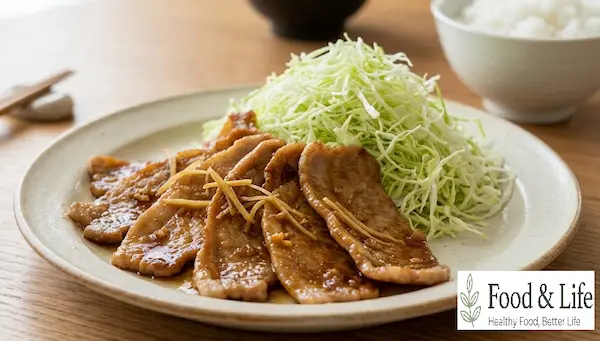
If you want to make Japanese-style pork at home, shogayaki is an easy option that lets the ginger-soy seasoning cook directly into the meat in the pan.
This shogayaki recipe uses 200 g (7 oz) pork hind leg seasoned with salt and pepper, lightly coated with flour on both sides, and pan-fried until golden. Cheongha, soy sauce, mirin, and sugar are then added directly to the pan to create the sauce. The key is to use 15 g (0.5 oz) ginger in two ways: half thinly julienned and the other half grated or finely minced. Once the ginger is added, the pork is finished over low heat so the seasoning can coat the meat evenly.
The savory soy sauce and sharp aroma of fresh ginger pair especially well with finely shredded cabbage, making this Japanese ginger pork flavorful without feeling overly heavy.
⏱️ Cooking Time: About 20 minutes
🍳 Difficulty: ★★☆☆☆
✓ Ingredients
🥣 Main Ingredients
- 200 g (7 oz) pork hind leg
- 15 g (0.5 oz) fresh ginger
- Cabbage, to taste
- Flour, as needed
🧂 Seasonings & Sauce
- Salt, for seasoning the pork
- Black pepper, for seasoning the pork
- Cooking oil
- 2 tbsp Cheongha
- 1.5 tbsp soy sauce
- 2 tsp mirin
- 1 tsp sugar
(Measurement guide: 1 tbsp = 15 ml, 1 tsp = 5 ml, 1 Korean paper cup = 180 ml / 6.1 fl oz)
✓ How to Make Shogayaki
- Prepare the cabbage: Finely shred the cabbage so it is easy to serve alongside the pork.
- Prepare the ginger: Peel 15 g (0.5 oz) fresh ginger. Thinly julienne half and grate or finely mince the remaining half.
- Season the pork: Lay out 200 g (7 oz) pork hind leg and season the surface with salt and black pepper.
- Coat with flour: Lightly coat both sides of the seasoned pork with flour so the surface is evenly covered.
- Heat the pan: Preheat a skillet and add cooking oil.
- Pan-fry the pork: Add the pork to the skillet one piece at a time. Cook until both sides are golden and lightly crisp.
- Remove excess fat: Once the pork is browned, carefully wipe excess rendered fat from the pan with a paper towel.
- Add the seasonings: Add 2 tbsp Cheongha, 1.5 tbsp soy sauce, 2 tsp mirin, and 1 tsp sugar in that order.
- Add the ginger and finish: Add both the julienned and grated or minced ginger. Reduce the heat to low and continue cooking, turning the pork so the ginger-soy seasoning coats the meat evenly.
- Serve: Arrange the finely shredded cabbage on a plate and serve the finished shogayaki alongside it.
✓ Key Tips for Success
- Wipe out excess fat after cooking the pork: If too much rendered pork fat remains in the pan when the seasonings are added, the finished sauce can become greasy. Once the pork is nicely browned, remove excess fat with a paper towel before adding the sauce ingredients.
- Finish over low heat after adding the ginger: The soy sauce and sugar in the seasoning can reduce quickly over high heat. After adding both forms of ginger, lower the heat and turn the pork as it cooks so the sauce coats the meat without reducing too quickly.
✓ Serving Tips
- Serve the finished shogayaki with finely shredded cabbage. Its fresh texture pairs well with the bold ginger-soy seasoning.
- Warm rice makes an easy accompaniment and works especially well with the savory sauce-coated pork.
- Spoon any ginger and seasoning left in the skillet over the pork before serving so you can enjoy more of the fresh ginger aroma.
✓ How to Choose Good Pork Hind Leg
- Color and appearance: Choose pork with a natural light pink color rather than meat that looks excessively pale or dark. The surface should have a natural sheen.
- Firmness and texture: Look for meat that feels firm rather than soft and that holds its shape relatively well when gently pressed.
- Drip and fat condition: Choose packages without excessive liquid collected inside. Any visible fat should be white rather than yellowed.
✓ Pork Hind Leg Nutrition per 100 g (3.5 oz)
| Nutrient | Amount per 100 g (3.5 oz) |
|---|---|
| Calories | 135.00 kcal |
| Carbohydrates | 0.00 g |
| Protein | 20.88 g |
| Fat | 4.97 g |
| Sodium | 48.00 mg |
Based on 100 g of raw pork hind leg. Actual nutrition values may vary depending on the breed, cut, product, and cooking method.
Source: Ministry of Food and Drug Safety Food Nutrition Database – Raw Food Ingredients
✓ Frequently Asked Questions (FAQ)
Q1. How should I prepare the 15 g of ginger for shogayaki?
Peel the 15 g (0.5 oz) ginger and thinly julienne half of it. Grate or finely mince the remaining half, then add both forms of ginger during the final stage of cooking after the sauce ingredients have been added.
Q2. Why does my shogayaki turn out greasy?
Too much rendered pork fat left in the skillet can mix with the seasoning and make the finished sauce oily. Once the pork has browned, wipe the excess fat from the pan with a paper towel before adding the Cheongha, soy sauce, mirin, and sugar.
The savory, lightly sweet soy sauce seasoning combined with the distinctive bite of fresh ginger makes pork hind leg especially enjoyable in this Japanese ginger pork recipe.
After making the recipe as written, I found that using both julienned ginger and grated or minced ginger gave the dish a nice balance of ginger texture and aroma. The sauce coated the pork evenly and paired particularly well with warm rice. Alternating bites of the seasoned pork with fresh shredded cabbage also kept the dish balanced.
If you want to make a Japanese pork dish at home, try this shogayaki with 200 g (7 oz) pork hind leg and 15 g (0.5 oz) fresh ginger. There is no need to prepare or marinate the sauce separately in advance, since everything comes together directly in the skillet, making it a practical option for a weekday meal.
Save or bookmark this recipe so you can easily find it later, and share it if you found it helpful.
I’ll continue sharing approachable recipes and practical cooking tips that are easy to make at home. 😊
If there is a dish you are curious about or a recipe you would like to see next, feel free to leave a comment. 😊
※ This recipe was prepared and written after referring to a recipe introduced on the YouTube channel ‘일식예보’, then cooking it and documenting the process and results.