
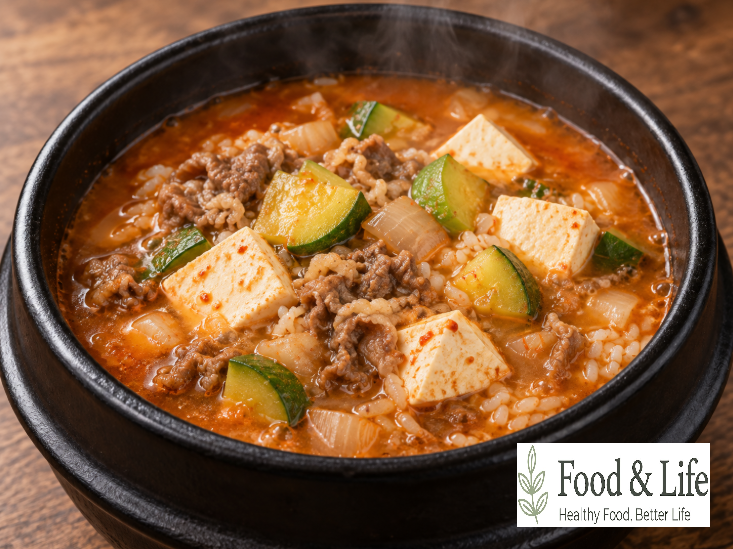
When you want something warm, hearty, and satisfying in one bowl, Chadol Doenjang Sulbap is an easy Korean comfort meal that combines stew and rice in the same pot. Inspired by Korean chef Jung Ho-young, this recipe starts by rendering the rich fat from thinly sliced chadolbagi, then frying doenjang and gochujang directly in the beef fat to build a deep, savory broth. Korean zucchini, onion, tofu, and rice make the dish filling enough to enjoy without several side dishes. Each spoonful is packed with tender beef, rice soaked in spicy doenjang broth, and plenty of comforting savory flavor.
⏱️ Cooking Time: About 20 minutes
🍳 Difficulty: ★★☆☆☆
✓ Ingredients
🥣 Main Ingredients
- 200 g (7 oz) chadolbagi (thinly sliced beef brisket)
- 1/2 block tofu
- 1/3 Korean zucchini
- 1/2 onion
- 1 large green onion
- 1 bowl cooked rice
🧂 Sauce & Seasonings
- 1 tbsp minced garlic
- 2 tbsp doenjang (Korean fermented soybean paste)
- 1 tbsp gochujang (Korean red chili paste)
- 2 tbsp gochugaru (Korean red pepper flakes)
- 500 ml (16.9 fl oz) water
- 1 tbsp oyster sauce
- 1 tbsp Korean tuna fish sauce
(Measurement guide: 1 tbsp = 15 ml, 1 tsp = 5 ml, 1 Korean paper cup = 180 ml / 6.1 fl oz)
✓ How to Make Chadol Doenjang Sulbap
- Prepare the vegetables and tofu: Cut the tofu, Korean zucchini, and onion into bite-size cubes. Thinly slice the green onion and set everything aside.
- Cook the chadolbagi: Add 200 g (7 oz) chadolbagi to a preheated pot and cook over medium heat until lightly browned and plenty of beef fat has rendered out.
- Fry the seasoning base: Once the beef has lost its raw color and begun to cook, add 1 tbsp minced garlic, 2 tbsp doenjang, and 1 tbsp gochujang. Stir-fry the pastes directly in the rendered beef fat. Cooking the fermented pastes in the fat mellows their raw flavor and creates a deeper, more savory base.
- Bloom the gochugaru: Once enough fat has rendered, reduce the heat to low and add 2 tbsp gochugaru. Stir-fry briefly, taking care not to let it burn. Keeping the heat low helps create a clean, aromatic chili oil without scorching the pepper flakes.
- Add water and vegetables: Pour in 500 ml (16.9 fl oz) water, then add 1 tbsp oyster sauce and 1 tbsp Korean tuna fish sauce. Add the prepared zucchini and onion, then bring the mixture to a boil over high heat.
- Add the tofu: Once the broth is boiling vigorously, add the tofu and green onion. Reduce to medium-low heat and simmer briefly until the broth is rich and slightly reduced.
- Add the rice and finish: Place the cooked rice in an earthenware pot or saucepan and pour the chadol doenjang stew over it. Bring everything to a lively simmer once more so the rice absorbs the flavorful broth, then serve hot.
✓ Key Tips for Success
- Keep the heat low when adding gochugaru: Once the chili flakes go into the pot, reduce the heat to low. High heat can scorch the seasoning and create an unpleasant bitter taste.
- Use the rendered beef fat: Do not add the fermented pastes before enough fat has rendered from the chadolbagi. Wait until the beef is partially cooked and has released its fat so the doenjang and gochujang can fry without burning.
✓ Serving Tips
- For a spicier finish, add 1–2 sliced Cheongyang chilies near the end of cooking.
- Slightly cooled leftover rice works especially well because the grains are less likely to break down quickly and can absorb the broth while keeping more of their texture.
✓ How to Choose Good Chadolbagi
- Check the meat color: Choose beef with a bright, clear red color and a natural sheen.
- Check the fat: The fat should be milky white, firm, and clearly defined from the lean meat.
- Check the packaging: For frozen products, avoid packages with excessive frost or large ice crystals inside.
✓ Chadolbagi Nutrition per 100 g (3.5 oz)
| Nutrient | Amount per 100 g (3.5 oz) |
|---|---|
| Calories | 408.00 kcal |
| Carbohydrates | 0.00 g |
| Protein | 16.45 g |
| Fat | 35.94 g |
| Sodium | 66.00 mg |
Values are based on 100 g (3.5 oz) of raw Korean Hanwoo Grade 1 brisket (chadolbagi). Actual nutrition may vary depending on breed, cut, product, and cooking method.
Source: Ministry of Food and Drug Safety (Korea) – Food Nutrition Database, Raw Ingredients
✓ Frequently Asked Questions (FAQ)
Q1. Do I need to add cooking oil when frying chadolbagi?
No. Chadolbagi contains plenty of fat, so cooking it in a dry pot over medium heat naturally renders enough beef fat for the seasoning base.
Q2. Why does my broth taste bitter or overly heavy?
The doenjang and gochugaru can scorch if the heat is too high while they are being fried. Reduce the heat and stir them briefly over low heat to prevent burnt or bitter flavors.
Q3. What can I use instead of oyster sauce or Korean tuna fish sauce?
You can substitute the same amount of Korean soup soy sauce. For a deeper broth, you can also replace the water with anchovy-kelp stock.
By frying doenjang, gochujang, and gochugaru in the rendered beef fat before adding vegetables, tofu, and rice, you can make a rich and warming Chadol Doenjang Sulbap without complicated preparation. The rice absorbs the spicy, savory soybean paste broth while the tender chadolbagi adds plenty of beef flavor to every spoonful.
Serve it piping hot as a hearty meal or a warm Korean-style dish to enjoy with drinks.
If you found this recipe helpful, please bookmark it and share it with anyone who enjoys easy Korean home cooking.
I’ll continue sharing approachable Korean recipes and practical cooking tips that make Korean food easier to recreate at home. 😊
If there’s a Korean dish or recipe you’d like to see next, feel free to leave a comment! 😊