
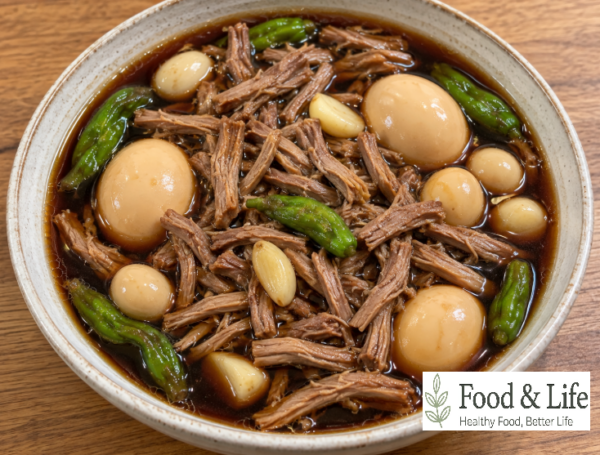
If you want to make pork tenderloin jangjorim that stays tender instead of turning dry, the two most important things are controlling the cooking time and using the right soy sauce seasoning ratio.
This Korean pork tenderloin jangjorim recipe uses 600 g (21.2 oz) pork tenderloin, simmered over medium heat for 20 minutes in water with cooking wine, then cooled and shredded along the grain. The all-purpose soy braising sauce is made with 1 Korean paper cup each of cheongju and cooking wine, 3 cups soy sauce, and 3/4 cup sugar. The shredded pork is then simmered in 500 ml (16.9 fl oz) of the pork broth and 500 ml (16.9 fl oz) of the prepared soy sauce mixture, with soft-boiled eggs and whole garlic added afterward. Kkwarigochu peppers are added only during the final 1–2 minutes so they keep their color and texture.
The result is tender shredded pork coated in a savory, gently sweet soy sauce, making this pork tenderloin jangjorim an easy and satisfying Korean side dish for steamed rice.
⏱️ Cooking Time: About 40 minutes
🍳 Difficulty: ★★☆☆☆
✓ Ingredients
🥣 Main Ingredients
- 600 g (21.2 oz) pork tenderloin
- Boiled eggs or quail eggs, as needed
- Whole garlic cloves, as needed
- Kkwarigochu (Korean shishito peppers), as needed
- 500 ml (16.9 fl oz) pork cooking broth
🧂 Seasonings & Sauce
- 1/2 Korean paper cup cooking wine — 90 ml (3.0 fl oz), for boiling the pork
- 1 Korean paper cup cooking wine — 180 ml (6.1 fl oz)
- 1 Korean paper cup cheongju (Korean rice wine) — 180 ml (6.1 fl oz)
- 3 Korean paper cups soy sauce — 540 ml (18.3 fl oz)
- 3/4 Korean paper cup sugar — 135 ml (4.6 fl oz)
(Measurement guide: 1 tbsp = 15 ml (0.5 fl oz), 1 tsp = 5 ml (0.17 fl oz), 1 Korean paper cup = 180 ml (6.1 fl oz))
✓ How to Make Pork Tenderloin Jangjorim
- Prepare the pork: Pat 600 g (21.2 oz) pork tenderloin lightly with paper towels to remove excess blood and moisture. Cut it into several large pieces so it cooks evenly.
- Boil the pork tenderloin: Bring a generous amount of water to a boil in a pot, then add 1/2 Korean paper cup cooking wine, or 90 ml (3.0 fl oz). Add the prepared pork and simmer over medium heat for about 20 minutes. Skim off foam and impurities with a spoon as they rise to the surface.
- Make the all-purpose soy sauce mixture: In a separate pot, combine 1 Korean paper cup cheongju, 1 Korean paper cup cooking wine, 3 Korean paper cups soy sauce, and 3/4 Korean paper cup sugar. Bring to a lively simmer over medium heat until the sugar is completely dissolved and the strong alcohol aroma has cooked off.
- Soft-boil the eggs: Bring water to a boil, add the eggs, and cook for about 6 minutes 30 seconds. Immediately transfer them to cold water, then peel and set aside.
- Cool and shred the pork: Remove the pork after 20 minutes of cooking and let it cool slightly. Shred it into bite-size pieces along the grain. Do not discard the cooking liquid; strain and reserve 500 ml (16.9 fl oz).
- Braise the pork in broth and soy sauce: Pour 500 ml (16.9 fl oz) pork cooking broth and 500 ml (16.9 fl oz) of the prepared all-purpose soy sauce mixture into a pot. Add the shredded pork and bring to a simmer over medium heat.
- Add the garlic and eggs: Once the liquid is simmering, add the whole garlic cloves, cut into suitable pieces if needed, and the soft-boiled eggs. Simmer briefly so the seasoning begins to soak into them.
- Finish with kkwarigochu peppers: Add the prepared kkwarigochu during the final 1–2 minutes. Cook just until they soften slightly, then turn off the heat.
✓ Key Tips for Success
- Do not overcook the pork: Pork tenderloin is very lean, so cooking it too long can quickly dry it out and make it tough. Simmer it with cooking wine for about 20 minutes only, and regularly skim off the foam and impurities so the broth stays clean and the pork does not develop an unpleasant odor.
- Add the peppers at the very end: If kkwarigochu peppers are braised from the beginning, they can turn yellowish and become overly soft. Add them only after the other ingredients are seasoned, then cook for just 1–2 minutes to preserve their fresh green color and slightly crisp texture.
✓ Serving Tips
- Place the tender shredded pork and a soft-boiled egg over freshly cooked rice, then spoon 1–2 tablespoons of the jangjorim sauce over the top and mix everything together for an easy jangjorim rice bowl.
- Serve the pork with slices of garlic and kkwarigochu peppers for a fresher, slightly peppery contrast to the lean pork.
- For refrigerated jangjorim, transfer only the amount you plan to eat to a separate dish and microwave it for about 20 seconds. A brief reheating helps the pork taste moist and tender without overcooking it.
✓ How to Choose Good Pork Tenderloin
- Color and surface: Look for pork that is bright reddish-pink to pale pink, with a moist natural sheen rather than a dry surface.
- Firmness: Fresh pork should spring back when lightly pressed with a finger and should not release excessive liquid.
✓ Pork Tenderloin Nutrition per 100 g (3.5 oz)
| Nutrient | Amount per 100 g (3.5 oz) |
|---|---|
| Calories | 123.00 kcal |
| Carbohydrates | 0.00 g |
| Protein | 22.21 g |
| Fat | 3.15 g |
| Sodium | 46.00 mg |
Based on 100 g of raw pork tenderloin. Actual nutrition values may vary depending on the breed, cut, product, and cooking method.
Source: Ministry of Food and Drug Safety Food Nutrition Database – Raw Food Ingredients
✓ Frequently Asked Questions (FAQ)
Q1. Do I really need to skim off the foam while boiling the pork?
Yes. Removing the foam and impurities that rise to the surface helps remove residual blood and unwanted odors while keeping the pork broth cleaner. Skimming it 2–3 times during cooking is recommended.
Q2. Why does pork tenderloin jangjorim sometimes turn dry and tough?
Pork tenderloin can lose moisture quickly if it is boiled over high heat for more than 20 minutes or reduced too aggressively in the soy sauce. Keep the initial cooking time to about 20 minutes, then simmer the shredded pork gently over medium heat when seasoning it.
Q3. Can I use quail eggs instead of boiled chicken eggs?
Yes. Store-bought peeled quail eggs can be used without changing the cooking method or seasoning ratio. Since they are already cooked, add them at the same stage as the garlic and simmer briefly so they absorb the sauce.
Following the cooking times and seasoning ratios in this recipe keeps the pork tenderloin soft enough to shred easily without becoming overly dry. The savory soy sauce has a gentle sweetness that evenly seasons the meat, while the soft-boiled eggs and garlic absorb the braising liquid. Adding the kkwarigochu at the end also preserves their fresh peppery flavor and texture, which pairs especially well with the lean pork.
If you want a Korean side dish that can be prepared with pork tenderloin and served with rice, try this pork tenderloin jangjorim recipe. Serve the tender pork and eggs over warm rice with a little of the soy braising sauce for a hearty and satisfying meal.
Save or bookmark this recipe so you can easily find it again, and share it with someone who enjoys Korean food.
More easy-to-follow recipes and practical cooking tips will be added regularly. 😊
If there is a dish you are curious about or would like to see featured, feel free to leave a comment. 😊