
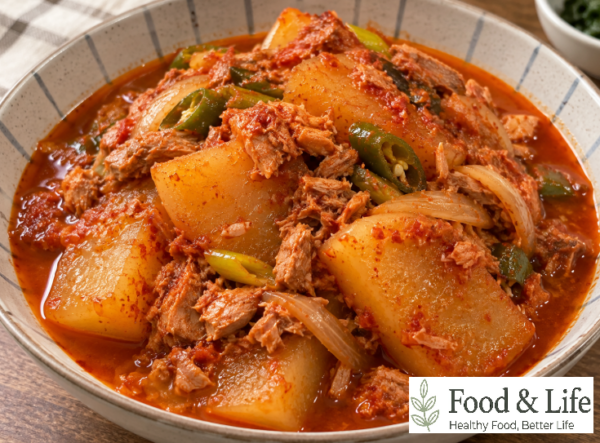
When you want a warm, savory side dish that goes especially well with steamed rice, Korean braised radish with tuna is an easy way to turn canned tuna and radish into a satisfying meal.
The key to this recipe is simmering the radish with 500 ml (16.9 fl oz) water, doenjang, soy sauce, gochugaru, tuna seasoning sauce, and the other seasonings over medium-low heat for about 20 minutes. This gives the radish enough time to become tender and absorb the savory sauce all the way through. Once the radish is soft, add 1 can of tuna near the end and simmer until only a small amount of sauce remains, which helps keep the tuna from breaking apart too much.
Tender, naturally sweet radish, soft tuna, and a rich, pleasantly spicy braising sauce come together in a comforting Korean side dish that is perfect with hot rice.
⏱️ Cooking Time: About 30 minutes
🍳 Difficulty: ★★☆☆☆
✓ Ingredients
🥣 Main Ingredients
- 400 g (14.1 oz) Korean radish
- 500 ml (16.9 fl oz) water
- 1/2 onion
- 1 green onion
- 1 Cheongyang chili pepper
- 1 can tuna
🧂 Seasonings & Sauce
- 1 tbsp doenjang (Korean fermented soybean paste)
- 2 tbsp soy sauce
- 1 tbsp cooking wine
- 2 tbsp gochugaru (Korean red pepper flakes)
- 2 tbsp sugar
- 2 tbsp tuna seasoning sauce
- 1 tbsp minced garlic
- 1 pinch black pepper
(Measurement guide: 1 tbsp = 15 ml (0.5 fl oz), 1 tsp = 5 ml (0.17 fl oz), 1 Korean paper cup = 180 ml (6.1 fl oz))
✓ How to Make Korean Braised Radish with Tuna
- Cut the radish: Wash 400 g (14.1 oz) Korean radish thoroughly, then cut it into fairly thick, bite-size pieces.
- Add the water: Place the sliced radish in a pot, pour in 500 ml (16.9 fl oz) water, and turn on the heat.
- Add the seasonings and simmer: Add 1 tbsp doenjang, 2 tbsp soy sauce, 1 tbsp cooking wine, 2 tbsp gochugaru, 2 tbsp sugar, 2 tbsp tuna seasoning sauce, 1 tbsp minced garlic, and 1 pinch black pepper. Bring to a simmer and cook for about 5 minutes.
- Add the vegetables and braise: Cut 1/2 onion, 1 green onion, and 1 Cheongyang chili pepper into bite-size pieces. Add them to the pot and continue simmering slowly over medium-low heat.
- Add the tuna: After the radish has cooked for about 20 minutes and become tender, add 1 can of tuna.
- Reduce the sauce: Simmer briefly over medium heat until the liquid reduces to a shallow amount around the radish and tuna, then remove from the heat.
✓ Key Tips for Success
- Add the tuna near the end: If canned tuna is added at the beginning and simmered for too long, it can break apart and make the sauce cloudy and heavy. Add it only after the radish is tender so the tuna keeps more of its texture and clean flavor.
- Use medium-low heat and give the radish enough time: If you cook only over high heat, the liquid can reduce before the seasoning penetrates the radish. Once the sauce comes to a simmer, lower the heat and cook gently for about 20 minutes so the radish becomes soft and flavorful.
✓ Serving Tips
- Spoon the tender braised radish and tuna generously over freshly cooked rice, then drizzle a little of the reduced braising sauce on top and mix everything together.
- Serve small bites of rice and braised radish with roasted or seasoned seaweed for an extra savory, nutty flavor.
- If you prefer more heat, sprinkle a little freshly sliced Cheongyang chili pepper over the dish just before turning off the heat.
✓ How to Choose a Good Korean Radish
- Surface and shape: Choose a firm radish with smooth, pale skin and no major cracks or damaged areas. A solid, cylindrical shape is ideal.
- Weight: A radish that feels heavy for its size generally has plenty of moisture and is less likely to be hollow inside.
- Green upper section: Look for a radish with a vivid green upper portion covering roughly one-third of the root.
✓ Korean Radish Nutrition per 100 g (3.5 oz)
| Nutrient | Amount per 100 g (3.5 oz) |
|---|---|
| Calories | 21.00 kcal |
| Carbohydrates | 4.72 g |
| Protein | 0.77 g |
| Fat | 0.15 g |
| Sodium | 13.00 mg |
Based on 100 g of raw Korean radish (Joseon radish). Actual nutrition values may vary depending on the variety, part used, product, and cooking method.
Source: Ministry of Food and Drug Safety Food Nutrition Database
✓ Frequently Asked Questions (FAQ)
Q1. Why does the tuna break apart and make the sauce cloudy?
This usually happens when the tuna is added too early or stirred frequently over high heat. Wait until the radish is fully tender, then add the tuna and mix only lightly to keep the sauce cleaner and the tuna pieces intact.
Q2. Can I substitute soup soy sauce or fish sauce for tuna seasoning sauce?
Yes. You can replace the tuna seasoning sauce with the same amount of soup soy sauce or anchovy fish sauce. Soup soy sauce gives the dish a cleaner salty flavor, while anchovy fish sauce adds a deeper savory note.
Following the recipe and cooking the radish slowly over medium-low heat before adding the tuna allows the savory flavors of the doenjang and tuna seasoning sauce to soak deeply into the radish. The tuna also keeps its soft texture without breaking apart too much, while the reduced braising sauce is especially good spooned over hot rice.
If you have leftover Korean radish and a can of tuna and want an easy but satisfying rice side dish, try this Korean braised radish with tuna recipe. The soft, thoroughly braised radish and rich, savory sauce make it a comforting dish that works well even without many other side dishes.
Save or bookmark this recipe so you can easily find it again, and share it with someone who enjoys Korean food.
More easy-to-follow recipes and practical cooking tips will be added regularly. 😊
If there is a dish you are curious about or would like to see featured, feel free to leave a comment. 😊