
Looking for an impressive brunch or dinner recipe that is surprisingly easy to make?
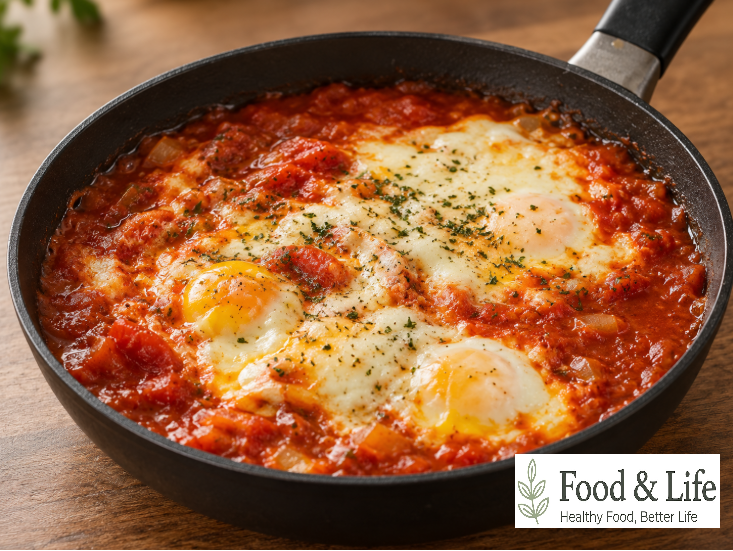
Eggs in Hell, also known as shakshuka, combines a rich tomato sauce with browned ham, warm cumin, tender vegetables, and perfectly cooked eggs. Melted cheese adds extra richness, making this hearty skillet dish especially satisfying when served with toasted bread.
Scoop up the spicy tomato sauce, runny egg yolks, and melted cheese together for a comforting meal that looks just as good as it tastes.
⏱️ Cooking Time: About 25 minutes
🍳 Difficulty: ★★☆☆☆
✓ Ingredients
🥣 Main Ingredients
- 3 large eggs
- 75g (2.6 oz) shredded mozzarella cheese
- 40g (1.4 oz) additional shredded cheese
- 100g (3.5 oz) canned luncheon meat
- 3 tomatoes, about 425g (15 oz)
- 1 red bell pepper, about 140g (5 oz)
- 1/2 onion, about 125g (4.4 oz)
- Sliced bread, as needed
- Dried parsley, for garnish
🧂 Seasonings & Sauce
- 1 jar tomato pasta sauce, 455g (about 16 oz)
- 2 tablespoons cooking oil
- 1 tablespoon ground cumin
- 1 1/2 tablespoons fine Korean red pepper powder
- 1/2 tablespoon minced garlic
- 1 tablespoon soy sauce
- 1/3 tablespoon salt
- 1/3 tablespoon brown sugar
- Ground black pepper, to taste
(Measurement guide: 1 tablespoon = 15ml, 1 teaspoon = 5ml, 1 cup = 180ml in this recipe)
✓ Easy Step-by-Step Instructions
- Prepare the ingredients: Place the luncheon meat in a plastic bag and crush it into small pieces with your palm. Dice the bell pepper, onion, and tomatoes into roughly 1cm (about 1/2-inch) pieces.
- Brown the onion and ham: Heat the cooking oil in a large skillet over high heat. Add the onion, minced garlic, and crushed ham, then cook until nicely browned. Letting the ham develop some browned edges adds a deeper savory flavor to the sauce.
- Cook the vegetables: Add the diced bell pepper and tomatoes to the browned mixture and cook until they begin to soften and release their juices.
- Bloom the spices: When the oil begins to sizzle around the vegetables, add the cumin and fine Korean red pepper powder. Reduce the heat to medium and stir-fry briefly. Cooking cumin directly in the oil helps release its warm, aromatic flavor.
- Make the tomato sauce: Add black pepper, brown sugar, soy sauce, salt, and the tomato pasta sauce. Stir well and bring everything to a simmer. Once bubbling, cook for an additional minute.
- Add the eggs: Transfer about 500g (17.6 oz) of the prepared sauce—enough for 2 to 3 servings—to a skillet. Bring it to a gentle boil over high heat, then make three small wells in the sauce. Crack one egg into each well and immediately reduce the heat to low.
- Add the cheese: Sprinkle the mozzarella and shredded cheese around the eggs. Cover the skillet and cook over low heat for 3 to 4 minutes.
- Finish and serve: Once the cheese has melted and the egg whites are set, remove the skillet from the heat. Sprinkle with dried parsley and serve immediately with golden toasted bread.
✓ Key Tips for Perfect Shakshuka
- Once the eggs go into the skillet, reduce the heat to low and cover the pan. This prevents the thick tomato sauce from burning while allowing the cheese to melt and the eggs to cook gently, keeping the yolks soft and runny.
✓ Serving Tips
- Serve with toasted baguette, ciabatta, pita, tortillas, or your favorite crusty bread for scooping up the tomato sauce and melted cheese.
- You can use mozzarella alone instead of combining two types of cheese.
- If you have leftover tomato sauce, cool it completely and refrigerate it in an airtight container. It can also be used as a quick sauce for penne, spaghetti, or other pasta.
✓ How to Choose Fresh Eggs
- Check the shell: Choose eggs with clean, intact shells without cracks or visible damage.
- Check the date marking: When purchasing eggs in Korea, the first four digits of the 10-digit code printed on the shell indicate the laying date. More recently laid eggs are generally preferable when freshness is the priority.
- Check how the egg feels: A fresh egg should feel relatively full and heavy for its size, without noticeable sloshing when gently shaken.
✓ Nutrition Facts for Raw Egg per 100g
| Nutrient | Amount per 100g |
|---|---|
| Calories | 140 kcal |
| Carbohydrates | 1.07g |
| Protein | 12.86g |
| Fat | 8.51g |
| Sodium | 137.00mg |
Values are based on 100g of raw whole egg. Actual nutrition may vary depending on egg variety, product, portion size, and cooking method.
Source: Korean Ministry of Food and Drug Safety Food Nutrition Database
✓ Frequently Asked Questions
Q1. How long should I cook the eggs for runny yolks?
After adding the eggs and cheese, cover the skillet and cook over low heat for about 3 to 3 1/2 minutes. The whites should be set while the yolks remain soft and runny.
Q2. Why does the tomato sauce stick to or burn on the bottom of the pan?
Tomato sauce becomes thicker as moisture evaporates, which makes it more likely to scorch over high heat. Reduce the heat to the lowest setting as soon as the eggs are added and cook with the lid on so the trapped steam helps cook the eggs.
Q3. Can I make shakshuka without cumin?
Yes. You can leave out the cumin and still make a flavorful spicy tomato skillet with red pepper powder and black pepper. For a different flavor profile, try 1/2 tablespoon curry powder or a small amount of dried oregano or basil.
Serve this Eggs in Hell shakshuka straight from the skillet with plenty of toasted bread for dipping. The rich tomato sauce, soft eggs, and melted cheese make it an easy yet impressive choice for brunch, lunch, or a casual dinner.
If you enjoyed this recipe, please bookmark it and share it with anyone who loves easy homemade meals.
I’ll continue sharing approachable recipes and useful cooking tips that make delicious food easier to prepare at home.
If there is a Korean dish or recipe you would like to see next, feel free to leave a comment.