
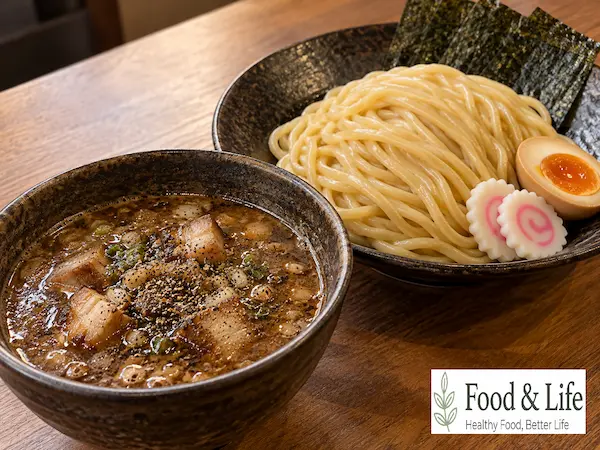
If you want to try a Japanese noodle dish that is a little different from regular ramen, Tsukemen is served with the noodles and broth separately so you can dip each bite into a rich, flavorful soup.
The key to this Tsukemen recipe is slowly cooking pork belly over low heat to render plenty of fat, then sautéing finely chopped green onion and shiitake mushroom in that fat until deeply browned. A tare made with mentsuyu, soy sauce, oyster sauce, and katsuobushi is then added to create a concentrated dipping broth called tsukejiru. The cooked noodles are rinsed thoroughly under cold water to give them a firm, springy texture. Dip the chilled noodles into the hot broth to enjoy the contrast between chewy noodles and the rich pork-and-katsuobushi flavor.
⏱️ Cooking Time: About 25 minutes
🍳 Difficulty: ★★☆☆☆
✓ Ingredients (Serves 1)
🥣 Main Ingredients
- 100 g (3.5 oz) pork belly
- 1 shiitake mushroom
- 1/2 green onion
- 1 serving noodles
🧂 Sauce & Seasonings
- 3 g (0.1 oz) katsuobushi (bonito flakes)
- 200 ml (6.8 fl oz) water
- 1 tbsp mentsuyu
- 1/2 tbsp brewed soy sauce
- 1/2 tbsp brown sugar (white sugar can be substituted)
- 1 tsp starch
- 1 tsp oyster sauce
- 1/2 tsp minced garlic
- Cooking oil
- Black pepper
(Measurement guide: 1 tbsp = 15 ml (0.5 fl oz), 1 tsp = 5 ml, 1 Korean paper cup = 180 ml (6.1 fl oz))
✓ How to Make Tsukemen
- Prep the vegetables and pork belly: Remove the stem from 1 shiitake mushroom, slice it thinly, then finely chop it. Cut the 1/2 green onion lengthwise and finely chop it. Cut 100 g (3.5 oz) pork belly into bite-size pieces about 1 cm (0.4 inch) wide.
- Make katsuobushi powder: Microwave 3 g (0.1 oz) katsuobushi for 50 seconds. Crush it finely by hand until it has a powder-like texture.
- Make the tare: Combine 200 ml (6.8 fl oz) water, 1 tbsp mentsuyu, 1/2 tbsp brewed soy sauce, 1/2 tbsp brown sugar, 1 tsp starch, 1 tsp oyster sauce, 1/2 tsp minced garlic, and all 3 g (0.1 oz) of the crushed katsuobushi. Mix thoroughly.
- Render the pork belly fat: Add a little cooking oil to a saucepan and begin cooking the pork belly over medium-low heat. Reduce the heat and cook it slowly so that plenty of fat renders from the pork.
- Cook the green onion and shiitake: Once the pork belly has released enough fat, add the finely chopped green onion and shiitake. Cook them thoroughly in the rendered pork fat, almost as if shallow-frying, until they develop a browned color.
- Finish the tsukejiru: Pour the prepared tare into the saucepan with the pork and vegetables. Bring the broth to an even boil to finish the tsukejiru.
- Cook and rinse the noodles: Cook 1 serving of noodles according to the package directions. Rinse them thoroughly under cold water to remove residual heat and surface starch, then drain very well.
- Serve the Tsukemen: Pour the hot tsukejiru into a bowl and grind in plenty of black pepper. Place the cold, rinsed noodles on a separate plate and dip small portions into the hot broth as you eat.
✓ Key Tips for Success
- Do not cook the pork belly too quickly over high heat: The deep pork flavor in the tsukejiru comes from slowly rendering the pork belly fat. Cook it gently over low heat, then sauté the green onion and shiitake in that fat until nicely browned.
- Rinse the cooked noodles thoroughly under cold water: If the noodles stay hot, they can soften too much and stick together. Rinsing them well under cold water removes excess starch and helps create the firm, springy texture that works well for Tsukemen.
✓ Serving Tips
- Do not put all of the cold noodles into the broth at once. Pick up a small amount at a time and dip it into the hot tsukejiru so you can enjoy the contrast in temperature and texture.
- Grind plenty of black pepper into the finished tsukejiru. Its sharp aroma complements the richness of the pork belly and the savory soy-based broth.
- Noodle cooking times vary by product, so follow the cooking time listed on the package rather than using one fixed time.
✓ How to Choose Good Pork Belly
- Meat and fat color: Choose pork belly with bright light pink to reddish-pink meat and firm, white fat.
- Firmness and surface condition: The meat should spring back when gently pressed and should not release excessive bloody liquid or moisture.
- Distribution of meat and fat: Look for pork belly with evenly layered lean meat and fat rather than pieces where one is heavily concentrated on one side.
✓ Pork Belly Nutrition per 100 g (3.5 oz)
| Nutrient | Amount per 100 g (3.5 oz) |
|---|---|
| Calories | 372.00 kcal |
| Carbohydrates | 0.00 g |
| Protein | 13.90 g |
| Fat | 33.31 g |
| Sodium | 56.00 mg |
Based on 100 g of raw pork belly listed as a raw ingredient food by the Ministry of Food and Drug Safety. Actual nutrition values may vary depending on breed, cut, product, and cooking method.
Source: Ministry of Food and Drug Safety Food Nutrition Database – Raw Ingredient Foods
✓ Frequently Asked Questions (FAQ)
Q1. Why are Tsukemen noodles rinsed in cold water after cooking?
Rinsing the cooked noodles thoroughly under cold water removes residual heat and surface starch, which helps them stay firm and springy. Drain them well before dipping them into the hot tsukejiru.
Q2. Why does my tsukejiru taste too light?
The broth may lack depth if the pork belly has not rendered enough fat or if the green onion and shiitake have not been cooked long enough. Slowly render the pork belly over low heat, then cook the green onion and shiitake in that fat until they are well browned.
The finished tsukejiru has a rich, full-bodied flavor from the rendered pork belly fat and the savory aroma of katsuobushi. Finely chopped green onion and shiitake are cooked until browned, adding both texture and deeper flavor throughout the broth.
The tare combines mentsuyu, brewed soy sauce, oyster sauce, and a subtle sweetness from brown sugar. Together, they create a distinctly savory dipping broth without overwhelming the noodles. The noodles, rinsed thoroughly in cold water, stay firm and springy and create a satisfying contrast with the piping-hot tsukejiru.
One of the most enjoyable parts of Tsukemen is being able to dip each bite of noodles into the broth yourself. You can control how much tsukejiru coats each portion, making it easy to enjoy the concentrated broth at your preferred intensity.
Slowly rendering the pork belly also builds plenty of flavor without requiring a separate, complicated stock. The same pork fat is used to cook the green onion and shiitake, creating layers of savory flavor in one saucepan. The combination of katsuobushi, pork belly, and black pepper gives the broth an especially bold finish.
If you enjoy rich Japanese noodle dishes, try this Tsukemen recipe with pork belly and katsuobushi at home. As long as you rinse the cooked noodles thoroughly under cold water, you can enjoy the classic contrast of chewy noodles and concentrated hot dipping broth.
Save or bookmark this recipe so you can easily find it again later, and share it if you found it helpful.
I’ll continue sharing approachable recipes and practical cooking tips that are easy to follow at home. 😊
If there is a dish you would like to see next, feel free to leave a comment. 😊