
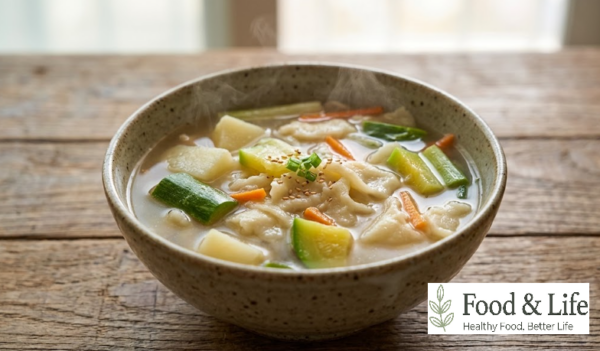
When you’re craving a warm and filling bowl of soup, Potato Sujebi (Korean Hand-Torn Noodle Soup) is a comforting choice with chewy dough, tender potatoes, and a deeply savory broth.
The key to this recipe is making the dough with salted water, kneading it for at least 10 minutes, and resting it in the refrigerator for 1 hour. This gives the dough enough elasticity to stretch thin without tearing while keeping its pleasantly chewy texture. For the broth, dried anchovies, dashima, Korean radish, and shiitake mushroom create a clean, flavorful base. The potatoes are partially cooked first, then thin pieces of sujebi dough are torn directly into the simmering broth so every ingredient finishes with the right texture.
The clear, savory anchovy broth pairs perfectly with fluffy potatoes and chewy hand-torn noodles, making this a satisfying one-bowl Korean meal.
⏱️ Cooking Time: About 80 minutes
🍳 Difficulty: ★★☆☆☆
✓ Ingredients
🥣 Main Ingredients
- 3 Korean paper cups all-purpose flour (540 ml by volume), for the dough
- 1 Korean paper cup water (180 ml / 6.1 fl oz), for the dough
- 2 L (67.6 fl oz) water, for the broth
- 15 dried anchovies, for the broth
- 3 pieces dried kelp (dashima), for the broth
- 1 stalk green onion, for the broth
- 1 onion, for the broth
- 1 shiitake mushroom, for the broth
- 1 piece Korean radish, about 5 cm (2 inches) long, for the broth
- 2 potatoes
- 1/4 aehobak (Korean zucchini)
- 1 stalk green onion
- 1/4 carrot
🧂 Seasonings
- 15 ml (1 tbsp) salt, for the dough
- 30 ml (2 tbsp) neutral cooking oil, for the dough
- 15 ml (1 tbsp) Korean soup soy sauce (guk-ganjang), for the broth
- 15 ml (1 tbsp) tuna extract seasoning, for the broth
(Measurement guide: 1 tbsp = 15 ml, 1 tsp = 5 ml, 1 Korean paper cup = 180 ml / 6.1 fl oz)
✓ How to Make Potato Sujebi
- Make the salted water and mix the dough: Dissolve 15 ml (1 tbsp) salt completely in 180 ml (6.1 fl oz) water. Place 3 Korean paper cups of all-purpose flour in a dry mixing bowl, pour in all the salted water at once, and stir with a spatula until rough strands of dough begin to form.
- Knead and rest the dough: Coat your gloves or hands with 30 ml (2 tbsp) neutral cooking oil to prevent sticking. Knead the dough for at least 10 minutes until smooth and cohesive. Place it in a food-safe plastic bag and refrigerate for about 1 hour.
- Make the broth: Add 2 L (67.6 fl oz) water, 15 dried anchovies, 3 pieces of dashima, 1 shiitake mushroom, 1 stalk green onion, 1 onion, and a 5 cm (2-inch) piece of Korean radish to a pot. Add 15 ml (1 tbsp) Korean soup soy sauce and 15 ml (1 tbsp) tuna extract seasoning. Once it comes to a boil, reduce the heat to low and continue simmering.
- Prepare the vegetables: While the broth cooks, cut 2 potatoes into thick slices. Cut 1/4 aehobak, 1 stalk green onion, and 1/4 carrot into bite-size pieces.
- Strain the broth and partially cook the potatoes: Once the broth is well infused, remove all the broth ingredients. Add the sliced potatoes and cook them until they are about halfway done.
- Tear in the sujebi dough: When the potatoes are about 50% cooked, lightly wet the surface of the rested dough with cold water. Stretch the dough as thin as possible with your hands, tear off small pieces, and drop them directly into the boiling broth.
- Add the vegetables and finish: After all the dough has been added, add the aehobak, green onion, and carrot. Bring the soup back to a boil and cook only until the aehobak is tender.
✓ Key Tips for Success
- Use salted water and oil for better dough: Dissolving the salt completely in water before adding it to the flour helps season the dough evenly. Coating your hands or gloves with oil while kneading prevents sticking and makes the dough easier to work. Knead for at least 10 minutes, then refrigerate for 1 hour to develop the chewy elasticity that makes sujebi distinctive.
- Cook the potatoes first and tear the dough thinly: If the potatoes and sujebi dough are added at the same time, the potatoes may remain undercooked while the dough becomes too soft. Cook the potatoes until about halfway done first. When tearing the dough, lightly wet its surface with cold water and stretch each piece as thin as possible so it cooks through while staying soft and chewy.
✓ Serving Tips
- Serve with fresh kimchi: The clear anchovy broth and chewy potato sujebi pair especially well with freshly seasoned napa cabbage geotjeori or well-fermented kkakdugi.
- Add a spicy dipping sauce: For extra heat, add finely chopped Cheongyang chili pepper or top each bowl with a small spoonful of sauce made with regular soy sauce, gochugaru, and chopped green onion.
✓ How to Choose Good Potatoes
- Shape and firmness: Choose potatoes that feel firm, have minimal blemishes, and feel heavy for their size.
- Skin condition: Look for potatoes with thin, smooth skins and only a few shallow eyes.
- Color: Choose potatoes with a clean yellow-brown color and no green areas on the surface.
Source: Republic of Korea Policy Briefing – Ingredient Guide
✓ Potato Nutrition per 100 g (3.5 oz)
| Nutrient | Amount per 100 g (3.5 oz) |
|---|---|
| Calories | 70.00 kcal |
| Carbohydrates | 16.07 g |
| Protein | 1.93 g |
| Fat | 0.03 g |
| Sodium | 1.00 mg |
Based on raw Sumi potatoes per 100 g (3.5 oz). Actual nutrition values may vary depending on variety, part used, product, and cooking method.
Source: Ministry of Food and Drug Safety Food Nutrition Database
✓ Frequently Asked Questions (FAQ)
Q1. The dough keeps sticking to my hands when I tear it. How can I make it easier to handle?
Add a small amount of cold water to the dough bowl and lightly wet the surface of the dough as you stretch it. This keeps it from sticking to your hands and makes it easier to tear into thin pieces.
Q2. Why does my sujebi broth become thick and cloudy?
This can happen if too much dry flour is left on the surface of the dough or if the dough is added before the broth is fully boiling, allowing excess starch to dissolve into the soup. Instead of dusting with extra flour, lightly wet the dough with water and quickly tear it into actively boiling broth.
Q3. Can I use bread flour or cake flour instead of all-purpose flour?
All-purpose flour is the best choice for a tender yet chewy sujebi texture. Bread flour can make the dough firmer, while cake flour can make it more likely to tear.
After kneading the dough with salted water for at least 10 minutes and resting it in the refrigerator for 1 hour, it became smooth and stretchy enough to tear into thin pieces without breaking easily. The anchovy, dashima, and vegetable broth stayed clear while developing plenty of savory depth from the Korean soup soy sauce and tuna extract seasoning. The potatoes, cooked ahead of the dough, also stayed fluffy and tender.
I’m usually disappointed when sujebi dough is too thick or the broth turns overly starchy, but this method gave the soup a good balance of thin, chewy noodles and a clean broth. My family also enjoyed the combination of chewy sujebi, soft potatoes, and the warm savory broth.
If you want to make chewy Korean potato sujebi at home, knead the dough thoroughly, rest it for 1 hour, cook the potatoes halfway first, and then stretch the dough as thin as possible before tearing it into the broth. Give this method a try whenever you want a warm, filling bowl of soup on a rainy or chilly day.
Save or bookmark this recipe for later, and share it with someone who enjoys Korean home cooking.
I’ll continue sharing approachable recipes and practical cooking tips that are easy to follow at home. 😊
If there is a dish you have been curious about or a recipe you would like to see next, feel free to leave a comment. 😊