
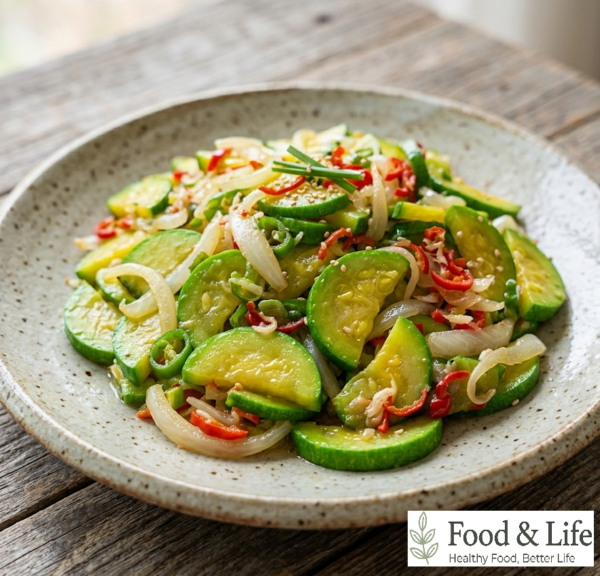
The key to this Aehobak Bokkeum recipe is slicing the Korean zucchini slightly thick, seasoning it with 1 tbsp saeujeot and 3 tbsp cooking wine, and stir-frying it only briefly so it stays tender with a light bite instead of turning mushy.
Start by sautéing the green onion and minced garlic in cooking oil until fragrant. Then add the onion, saeujeot, and cooking wine first so the seasoning develops more depth before the zucchini goes in. Cook the Aehobak only until just tender, then finish with 1 tbsp perilla oil. This helps keep the dish moist and flavorful without letting too much liquid collect in the pan.
In about 15 minutes, you can make a simple Korean side dish that combines the deep umami of saeujeot with the mild sweetness of Aehobak.
⏱️ Cooking Time: About 15 minutes
🍳 Difficulty: ★☆☆☆☆
✓ Ingredients
🥣 Main Ingredients
- 2 Aehobak (Korean zucchini), about 500 g (17.6 oz)
- 1/2 onion
- White part of 1 large green onion
- 2 Cheongyang chili peppers
- 2 red chili peppers
🧂 Seasonings
- 2 tbsp cooking oil
- 1 tbsp minced garlic
- 1 tbsp saeujeot (Korean salted fermented shrimp)
- 3 tbsp cooking wine
- 1 tbsp perilla oil
(Measurement guide: 1 tbsp = 15 ml, 1 tsp = 5 ml, 1 Korean paper cup = 180 ml)
✓ How to Make Aehobak Bokkeum
- Prepare the vegetables: Trim both ends from the 2 Aehobak, cut them in half lengthwise, then slice them into slightly thick half-moons so they do not fall apart while cooking. Thinly slice 1/2 onion. Finely chop the white part of 1 large green onion, and slice 2 Cheongyang chili peppers and 2 red chili peppers into rounds.
- Sauté the green onion and garlic: Heat 2 tbsp cooking oil in a skillet. Add 1 tbsp minced garlic and the chopped green onion, then sauté over medium heat until fragrant.
- Add the onion and seasonings: Once the green onion and garlic become aromatic, add the sliced onion, 1 tbsp saeujeot, and 3 tbsp cooking wine. Stir-fry briefly to bring out the flavor and deepen the umami.
- Add the zucchini: Add the thickly sliced Aehobak and stir-fry. When the zucchini is about halfway cooked, add the 2 sliced Cheongyang chili peppers and 2 red chili peppers, then cook briefly until the zucchini is just tender.
- Finish with perilla oil: When the zucchini is tender but still has a slight bite, turn off the heat. Drizzle with 1 tbsp perilla oil and gently toss to coat.
✓ Key Tips for Success
- Do not overcook the zucchini: If Aehobak is stir-fried too long, it releases too much moisture, becomes soft, and can easily break apart. Remove it from the heat when a chopstick can just pierce it but the slices still feel slightly firm. Residual heat will finish the cooking while helping the zucchini stay tender and springy.
- Sauté the saeujeot and cooking wine first: Briefly cooking 1 tbsp saeujeot and 3 tbsp cooking wine with the onion before adding the zucchini helps mellow the strong aroma of the fermented shrimp while bringing out more of its savory umami.
✓ Serving Tips
- Spoon warm Aehobak Bokkeum over rice and add gochujang and a fried egg for an easy bibimbap-style meal.
- If you are sensitive to spicy food, reduce the Cheongyang chili peppers to 1 or replace them with a mild green chili pepper.
- Let the dish cool, refrigerate it, and serve it chilled. The natural sweetness of the zucchini and nutty aroma of the perilla oil still come through, making it a good summer side dish.
✓ How to Choose Good Aehobak
- Surface and stem: Choose Aehobak with no scratches or bruises and with the stem still fresh and intact.
- Color and sheen: Look for zucchini with an even light-green color and a clean, natural sheen across the surface.
- Thickness and firmness: The zucchini should be fairly even in thickness from end to end. It should feel firm and springy when gently squeezed rather than soft.
Source: Rural Development Administration Ingredient Information
✓ Aehobak Nutrition per 100 g (3.5 oz)
| Nutrient | Amount per 100 g (3.5 oz) |
|---|---|
| Calories | 22.00 kcal |
| Carbohydrates | 5.14 g |
| Protein | 1.07 g |
| Fat | 0.09 g |
| Sodium | 0.00 mg |
Based on 100 g of raw Aehobak. Actual nutrition values may vary depending on the variety, cut, product, and cooking method.
Source: Ministry of Food and Drug Safety Food Nutrition Database
✓ Frequently Asked Questions (FAQ)
Q1. Why does my zucchini release so much water and turn mushy while stir-frying?
If the zucchini is sliced too thin or cooked too long over low heat, it releases excess moisture and becomes soft. Slice it slightly thick and stir-fry it quickly over medium-high heat.
Q2. Can I replace saeujeot with soup soy sauce or salt?
You can season the dish with 1 tbsp Korean soup soy sauce, 1 tbsp tuna extract seasoning, or salt instead. However, if you want a more savory depth similar to saeujeot, adding a small amount of fish sauce can help.
Following the recipe in order—first sautéing the green onion and garlic, then briefly cooking the saeujeot and cooking wine before adding the zucchini—helps the Aehobak stay moist and tender without becoming watery or mushy.
The salty umami of saeujeot blends naturally with the mild sweetness of onion and the nutty aroma of perilla oil. The Cheongyang chili peppers add a clean spicy kick, making this a flavorful side dish that pairs especially well with rice.
If you are looking for an easy Aehobak Bokkeum recipe that does not turn watery, slice the zucchini slightly thick, season it with saeujeot, and cook it only briefly. It takes about 15 minutes, making it a practical Korean side dish for busy weeknights or simple home-cooked meals.
Save or bookmark this recipe so you can easily find it again, and share it with someone who enjoys Korean food.
I’ll continue sharing easy-to-follow recipes and practical cooking tips. 😊
If there’s a dish you’d like to see next, feel free to leave a comment. 😊