
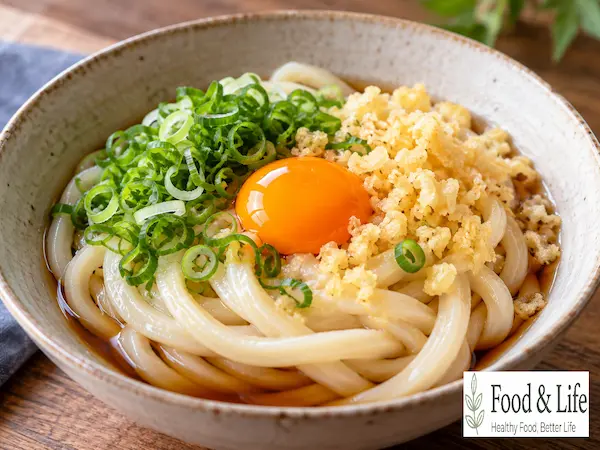
When you want a refreshing noodle dish on a hot day without spending much time at the stove, this cold bukkake udon recipe is an easy option.
Frozen udon noodles are microwaved for 2 minutes 30 seconds, rinsed thoroughly under cold water, and served with a simple tsuyu made with equal parts water, soy sauce, and mirin. The key is to bring the tsuyu to a quick boil with 1/2 teaspoon Hondashi, then pour it directly over 2 ice cubes to cool it down quickly while slightly diluting the seasoning. The cold, springy udon noodles pair well with the savory, lightly sweet tsuyu and creamy egg yolk.
⏱️ Cooking Time: About 5 minutes
🍳 Difficulty: ★☆☆☆☆
✓ Ingredients
🥣 Main Ingredients
- 1 serving frozen udon noodles
- 1 egg yolk
- Scallions, optional (green onion can be substituted)
- Tenkasu (crispy tempura bits), optional
- Grated daikon, optional
🧂 Sauce & Seasonings
- 30 ml (2 tbsp) water
- 30 ml (2 tbsp) soy sauce
- 30 ml (2 tbsp) mirin
- 2.5 ml (1/2 tsp) Hondashi
- 2 ice cubes
(Measurement guide: 1 tbsp = 15 ml, 1 tsp = 5 ml, 1 paper cup = 180 ml / 6.1 fl oz)
✓ How to Make Cold Bukkake Udon
- Heat the frozen udon: Microwave 1 serving of frozen udon noodles for 2 minutes 30 seconds. Follow the heating instructions on the package if they differ.
- Rinse the noodles until cold: Immediately rinse the heated udon thoroughly under cold water, then drain well. For an even firmer, springier texture, rinse the noodles in ice water.
- Make the tsuyu: Add 30 ml (2 tbsp) water, 30 ml (2 tbsp) soy sauce, 30 ml (2 tbsp) mirin, and 2.5 ml (1/2 tsp) Hondashi to a small saucepan. Heat until the mixture just comes to a boil, then immediately remove it from the heat.
- Cool the tsuyu: Place 2 ice cubes in a cup and pour the hot tsuyu directly over them. This cools the sauce quickly while bringing the seasoning to the right balance.
- Prepare the toppings: Thinly slice the scallions if using. Prepare grated daikon or tenkasu as additional toppings if desired.
- Assemble the cold bukkake udon: Place the chilled, well-drained udon noodles in a bowl and top with 1 egg yolk. Add scallions and tenkasu, then pour the cooled tsuyu over the noodles.
✓ Key Tips for Success
- Rinse the heated udon thoroughly with cold water right away. If the noodles stay warm, they will not have the refreshing temperature or springy texture that makes cold udon so enjoyable. Drain them well afterward so excess water does not dilute the tsuyu.
- Do not boil the tsuyu for too long. Remove it from the heat as soon as it reaches a boil. Pouring the hot tsuyu over 2 ice cubes cools it quickly and slightly adjusts the concentration for serving.
✓ Serving Tips
- For firmer, more springy udon noodles, rinse them thoroughly in ice water instead of regular cold water.
- Thinly sliced scallions add a fresh aroma. If scallions are unavailable, green onion can be used instead.
- Grated daikon gives the dish a cleaner, more refreshing finish, while tenkasu adds a crispy texture and savory richness.
✓ How to Choose Good Eggs
- Check the shell: Choose eggs with clean, smooth shells that are free of cracks.
- Check the laying date: For eggs marked with a 10-digit code on the shell, check the first four digits for the laying date and choose recently produced eggs.
✓ Egg Nutrition per 100 g (3.5 oz)
| Nutrient | Amount per 100 g (3.5 oz) |
|---|---|
| Calories | 140.00 kcal |
| Carbohydrates | 1.07 g |
| Protein | 12.86 g |
| Fat | 8.51 g |
| Sodium | 137.00 mg |
Values are based on 100 g (3.5 oz) of raw egg. Actual nutrition may vary depending on the variety, product, and preparation method.
Source: Ministry of Food and Drug Safety Food Nutrition Database
✓ Frequently Asked Questions (FAQ)
Q1. Why aren’t my cold udon noodles firm and springy?
The noodles may not have been chilled thoroughly enough, or too much water may have remained after rinsing. Rinse them well under cold or ice water, then drain thoroughly before adding the tsuyu.
Q2. Do I have to add scallions and tenkasu?
No. Both are optional toppings and can be omitted. You can substitute green onion for scallions or add grated daikon according to your preference.
Q3. Can I use green onion instead of scallions?
Yes. Green onion can be used in place of scallions. Slice it thinly and add it as a topping just before serving.
Finished cold bukkake udon is all about the firm, springy texture of thoroughly chilled udon noodles. The tsuyu, made with equal amounts of water, soy sauce, and mirin, has a clean balance of savory umami and gentle sweetness. Once the egg yolk is broken and mixed into the noodles, it softens the salty edge of the sauce and adds a richer, creamier flavor.
Scallions add a fresh aroma, while tenkasu provides a crisp contrast to the soft, chewy noodles. The deep brown tsuyu, bright egg yolk, and green scallions also create an appetizing bowl with only a few simple ingredients.
On hot days, I often prefer chilled noodles like this over a bowl of hot noodle soup. This recipe is especially convenient because the tsuyu ingredients can be prepared while the frozen udon is heating in the microwave. Pouring the hot sauce directly over 2 ice cubes also means there is no need to chill the tsuyu in the refrigerator for a long time.
Mixing the egg yolk into the tsuyu gradually changes the flavor from distinctly savory to smooth and rich. My family also enjoyed the combination of cold, chewy noodles and the lightly sweet and savory sauce. For such a quick recipe, both the noodle texture and the flavor of the tsuyu remain clear and satisfying.
If you need a quick, refreshing meal on a day when you do not want to spend much time cooking over the stove, try this cold bukkake udon recipe. With frozen udon noodles and a few basic seasonings, it works well for an easy lunch or light dinner.
Save or bookmark this recipe so you can quickly find it again, and feel free to share it with someone who enjoys Japanese noodle dishes.
I’ll continue sharing approachable recipes and practical cooking tips that are easy to make at home. 😊
If there is a dish you have been curious about or a recipe you would like to see next, feel free to leave a comment. 😊
This recipe was prepared after referring to a recipe from the YouTube channel “일식예보,” and this post is based on the cooking process and results.