
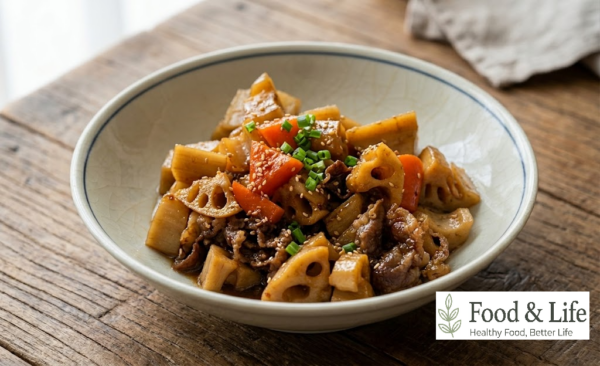
When your usual side dishes start to feel repetitive, a hearty combination of meat and vegetables can make the meal more satisfying.
This Korean braised lotus root with beef belly pairs crisp lotus root with tender, thinly sliced beef belly in a savory soy-based braising sauce. With a simple ratio of water, soy sauce, cooking wine, and sugar, you can easily create a balanced sauce that is salty, savory, and lightly sweet.
The glossy sauce coats every piece of lotus root and beef, making this an easy Korean side dish that pairs especially well with rice.
⏱️ Cooking Time: About 20 minutes
🍳 Difficulty: ★★☆☆☆
✓ Ingredients
🥣 Main Ingredients
- 320 g (11.3 oz) lotus root
- 150 g (5.3 oz) thinly sliced beef belly
- 1/3 carrot
- Cooking oil
🧂 Sauce & Seasonings
- 300 ml (10.1 fl oz) water
- 50 ml (1.7 fl oz) regular soy sauce
- 25 ml (0.8 fl oz) Mirim cooking wine
- 25 ml (0.8 fl oz) sugar
(Measurement guide: 1 tbsp = 15 ml, 1 tsp = 5 ml, 1 Korean paper cup = 180 ml / 6.1 fl oz)
✓ How to Make Korean Braised Lotus Root
- Soak the lotus root in vinegar water: Peel the lotus root and briefly soak it in water mixed with 1 tbsp vinegar. This helps prevent discoloration and removes some surface starch, helping the lotus root stay crisp when cooked.
- Prep the vegetables: Drain the lotus root well, then cut both the lotus root and carrot diagonally into bite-size pieces.
- Sauté the vegetables: Add cooking oil to a skillet and sauté the lotus root and carrot over medium heat. Lightly coating the vegetables in oil first helps keep the lotus root from breaking apart and preserves its crisp texture during braising.
- Add the braising sauce: Once the surface of the lotus root begins to turn lightly golden, add 300 ml (10.1 fl oz) water, 50 ml (1.7 fl oz) regular soy sauce, 25 ml (0.8 fl oz) Mirim cooking wine, and 25 ml (0.8 fl oz) sugar. Bring the mixture to a boil.
- Add the beef belly: When the sauce is bubbling, separate the thin slices of beef belly as you add them so they do not clump together. Reduce the heat to medium-low and continue simmering. Spoon the braising liquid over the meat and vegetables as they cook so everything becomes evenly coated and flavorful.
- Finish the dish: Turn off the heat when only a shallow layer of sauce remains in the bottom of the pan and the ingredients look glossy. Transfer to a serving dish.
✓ Key Tips for Success
- Thinly sliced beef belly can become tough if added too early. Wait until the braising sauce comes to a boil, then add the beef and simmer over medium-low heat while spooning the sauce over the meat. This helps keep the beef tender while allowing its rich flavor to blend into the sauce.
✓ Serving Tips
- If you prefer a spicy finish, add 1–2 sliced Cheongyang chilies or peperoncino when adding the beef belly.
- You can also use thinly sliced beef brisket, thinly shaved pork belly, or thinly sliced beef for bulgogi in place of the beef belly.
✓ How to Choose Fresh Lotus Root
- Shape and thickness: Choose lotus roots with long, straight segments that are thick and relatively even in size.
- Surface condition: Look for roots without cracks or major blemishes. A little soil on the surface can help indicate that the lotus root has not dried out excessively.
- Color and cut ends: Choose lotus roots with evenly colored skin and cut ends that have not turned black or become dried out.
✓ Lotus Root Nutrition per 100 g (3.5 oz)
| Nutrient | Amount per 100 g (3.5 oz) |
|---|---|
| Calories | 75.00 kcal |
| Carbohydrates | 17.28 g |
| Protein | 1.63 g |
| Fat | 0.07 g |
| Sodium | 21.00 mg |
Based on 100 g of raw lotus root. Actual nutrition values may vary depending on variety, portion, product, and cooking method.
Source: Ministry of Food and Drug Safety Food Nutrition Database – Raw Food Ingredients
✓ Frequently Asked Questions (FAQ)
Q1. What should I do if the braising liquid reduces too quickly and starts to burn?
Immediately reduce the heat to low and add 2–3 tbsp of water. Loosen any sauce sticking to the bottom of the pan, then gently stir and finish cooking to prevent the seasoning from becoming too concentrated or burning.
Q2. Can I use a different cut of meat instead of beef belly?
Yes. Thinly sliced beef brisket, shaved pork belly, or thinly sliced beef for bulgogi can be used instead. Thin slices work best because they absorb the sauce quickly and stay tender during the short cooking time.
The crisp lotus root absorbs the savory soy-based sauce while the beef belly adds rich flavor, creating a satisfying side dish that goes especially well with steamed rice. Once you remember the simple sauce ratio, this Korean braised lotus root is easy to prepare as either an everyday side dish or a hearty main accompaniment.
Save or bookmark this recipe so you can make it again whenever you want an easy Korean side dish with both vegetables and meat.
If you found this recipe helpful, feel free to share it with someone who enjoys Korean food.
Have a dish you would like to see next? Leave a comment with your recipe request. 😊