
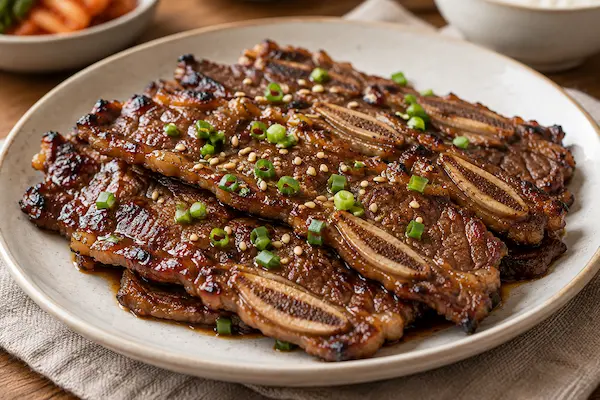
The key to making tender LA galbi without burning the marinade is to finely blend the fruits and vegetables, then strain out all of the pulp and use only the clear juice in the marinade.
Instead of soaking frozen LA galbi in water for a long time, quickly rinse away any bone fragments under running water, then let the ribs thaw naturally in a colander so excess blood and moisture can drain. The ribs are marinated for a full day in a mixture of onion, apple, Asian pear, Korean radish, garlic, and ginger juice combined with soy sauce and rice syrup.
When cooking, sear the marinated ribs first in a very hot skillet until nicely browned, then spoon in the remaining marinade a little at a time and let it reduce around the meat. This method helps prevent the marinade from scorching while keeping the beef tender and juicy. With its sweet and savory flavor, this LA galbi recipe is especially well suited for holiday meals and family gatherings.
⏱️ Cooking Time: About 40 minutes
🍳 Difficulty: ★★☆☆☆
✓ Ingredients
🥣 Main Ingredients
- LA galbi (Korean BBQ short ribs) 1.2 kg (2.6 lb)
- Onion 150 g (5.3 oz)
- Apple 150 g (5.3 oz)
- Asian pear 150 g (5.3 oz)
- Korean radish 150 g (5.3 oz)
- Garlic 50 g (1.8 oz)
- Ginger 10 g (0.35 oz)
🧂 Marinade & Seasonings
- Soy sauce 6 tbsp
- Sugar 2 tbsp
- Rice syrup 3 tbsp
- Ground black pepper 1/2 tsp
- Sesame oil 3 tbsp
(Measurement guide: 1 tbsp = 15 ml, 1 tsp = 5 ml, 1 paper cup = 180 ml / 6.1 fl oz)
✓ How to Make LA Galbi
- Rinse off bone fragments and drain the ribs: While the 1.2 kg (2.6 lb) of LA galbi is still frozen, rinse it under running water, rubbing the cut surfaces gently with your hands to remove any fine bone fragments. Do not soak the ribs in water. Place them in a colander and let them thaw naturally for 1–2 hours while excess blood and moisture drain away.
- Blend the fruits and vegetables: Add 150 g (5.3 oz) onion, 50 g (1.8 oz) garlic, 10 g (0.35 oz) ginger, 150 g (5.3 oz) peeled and cored apple, 150 g (5.3 oz) peeled and cored Asian pear, and 150 g (5.3 oz) Korean radish to a blender. Blend until very finely puréed.
- Strain out the pulp: Pour the blended mixture into a clean cheesecloth or fine cloth. Squeeze firmly with your hands, leaving the fibrous pulp behind and collecting only the clear fruit-and-vegetable juice in a bowl.
- Make the marinade: Add 6 tbsp soy sauce, 2 tbsp sugar, 3 tbsp rice syrup, 1/2 tsp ground black pepper, and 3 tbsp sesame oil to the strained juice. Stir until evenly combined.
- Marinate overnight: Coat the LA galbi with the marinade and arrange the ribs in an airtight container, slightly overlapping them at an angle so the bone sections are not stacked directly on top of one another. Pour in all of the remaining marinade, cover, and refrigerate for one day.
- Sear and reduce the marinade: Heat a skillet until very hot without adding oil. Add the marinated ribs and cook until the underside is browned. Flip the ribs, then add the remaining marinade a little at a time. Continue cooking and reducing the liquid around the meat until both sides are browned and the ribs are cooked through.
✓ Key Tips for Success
- Use only the strained fruit-and-vegetable juice: If the fibrous pulp is left in the marinade, it can burn before the meat finishes cooking and leave the outside of the ribs overly dark. Straining the mixture through cheesecloth helps keep the marinade smooth, reduces scorching, and allows it to coat the meat more evenly.
- Drain the ribs instead of soaking them in water: Leaving the ribs submerged for a long time can draw out juices along with the blood, which may leave the meat drier after cooking. Rinse away only the bone fragments, then let the ribs thaw and drain in a colander for 1–2 hours to help preserve their juicy, pleasantly chewy texture.
✓ Serving Tips
- Transfer the freshly cooked LA galbi to a serving plate and garnish lightly with sliced scallions or sesame seeds for a fresh aroma and a little extra texture.
- Because this recipe uses Korean radish instead of pineapple or kiwi, the beef stays tender without becoming overly soft, while the meat around the bones retains a pleasantly chewy texture.
- Serve the golden-brown ribs over warm steamed rice to enjoy the balance of the mild sweet-and-savory marinade with the rich juices of the beef.
✓ How to Choose Good Beef
- Color: Choose beef with a bright red surface that looks moist rather than dry and has a natural sheen.
- Firmness: Fresh beef should feel springy when lightly pressed and quickly return to its original shape.
- Fat: Look for beef with creamy white fat that is evenly distributed through the lean meat.
✓ Beef Short Rib Nutrition per 100 g (3.5 oz)
| Nutrient | Amount per 100 g (3.5 oz) |
|---|---|
| Calories | 376.00 kcal |
| Carbohydrates | 0.00 g |
| Protein | 16.78 g |
| Fat | 32.39 g |
| Sodium | 48.00 mg |
Based on 100 g of raw Korean beef (Hanwoo), Grade 1, short ribs. Actual nutrition may vary depending on breed, cut, product, and cooking method.
Source: Ministry of Food and Drug Safety Food Nutrition Database – Raw Food Ingredients
✓ Frequently Asked Questions (FAQ)
Q1. Why don’t you soak LA galbi in water to remove the blood?
Soaking the ribs for too long can draw out some of the beef’s natural juices along with the blood, which may leave the meat drier after cooking. Instead, quickly rinse off the bone fragments under running water, then let the ribs drain naturally in a colander.
Q2. Why does LA galbi marinade burn or stick to the pan?
This can happen when the fibrous fruit-and-vegetable pulp is left in the marinade or when too much marinade is added to the skillet at the beginning. Strain the blended mixture and use only the clear juice, then brown the meat first and add the marinade gradually as the ribs cook.
Q3. Why use Korean radish instead of pineapple or kiwi in the marinade?
Kiwi and pineapple can soften meat very quickly, which may make the texture overly soft. Using blended Korean radish helps keep the ribs tender while preserving a pleasantly chewy texture around the bones.
Marinating the LA galbi for a full day in a smooth, strained marinade allows the sweet and savory seasoning to penetrate the meat without leaving excessive fruit-and-vegetable pulp that can burn in the skillet. The gentle sweetness of rice syrup and the rich aroma of sesame oil pair especially well with the tender, chewy meat around the bones.
If you have struggled with LA galbi marinade burning or the beef turning dry, try straining out the pulp and avoiding a long soak in water. This method works well for holiday tables, family gatherings, and other special meals.
Save or bookmark this recipe so you can easily find it later, and share it with someone who enjoys Korean food.
More approachable recipes and practical cooking tips will be added regularly. 😊
If there is a dish you would like to see featured next, feel free to leave a comment. 😊
※ This recipe was prepared and written based on a recipe featured on the YouTube channel “Altoran – Home-Cooked Recipes”, with the cooking process and final results reflected in this post.