
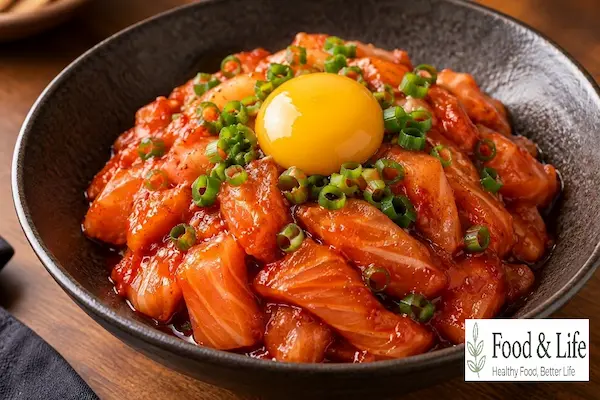
Chef Jung Ho-young’s salmon yukhoe recipe is a quick 10-minute dish made by gently tossing 200 g (7 oz) of raw salmon intended for sashimi with a 4:3:2 cho-gochujang sauce made from 4 tbsp gochujang, 3 tbsp vinegar, and 2 tbsp sugar.
The sweet and tangy sauce is finished with minced garlic and sesame oil, which pair well with the rich flavor of fresh salmon. Adding an egg yolk in the center makes the seasoning taste smoother and more mellow. For the best texture, slice the fattier salmon belly a little thinner and cut the leaner sections into thicker strips, then toss everything gently so the delicate salmon does not break apart. Since no cooking is required, this salmon yukhoe recipe is an easy way to enjoy fresh raw salmon in a different style.
⏱️ Cooking Time: About 10 minutes
🍳 Difficulty: ★☆☆☆☆
✓ Ingredients
🥣 Main Ingredients
- 200 g (7 oz) raw salmon intended for sashimi
- 1 egg yolk
- A little sesame seed
🧂 Sauce & Seasonings
- 4 tbsp gochujang
- 3 tbsp vinegar
- 2 tbsp sugar
- 1/2 tbsp minced garlic
- 1/2 tbsp sesame oil
(Measurement guide: 1 tbsp = 15 ml, 1 tsp = 5 ml, 1 Korean paper cup = 180 ml / 6.1 fl oz)
✓ How to Make Salmon Yukhoe
- Make the 4:3:2 cho-gochujang sauce: Add 4 tbsp gochujang, 3 tbsp vinegar, and 2 tbsp sugar to a bowl. Add 1/2 tbsp minced garlic and 1/2 tbsp sesame oil, then stir thoroughly with a spoon until the sugar is fully dissolved and no grainy texture remains.
- Slice the salmon according to the cut: Place 200 g (7 oz) salmon on a cutting board. Slice the fattier belly portion slightly thinner so it does not taste overly rich, and cut the leaner sections into thicker, longer strips.
- Gently toss with the sauce: Add the sliced salmon to the prepared sauce. Wearing food-safe gloves, gently toss the salmon with your fingertips so the pieces are evenly coated without crushing or breaking the flesh.
- Plate and finish: Arrange the seasoned salmon in a small mound on a serving plate. Place 1 egg yolk in the center and sprinkle a little sesame seed evenly over the top.
✓ Key Tips for Success
- Adjust the thickness for different parts of the salmon: The belly contains more fat, so slicing it too thick can make each bite feel overly rich. Slice the belly slightly thinner while keeping the leaner sections thicker and longer to balance the tender texture with a more satisfying bite.
- Dissolve the sugar and toss gently: Make sure the sugar is fully dissolved in the sauce so the sweetness blends evenly rather than tasting grainy. Because raw salmon is delicate, avoid squeezing or kneading it. Toss it lightly with your fingertips to keep the pieces intact.
✓ Serving Tips
- Break the egg yolk and gently mix it with the spicy-sweet salmon. The yolk softens the sharper flavor of the cho-gochujang and adds a richer, smoother finish.
- If you like, serve the salmon yukhoe with thinly sliced onion, radish sprouts, or crisp cucumber. Their fresh texture provides a refreshing contrast to the rich salmon.
- Place a small amount of warm rice on a piece of crisp seasoned seaweed, then top it with salmon yukhoe for a flavorful maki-style bite.
✓ How to Choose Good Salmon
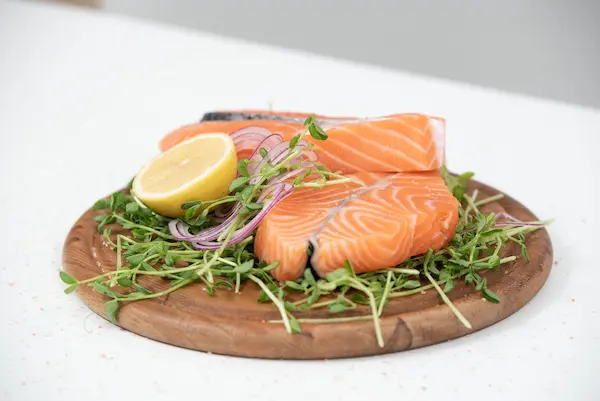
- [Color and sheen]: Look for salmon with a vivid orange to reddish color and a moist, glossy surface.
- [Firmness and texture]: Choose salmon that feels firm and springs back when lightly pressed rather than feeling soft or mushy.
- [Fat lines]: The white fat lines running through the flesh should look clear, distinct, and evenly distributed rather than blurred or broken down.
✓ Salmon Nutrition per 100 g (3.5 oz)
| Nutrient | Amount per 100 g (3.5 oz) |
|---|---|
| Calories | 106.00 kcal |
| Carbohydrates | 0.20 g |
| Protein | 20.60 g |
| Fat | 1.90 g |
| Sodium | 95.00 mg |
Based on 100 g of raw salmon. Actual nutrition values may vary depending on the species, cut, product, and preparation.
Source: Ministry of Food and Drug Safety Food Nutrition Database – Raw Ingredient Foods
✓ Frequently Asked Questions (FAQ)
Q1. What should I be careful about when mixing salmon with the sauce?
Raw salmon has a delicate texture and can break apart easily if squeezed or mixed too aggressively. Toss it gently with your fingertips so the pieces keep their shape and texture.
Q2. Why does the sauce taste grainy or too heavy on salmon yukhoe?
The sauce can taste grainy if the sugar is not fully dissolved, while too much gochujang can make the flavor feel heavy. Keep the gochujang, vinegar, and sugar at the 4:3:2 ratio and dissolve the sugar completely before adding the salmon.
Q3. Can I use smoked salmon instead of raw salmon?
Smoked salmon has a stronger smoky flavor and more pronounced saltiness, which can compete with the sweet and tangy cho-gochujang sauce. For this recipe, fresh raw salmon intended for sashimi provides a cleaner flavor that matches the original seasoning better.
After making this recipe, I found that the 4:3:2 mixture of gochujang, vinegar, and sugar lightly coated the soft, rich salmon with a clean balance of spicy, sweet, and tangy flavors. Breaking the egg yolk and mixing it into the salmon mellowed the bold cho-gochujang, while the sesame oil added a subtle savory richness.
The combination of tender salmon and sweet-tangy seasoning also worked well as a simple dinner dish for the family. If you want to make something different with fresh raw salmon, slice the belly and lean sections to different thicknesses, then gently toss them in the 4:3:2 cho-gochujang sauce to make this easy salmon yukhoe recipe.
If you found this recipe helpful, save or bookmark it for later and share it with someone who might enjoy it.
I’ll continue sharing approachable recipes and practical cooking tips that are easy to follow at home. 😊
If there is a dish you have been curious about or a recipe you would like to see featured, feel free to leave a comment. 😊
※ This recipe was adapted from a recipe introduced on the YouTube channel “정호영의 오늘도 요”. I prepared the dish myself and wrote this post based on the cooking process and results.