
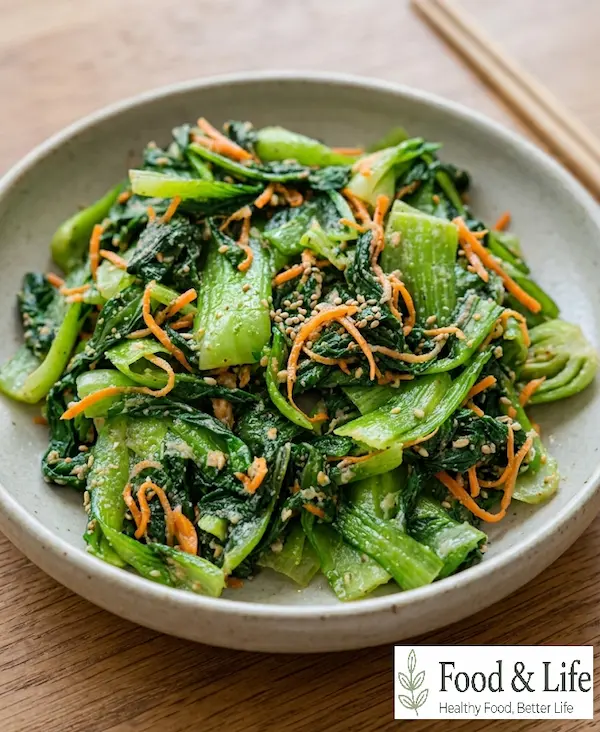
The key to making Korean seasoned bok choy is to blanch 300 g (10.6 oz) of bok choy in boiling water for just about 30 seconds, immediately rinse it under cold water, and thoroughly remove the excess moisture.
If bok choy is blanched for too long, the stems can become soft and lose their crunch. A quick blanch helps preserve their crisp texture and natural juiciness. Toss the blanched bok choy with 2/3 tbsp Korean soup soy sauce, 1 pinch seasoned salt, 1/3 tbsp minced garlic, 1 heaping tbsp ground perilla seeds, and 1 tbsp perilla oil for a mild, nutty flavor.
Add 20 g (0.7 oz) of finely julienned carrot for extra color, and you’ll have a simple Korean bok choy salad with perilla ready in about 15 minutes.
⏱️ Cooking Time: About 15 minutes
🍳 Difficulty: ★☆☆☆☆
✓ Ingredients
🥣 Main Ingredients
- 300 g (10.6 oz) bok choy
- 20 g (0.7 oz) carrot
🧂 Seasonings
- 1 tbsp salt, for blanching the bok choy
- 2/3 tbsp Korean soup soy sauce (guk-ganjang)
- 1 pinch seasoned salt
- 1/3 tbsp minced garlic
- 1 heaping tbsp ground perilla seeds
- 1 tbsp perilla oil
- Sesame seeds, a small amount
(Measurement guide: 1 tbsp = 15 ml, 1 tsp = 5 ml, 1 Korean paper cup = 180 ml)
✓ How to Make Korean Bok Choy Salad
- Prepare the vegetables: Trim the base from 300 g (10.6 oz) of bok choy, separate the leaves, and rinse them thoroughly under running water. Julienne 20 g (0.7 oz) of carrot into thin strips.
- Blanch the bok choy: Bring a generous amount of water to a boil over high heat. Add 1 tbsp salt and the prepared bok choy, then blanch for only 30 seconds. Immediately rinse under cold water to stop the cooking process.
- Remove excess moisture: Gently press and squeeze the cooled bok choy with both hands to remove as much water as possible, then place it in a mixing bowl.
- Season and toss: Add the drained bok choy and julienned carrot to a bowl. Add 2/3 tbsp Korean soup soy sauce, 1 pinch seasoned salt, 1/3 tbsp minced garlic, 1 heaping tbsp ground perilla seeds, 1 tbsp perilla oil, and a small amount of sesame seeds. Gently toss everything together by hand until evenly seasoned.
✓ Key Tips for Success
- Watch the blanching time and moisture: Blanching bok choy for too long can make the stems limp and overly soft, so remove it after just 30 seconds. After blanching, squeeze out the excess water thoroughly. If too much moisture remains, the bok choy will release water after seasoning and dilute the flavor.
✓ Serving Tips
- Serve the seasoned bok choy over warm rice with a fried egg and a spoonful of gochujang for an easy namul-style bibimbap.
- The mild, nutty flavor of ground perilla seeds and perilla oil pairs well with a clear Korean soybean sprout soup or a mild Korean beef and radish soup.
✓ How to Choose Fresh Bok Choy
- Leaf color and condition: Look for bok choy with deep, vibrant green leaves without wilted or yellowed areas. The leaf veins should not be overly pronounced.
- Thickness and firmness of the stems: Fresh bok choy should have thick, pale-to-white stems that feel firm and springy rather than soft.
✓ Bok Choy Nutrition per 100 g (3.5 oz)
| Nutrient | Amount per 100 g (3.5 oz) |
|---|---|
| Calories | 10.00 kcal |
| Carbohydrates | 1.64 g |
| Protein | 1.41 g |
| Fat | 0.09 g |
| Sodium | 17.00 mg |
Values are based on 100 g of raw bok choy. Actual nutrition may vary depending on the variety, product, and cooking method.
Source: Ministry of Food and Drug Safety Food Nutrition Database
✓ Frequently Asked Questions (FAQ)
Q1. How long should I blanch bok choy to keep it crisp?
Blanch it in boiling water for about 30 seconds, then immediately rinse it under cold water. This short cooking time helps keep the stems crisp.
Q2. Why does my seasoned bok choy become watery after sitting?
The bok choy likely still had too much moisture after blanching. Squeeze it thoroughly before adding the seasonings so the flavor does not become diluted.
Q3. Can I use sesame oil and sesame seeds instead of ground perilla seeds and perilla oil?
Yes. You can substitute sesame oil and sesame seeds in the same proportions for a more familiar, clean, nutty flavor.
Blanching the bok choy for only 30 seconds and immediately cooling it under cold water helps preserve the crisp texture of the stems and the vegetable’s natural mild sweetness. Once the excess water is thoroughly squeezed out, the ground perilla seeds and perilla oil coat the bok choy evenly without becoming diluted, giving the dish a gentle nutty aroma.
If your bok choy often turns soft after blanching or releases too much water after seasoning, remember the key steps: blanch for only 30 seconds, rinse immediately under cold water, and squeeze out the moisture thoroughly. This simple method makes it easy to prepare a crisp and nutty Korean bok choy side dish.
Save or bookmark this recipe so you can easily find it again, and share it with someone who enjoys Korean food.
More easy-to-follow recipes and practical cooking tips are coming soon. 😊
If there’s a dish you’d like to see featured next, feel free to leave a comment. 😊