
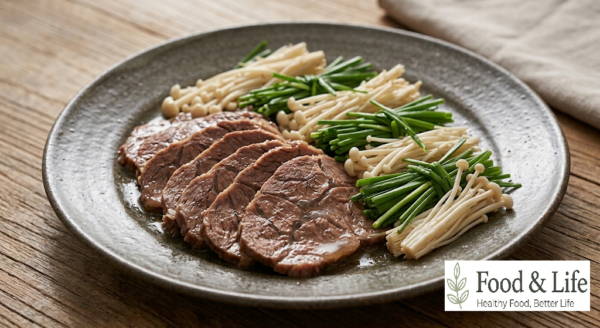
The key to this Korean beef shank hot pot recipe is soaking 1 kg (2.2 lb) of beef shank in cold water, then adding it to boiling broth and gently simmering it over medium heat for 1 hour until the meat is tender and the connective tissue turns pleasantly chewy and soft.
Start with 2.5 L (84.5 fl oz) of water and simmer it with onion, green onion, whole garlic cloves, and black peppercorns. Season the broth with 7 tbsp of anchovy fish sauce to create a clear, deeply savory broth that highlights the natural flavor of the beef. Once cooked, thinly slice the beef and arrange it over mung bean sprouts, napa cabbage, garlic chives, enoki mushrooms, and oyster mushrooms, then add just enough broth to partially cover the vegetables and bring everything back to a boil.
The combination of tender beef, crisp vegetables, mushrooms, and a clean, comforting broth makes this Korean-style hot pot an excellent choice for a warm family dinner.
⏱️ Cooking Time: About 90 minutes
🍳 Difficulty: ★★☆☆☆
✓ Ingredients
🥣 Main Ingredients
- 1 kg (2.2 lb) beef shank
- 2.5 L (84.5 fl oz) water
- 1 onion
- 1 green onion
- 15 whole garlic cloves
- 1/2 head baby napa cabbage, about 300 g (10.6 oz)
- 300 g (10.6 oz) mung bean sprouts
- 200 g (7 oz) garlic chives
- 150 g (5.3 oz) enoki mushrooms
- 200 g (7 oz) oyster mushrooms
🧂 Seasonings
- A small amount of whole black peppercorns
- 7 tbsp anchovy fish sauce
(Measurement guide: 1 tbsp = 15 ml, 1 tsp = 5 ml, 1 Korean paper cup = 180 ml / 6.1 fl oz)
✓ How to Make Korean Beef Shank Hot Pot
- Soak and trim the beef: Trim the visible fat from the surface of the 1 kg (2.2 lb) beef shank with kitchen scissors. Place the beef in cold water and soak for 1 hour to draw out the blood.
- Prepare the broth base: Pour 2.5 L (84.5 fl oz) of water into a large pot. Cut the onion and green onion into pieces, then add them along with 15 whole garlic cloves and a small amount of whole black peppercorns. Bring to a boil.
- Simmer the beef shank: Once the water reaches a full boil, add the soaked beef shank and 7 tbsp of anchovy fish sauce. Reduce to medium heat and gently simmer for 1 hour.
- Prepare the vegetables and assemble the hot pot: While the beef cooks, rinse 300 g (10.6 oz) of mung bean sprouts. Cut and wash 300 g (10.6 oz) of baby napa cabbage, then spread both evenly over the bottom of a hot pot or wide shallow pot. Arrange 200 g (7 oz) of garlic chives, 150 g (5.3 oz) of enoki mushrooms, and 200 g (7 oz) of oyster mushrooms on top.
- Slice the beef: After simmering for 1 hour, remove the beef shank from the broth. Let it cool slightly, then slice it thinly.
- Add the beef and broth: Arrange the sliced beef neatly over the vegetables. Pour in slightly less broth than you think you need, leaving the ingredients only partially submerged. Bring the hot pot to a boil so the vegetable juices blend naturally into the beef broth.
✓ Key Tips for Success
- Control the heat and cooking time: Beef shank contains plenty of tendons and connective tissue, so boiling it too aggressively can make the meat tough. Once the broth comes to a boil, cook it gently over medium heat for exactly 1 hour so the connective tissue softens and develops a tender, pleasantly chewy texture.
- Do not add too much broth at first: Filling the hot pot with broth from the beginning can cause it to overflow as the vegetables release moisture, and it may also dilute the seasoning. Add just enough broth to partially cover the ingredients so the liquid released from the cabbage and mushrooms can balance the final amount and flavor.
✓ Serving Tips
- Taste the finished broth and season with a little salt if needed. This keeps the broth clear and clean-tasting without overpowering the natural beef flavor.
- Dip the tender slices of beef and cooked vegetables into soy-based pickling sauce for a sweet, tangy, and savory contrast.
- You can also make a dipping sauce with Cham Sauce (Korean dipping sauce), Korean hot mustard, and finely sliced Cheongyang chili peppers for a sharper, refreshing kick.
✓ How to Choose Good Beef Shank
- Look for a bright red color: Choose beef with a clear, bright red color rather than meat that appears excessively dark or brown. The surface should feel firm and retain a fresh, moist appearance.
- Check the connective tissue and white fat: The connective tissue and fat should appear clean and white rather than yellow. Beef shank with clearly visible tendons and collagen fibers through the center develops the characteristically chewy texture after cooking.
- Avoid unpleasant odors: After opening the package, the beef should not have a sour or unpleasant smell. Choose meat that retains the clean, natural aroma of fresh beef.
✓ Beef Shank Nutrition per 100 g (3.5 oz)
| Nutrient | Amount per 100 g (3.5 oz) |
|---|---|
| Calories | 237.00 kcal |
| Carbohydrates | 0.00 g |
| Protein | 21.47 g |
| Fat | 15.55 g |
| Sodium | 66.00 mg |
Based on raw Korean beef (Hanwoo), Grade 1, beef shank (arongsatae), per 100 g. Actual nutritional values may vary depending on breed, cut, product, and cooking method.
Source: Ministry of Food and Drug Safety Food Nutrition Database
✓ Frequently Asked Questions (FAQ)
Q1. Should I add the beef shank before or after the broth starts boiling?
Add the soaked beef shank once the broth reaches a full boil. This allows the proteins on the surface to set quickly and helps the meat retain its juices and savory flavor.
Q2. Why is my cooked beef shank dry and tough?
The most common causes are cooking it for less than 1 hour or using heat that is too high, which can cause moisture to evaporate too quickly. Gently simmering the beef over medium heat for 1 hour gives the connective tissue and tendons enough time to soften, producing a tender yet pleasantly chewy texture.
Following this method, simmering the beef shank in boiling broth over medium heat for 1 hour produces tender lean meat with pleasantly chewy tendon throughout. Adding just enough of the beef broth to the mung bean sprouts, napa cabbage, garlic chives, and mushrooms also lets the vegetables release their natural sweetness and savory flavor into the clear broth.
Thin slices of beef served with warm vegetables give you a satisfying mix of tender meat, crisp vegetables, and mushrooms in every bite. Keeping the 1-hour simmering time and controlling the amount of broth are the two most important steps for making a Korean beef shank hot pot with tender meat and a clean, deeply savory broth at home.
Save or bookmark this recipe so you can easily find it the next time you want a warm and comforting Korean hot pot. Share it with someone who enjoys Korean food.
More practical and easy-to-follow recipes will be added regularly. If there is a dish you would like to see next, feel free to leave a comment. 😊