
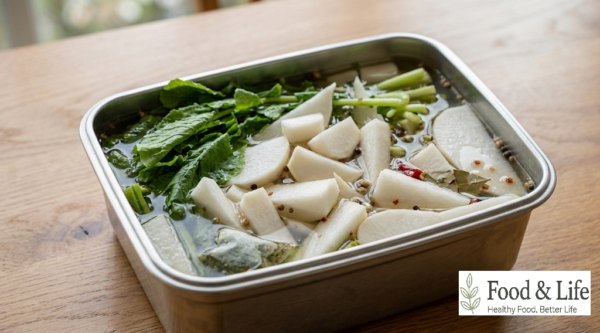
When you need a crisp, sweet-and-tangy side dish to serve with rich foods like fried chicken, pizza, or pasta, these Korean radish pickles are a refreshing option.
This recipe uses 1 kg (2.2 lb) altari radish with a brine made from 700 ml (23.7 fl oz) water, 300 ml (10.1 fl oz) vinegar, and 150 g (5.3 oz) sugar. Two mint tea bags add a light, cooling aroma that sets these pickles apart from more traditional radish pickles. The brine is simmered for 20 minutes, then cooled at room temperature for 10 minutes before being poured over the radish so the heat does not overcook it and the texture stays firm and crisp.
The sweet-and-tangy brine, gentle heat from Cheongyang chili peppers, and refreshing mint aroma come together in a unique homemade radish pickle.
⏱️ Cooking Time: About 35 minutes
🍳 Difficulty: ★☆☆☆☆
✓ Ingredients
🥣 Main Ingredients
- 1 kg (2.2 lb) altari radish
- 2 Cheongyang chili peppers
- 2 mint tea bags
🧂 Pickling Brine
- 700 ml (23.7 fl oz) water
- 150 g (5.3 oz) sugar
- 300 ml (10.1 fl oz) vinegar
- 1.5 tbsp salt
- 1 tbsp pickling spice
(Measurement guide: 1 tbsp = 15 ml (0.5 fl oz), 1 tsp = 5 ml (0.17 fl oz), 1 Korean paper cup = 180 ml (6.1 fl oz))
✓ How to Make Korean Radish Pickles
- Prepare the radish: Wash 1 kg (2.2 lb) altari radish thoroughly under running water. Trim away any rough or damaged areas, cut the radish into bite-size pieces, and place them in a sterilized storage container.
- Cook the pickling brine: Add 700 ml (23.7 fl oz) water, 150 g (5.3 oz) sugar, 300 ml (10.1 fl oz) vinegar, 1.5 tbsp salt, 1 tbsp pickling spice, and 2 Cheongyang chili peppers to a pot. Bring to a boil over high heat, then reduce to medium heat and simmer for about 20 minutes.
- Cool the brine slightly: Turn off the heat and let the finished brine sit at room temperature for about 10 minutes so it is no longer piping hot.
- Pour over the radish and add the mint: Pour the slightly cooled brine evenly over the altari radish, then add 2 mint tea bags and let their fresh aroma infuse into the pickles.
- Let the pickles mature: Seal the container and leave it at room temperature for 24 hours. Then transfer it to the refrigerator and let the pickles continue chilling before serving.
✓ Key Tips for Success
- Cool the brine before pouring: If boiling-hot brine is poured directly over the altari radish, the heat can partially cook the radish and soften its texture. Let the brine cool at room temperature for 10 minutes first to help preserve the crispness.
- Do not leave the mint tea bags in too long: If the mint tea bags stay in the brine for too long, the tea can develop an astringent flavor. After the pickles have rested at room temperature for one day, remove the tea bags once the mint aroma is strong enough before refrigerating.
✓ Serving Tips
- Serve these pickles with rich dishes such as fried chicken, pizza, or pasta. They also pair well with jajang ramen and help refresh the palate between bites.
- Keep the pickles chilled in the refrigerator and serve them cold for the crispest texture and the most refreshing flavor.
✓ How to Choose Good Altari Radish
- Root shape and firmness: Look for radishes with roots that are not overly thick or long and are fairly uniform in shape. They should feel firm and springy when held.
- Surface and fine roots: Choose radishes with smooth skin, minimal cracks or blemishes, and relatively few fine roots. A radish that feels heavy for its size is a good choice.
- Freshness of the greens: If the greens are still attached, look for bright green leaves and tender, lively stems without yellowing.
✓ Altari Radish Nutrition per 100 g (3.5 oz)
| Nutrient | Amount per 100 g (3.5 oz) |
|---|---|
| Calories | 25.00 kcal |
| Carbohydrates | 5.51 g |
| Protein | 1.06 g |
| Fat | 0.06 g |
| Sodium | 27.00 mg |
Based on 100 g of raw chonggak radish root. Actual nutrition values may vary depending on the variety, part used, product, and preparation method.
Source: Ministry of Food and Drug Safety Food Nutrition Database – Raw Food Ingredients
✓ Frequently Asked Questions (FAQ)
Q1. Why should the pickling brine cool for 10 minutes before pouring it over the radish?
Pouring the brine over the radish while it is still boiling hot can partially cook the radish and make it soft. Letting it cool briefly helps preserve the firm, crunchy texture.
Q2. Why can the pickles develop a bitter or astringent taste?
If the mint tea bags are left in the brine for too long, tannins from the tea leaves can create an astringent taste. Remove the tea bags after the pickles have matured and the mint aroma has infused sufficiently.
Q3. Can I use regular white radish, cabbage, or cucumber instead of altari radish?
Yes. You can use the same pickling brine ratio with other firm vegetables such as regular white radish, cucumber, cabbage, or bell peppers.
Following the ingredient ratios and cooking times in this recipe gives the altari radish an evenly sweet-and-tangy flavor while preserving its naturally firm, crisp texture. The subtle cooling aroma from the mint tea and the clean heat of Cheongyang chili peppers make these pickles especially refreshing alongside rich foods such as fried chicken or pasta.
If you are looking for a homemade pickle with a slightly different flavor from standard cucumber or radish pickles, try this Korean radish pickle recipe with mint. Make it ahead and keep it chilled in the refrigerator for an easy side dish to serve with meat, pizza, pasta, and other rich meals.
Save or bookmark this recipe so you can easily find it again, and share it with someone who enjoys Korean-inspired cooking.
More easy-to-follow recipes and practical cooking tips will be added regularly. 😊
If there is a dish you are curious about or would like to see featured, feel free to leave a comment. 😊