
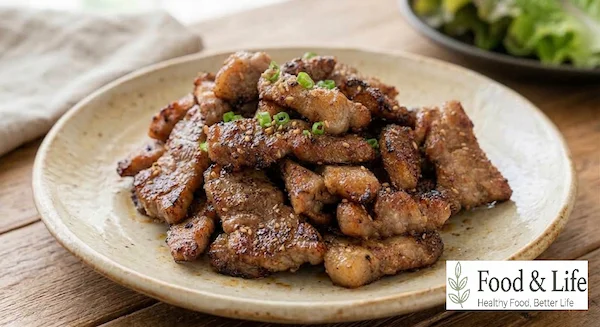
This Korean marinated pork recipe from actor Ryu Soo-young turns thick pork neck or shoulder steaks into tender, juicy, galbi-style pork using a simple skillet method. The key is to score 600 g (1.3 lb) of pork in different directions on each side, marinate it for at least 4 hours, then cook it over medium heat for 6 minutes before finishing over high heat for just 10 seconds.
The marinade combines 5 tbsp each of soy sauce, tuna fish sauce, and sugar with minced garlic, sesame oil, vinegar, black pepper, and 238 ml (8 fl oz) of Korean pear drink. Letting the scored pork soak in this mixture gives the meat an even balance of sweet, savory, and umami flavors.
When cooking, lightly shake off the excess marinade before placing the pork in the skillet. As the sauce caramelizes on the bottom of the pan, rub those browned bits back onto the surface of the pork to build a rich color and deeper flavor without letting the sugary marinade burn. Using thick pork neck or shoulder steaks makes it easy to prepare moist and tender Korean-style marinated pork at home with just one skillet.
⏱️ Cooking Time: About 25 minutes (excluding marinating time)
🍳 Difficulty: ★★☆☆☆
✓ Ingredients
🥣 Main Ingredients
- 600 g (1.3 lb) pork neck or pork shoulder steaks
- 1 green onion
🧂 Marinade & Seasonings
- 2 heaping tbsp minced garlic
- 5 tbsp sugar
- 5 tbsp soy sauce
- 5 tbsp tuna fish sauce
- 3 tbsp sesame oil
- 1 tbsp vinegar
- 1 can Korean pear drink, 238 ml (8 fl oz)
- 20 turns freshly ground black pepper
- 1 tbsp sesame seeds
- 3 swirls cooking oil
(Measurement guide: 1 tbsp = 15 ml, 1 tsp = 5 ml, 1 Korean paper cup = 180 ml / 6.1 fl oz)
✓ How to Make Korean Marinated Pork
- Score the pork: Score one side of the 600 g (1.3 lb) pork at 1 cm (about 0.4-inch) intervals in straight lines. Score the other side diagonally, then finely chop 1 green onion. Scoring each side in a different direction helps the marinade penetrate the meat more quickly and gives the pork a more tender texture.
- Make the marinade: In a bowl, combine the chopped green onion, 2 heaping tbsp minced garlic, 5 tbsp sugar, 5 tbsp soy sauce, 5 tbsp tuna fish sauce, 3 tbsp sesame oil, 1 tbsp vinegar, 1 can of Korean pear drink (238 ml / 8 fl oz), and 20 turns of black pepper. Crush 1 tbsp sesame seeds finely between your fingers and add them to the bowl. Mix until the sugar has completely dissolved.
- Marinate the pork: Layer the scored pork pieces in an airtight container and pour the prepared marinade generously over them. Refrigerate for at least 4 hours.
- Cook over medium heat: Add 3 swirls of cooking oil to a skillet and preheat it. Lightly shake excess marinade from the pork before placing it in the pan, then cook over medium heat for 6 minutes. Flip the pork when the excess moisture has evaporated and the oil begins to sizzle. As the marinade lightly caramelizes on the bottom of the skillet, rub the pork over those browned bits to coat the surface and develop a deeper, charred flavor without burning the sauce.
- Cut and finish over high heat: Once the pork has cooked for 6 minutes, cut it into bite-size pieces. Increase the heat to high, toss quickly for 10 seconds, then turn off the heat. Keep the total cooking time under 7 minutes so the pork retains its moisture and stays tender and juicy.
✓ Key Tips for Success
- Shake off excess marinade: Pouring a large amount of marinade into the skillet with the pork causes the meat to simmer or steam instead of sear, which can make the texture overly soft. Lightly shake off the excess marinade first, then flip the pork once the moisture has evaporated and the oil begins to sizzle so the surface can brown properly.
- Control the cooking time and caramelization: Because the marinade contains plenty of sugar, the pork can burn quickly if cooked too long. Cook over medium heat for 6 minutes while coating the meat with the browned marinade from the bottom of the skillet, then finish over high heat for just 10 seconds. Keeping the total cooking time under 7 minutes helps prevent the meat from drying out.
✓ Serving Tips
- Wrap the pork in fresh lettuce or perilla leaves with ssamjang and sliced garlic for a classic Korean-style lettuce wrap.
- Serve it with seasoned shredded green onions or spicy, tangy bibim naengmyeon to balance the richness of the pork.
- Spoon the caramelized pork generously over freshly steamed white rice for an easy Korean-style rice bowl.
✓ How to Choose Good Pork Neck or Shoulder
- Color and appearance: Look for pork with a bright pinkish-red color and a naturally moist, glossy surface.
- Fat quality: Choose meat with firm, milky-white fat and even marbling throughout the lean portion.
- Firm texture: Fresh pork should feel firm when lightly pressed and quickly return to its original shape.
✓ Pork Neck Nutrition per 100 g (3.5 oz)
| Nutrient | Amount per 100 g (3.5 oz) |
|---|---|
| Calories | 227.00 kcal |
| Carbohydrates | 0.00 g |
| Protein | 17.21 g |
| Fat | 16.36 g |
| Sodium | 51.00 mg |
Values are based on 100 g of raw pork neck. Actual nutrition may vary depending on the breed, cut, product, and cooking method.
Source: Ministry of Food and Drug Safety Food Nutrition Database – Raw Food Ingredients
✓ Frequently Asked Questions (FAQ)
Q1. Should I pour the leftover marinade into the skillet when cooking the pork?
No. Too much marinade will cause the pork to simmer rather than sear. Lightly shake off the excess liquid before cooking, then use the naturally caramelized marinade on the bottom of the skillet to coat the pork as it cooks.
Q2. Why does Korean marinated pork burn so easily in a skillet?
The sugar in the marinade and the pear drink caramelizes very quickly over high heat. Keep the skillet at medium heat for the main 6-minute cooking period, flip once the moisture has evaporated and the oil begins to sizzle, and keep the total cooking time under 7 minutes.
Q3. Can I use fresh pear instead of Korean pear drink?
Yes. You can grate fresh pear and use approximately 200 ml (6.8 fl oz) of the juice or purée for a naturally sweet flavor. Because fresh pears can vary in sweetness, using the pear drink from the original recipe is the easiest way to maintain a more consistent flavor balance.
Scoring the pork in different directions on each side and giving it enough time to marinate allows the sweet and savory seasoning to penetrate deeply while keeping the meat tender and juicy. Cooking the pork over medium heat for 6 minutes and finishing it over high heat for only 10 seconds also helps the sugary marinade develop an appetizing caramelized surface without burning excessively.
Rubbing the browned marinade from the bottom of the skillet back onto the pork creates an extra layer of savory flavor. The finished meat pairs especially well with hot steamed rice or fresh Korean lettuce wraps, making it an easy option for a hearty family meal.
For tender Ryu Soo-young-style Korean marinated pork, follow the scoring method, the 6-minute medium-heat cooking time, and the final 10-second high-heat finish as closely as possible. Save or bookmark this recipe so you can easily find it the next time you want a sweet, savory Korean pork dish.
If you found this recipe helpful, feel free to share it with someone who enjoys Korean food. If there is another Korean dish you would like to see, leave a comment with your recipe request.