
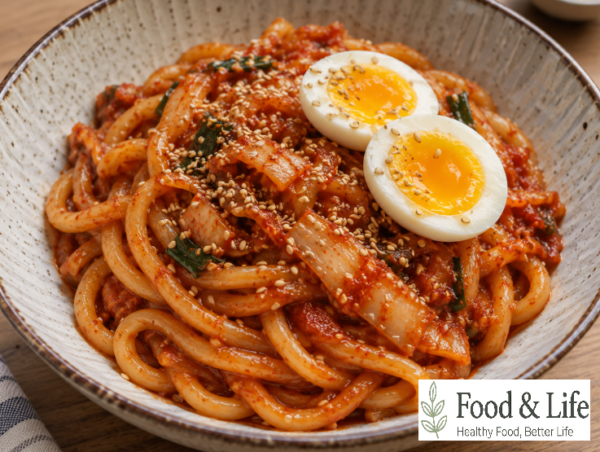
This Kimchi Bibim Udon recipe comes from Korean chef Jung Ho-young and combines chewy udon noodles with kimchi and a spicy-sweet Korean mixing sauce.
The sauce is made with gochugaru, gochujang, soy sauce, and vinegar, then brightened with 2 tbsp lemon-lime soda, 2 tbsp kimchi juice, and 1/2 tbsp Worcestershire sauce for extra tang and savory depth. After cooking, the udon should be rinsed thoroughly under cold water and drained very well so the sauce stays concentrated and coats the noodles evenly.
With springy udon noodles, crunchy kimchi, and a spicy, sweet, and tangy sauce, this is an easy noodle dish that works especially well when you want something refreshing yet full of flavor.
⏱️ Cooking Time: About 15 minutes
🍳 Difficulty: ★☆☆☆☆
✓ Ingredients
🥣 Main Ingredients
- 2 packs udon noodles
- 1 hard-boiled egg
- Kimchi, to taste (for garnish)
🧂 Sauce & Seasonings
- 3 tbsp gochugaru (Korean red pepper flakes)
- 3 tbsp gochujang (Korean red pepper paste)
- 5 tbsp sugar
- 2 tbsp vinegar
- 2 tbsp soy sauce
- 1/2 tbsp Worcestershire sauce (or tonkatsu sauce)
- 1/2 tbsp ground black pepper
- 1 tbsp minced garlic
- 2 tbsp lemon-lime soda
- 2 tbsp kimchi juice
- 2 tbsp sesame oil
- Sesame seeds, for sprinkling
(Measurement guide: 1 tbsp = 15 ml, 1 tsp = 5 ml, 1 Korean paper cup = 180 ml (6.1 fl oz))
✓ How to Make Kimchi Bibim Udon
- Make the all-purpose bibim sauce: Add 3 tbsp gochugaru, 3 tbsp gochujang, 5 tbsp sugar, 2 tbsp vinegar, 2 tbsp soy sauce, 1/2 tbsp Worcestershire sauce, 1/2 tbsp ground black pepper, 1 tbsp minced garlic, 2 tbsp lemon-lime soda, 2 tbsp kimchi juice, 2 tbsp sesame oil, and a sprinkle of sesame seeds to a bowl. Mix thoroughly until the sugar is well dissolved.
- Prepare the kimchi garnish: Place the kimchi on a cutting board and cut it into pieces about 1 cm (0.4 in) wide so it is easy to pick up together with the noodles.
- Cook the udon noodles: Fill a pot with plenty of water and bring it to a boil over high heat. Add the 2 packs of udon noodles and cook until the strands loosen and become tender.
- Rinse and drain the noodles: Immediately rinse the cooked udon under cold water to remove excess surface starch. Transfer to a strainer and gently press the noodles to remove as much remaining water as possible.
- Mix and serve: Add the well-drained udon noodles and the prepared bibim sauce to a bowl and toss until evenly coated. Transfer to a serving bowl and top with the chopped kimchi and 1 hard-boiled egg.
✓ Key Tips for Success
- Drain the noodles thoroughly: If too much water remains on the udon after rinsing, it will dilute the bibim sauce and prevent it from coating the noodles properly. Shake off the excess water in a strainer, then gently press the noodles to remove any remaining moisture.
- Using Worcestershire sauce: Worcestershire sauce adds extra tanginess and savory depth to the dressing. If it is difficult to find, substitute the same amount—1/2 tbsp—of tonkatsu sauce, or simply leave it out.
✓ Serving Tips
- Add fresh vegetables: If you like, serve the noodles with thinly sliced cucumber, lettuce, or perilla leaves for extra crunch and freshness that pairs well with the spicy-sweet sauce.
- Use the sauce with other noodles: This versatile bibim sauce also works well with somyeon (thin Korean wheat noodles), medium wheat noodles, jjolmyeon, or kalguksu noodles, making it easy to use any leftover sauce in another noodle dish.
- Rinse in ice water: Quickly rinsing the cooked udon in ice water helps firm up the noodles and gives them an even chewier, bouncier texture.
✓ How to Choose Good Napa Cabbage Kimchi
- Appearance and leaves: Choose kimchi with firm white cabbage stems that are not mushy. The seasoning should be evenly distributed between the leaves rather than sitting only on the surface.
- Fermentation and acidity: For this recipe, choose well-fermented kimchi with a pleasantly sour aroma and no unpleasant off-smell.
- Texture: The leaves and stems should still have some crispness and spring rather than feeling overly soft or mushy.
✓ Napa Cabbage Kimchi Nutrition per 100 g (3.5 oz)
| Nutrient | Amount per 100 g (3.5 oz) |
|---|---|
| Calories | 38.00 kcal |
| Carbohydrates | 6.49 g |
| Protein | 1.98 g |
| Fat | 0.43 g |
| Sodium | 551.00 mg |
Based on napa cabbage kimchi per 100 g. Actual nutrition values may vary depending on the variety, ingredients, product, and preparation.
Source: Ministry of Food and Drug Safety Food Nutrition Database – Raw Food Ingredients
✓ Frequently Asked Questions (FAQ)
Q1. Why should I rinse udon noodles in cold water after cooking?
Rinsing the cooked udon immediately under cold water removes excess surface starch and helps keep the noodles from becoming overly soft. It also gives them a firmer, chewier texture.
Q2. Why does the sauce become watery and fail to coat the udon properly?
This usually happens when too much water remains on the noodles after rinsing. Drain them thoroughly and gently press out the excess moisture before mixing with the sauce.
Q3. Do I have to use Worcestershire sauce in the bibim sauce?
No. If you do not have Worcestershire sauce, you can substitute 1/2 tbsp tonkatsu sauce. You can also omit it and still keep the basic spicy-sweet flavor of the bibim sauce.
Chef Jung Ho-young’s Kimchi Bibim Udon combines springy udon noodles with a spicy-sweet sauce that clings evenly to every strand. The kimchi juice, lemon-lime soda, and Worcestershire sauce give the dressing more than just heat and sweetness, adding a bright tanginess and savory depth that keeps the dish refreshing through the last bite.
If you want a quick noodle dish with bold, clean flavors, this Kimchi Bibim Udon recipe is an easy one to try. Simply cook and rinse the udon, drain it well, and toss it with the sauce for a simple lunch or satisfying meal.
Save or bookmark this recipe so you can easily find it again later, and share it with someone who enjoys Korean food.
I’ll continue sharing easy-to-follow recipes and practical cooking tips. 😊
If there is a dish or recipe you would like to see next, feel free to leave a comment. 😊