
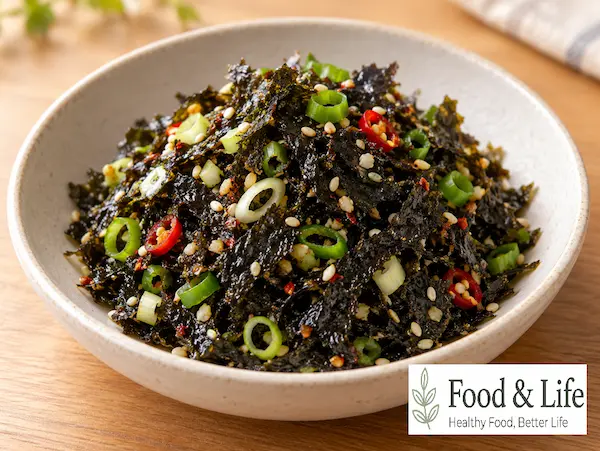
The key to making Gim Muchim (Korean seasoned seaweed) without it turning soggy or clumping together is to lightly toast unseasoned gim in a dry skillet over low heat to remove moisture, then gently toss it with a premixed soy sauce seasoning.
Lightly toast 10 sheets of gim on both sides until crisp, then crush them into small pieces. Prepare the seasoning with 1 tbsp Korean soup soy sauce, 1 tbsp brewed soy sauce, 1 tbsp tuna extract, 1 tbsp maesil extract, 2 tbsp Mirim, and the remaining seasonings.
Instead of pouring the seasoning onto one spot, gently toss and lift the seaweed with your fingertips so the sauce coats it evenly. This helps prevent the gim from sticking together in dense clumps. In about 10 minutes, you can make a simple Korean side dish with the nutty aroma of sesame oil, fresh green onion, and a touch of red chili.
⏱️ Cooking Time: About 10 minutes
🍳 Difficulty: ★☆☆☆☆
✓ Ingredients
🥣 Main Ingredients
- 10 sheets unseasoned gim (Korean dried seaweed)
- 5 green onions
- 1 red chili pepper
🧂 Sauce & Seasonings
- 1 tbsp Korean soup soy sauce
- 1 tbsp brewed soy sauce
- 1 tbsp tuna extract
- 1 tbsp maesil extract (Korean green plum extract)
- 2 tbsp Mirim
- 1 tbsp minced garlic
- 1 tbsp sesame seeds
- 1 tbsp sesame oil
- 1 tbsp gochugaru (Korean red pepper flakes)
(Measurement guide: 1 tbsp = 15 ml (0.5 fl oz), 1 tsp = 5 ml, 1 Korean paper cup = 180 ml (6.1 fl oz))
✓ How to Make Gim Muchim
- Toast the gim: Place 10 sheets of gim in a dry skillet over low heat and lightly toast both sides to remove moisture and make them crisp.
- Crush the gim: Cut the toasted gim into manageable pieces, place them in a plastic bag, close the bag, and gently crush them by hand into bite-size pieces.
- Make the seasoning: In a bowl, combine 1 tbsp Korean soup soy sauce, 1 tbsp brewed soy sauce, 1 tbsp tuna extract, 1 tbsp maesil extract, 2 tbsp Mirim, 1 tbsp minced garlic, 1 tbsp sesame seeds, 1 tbsp sesame oil, and 1 tbsp gochugaru. Mix well.
- Prepare the garnish: Finely slice 5 green onions and 1 red chili pepper.
- Season the gim: Place the prepared seasoning and crushed gim in a large bowl. Gently toss and lift the seaweed with your fingertips so the seasoning coats it evenly without forming clumps.
- Add the garnish: Add the sliced green onions and red chili pepper, then gently toss once more to finish.
✓ Key Tips for Success
- Remove moisture from the gim first: If unseasoned gim is mixed with the sauce without toasting, it can quickly absorb moisture and become chewy or soggy. Lightly toasting both sides in a dry skillet over low heat removes excess moisture and helps preserve a cleaner, crisper texture.
- Toss the seasoning gently: Pouring all the seasoning onto one spot and squeezing the seaweed firmly can make the gim clump together. Spread the seasoning around the bowl or add it gradually, then gently lift and toss the gim with your fingertips so the sauce is distributed evenly.
✓ Serving Tips
- Serve generously over freshly cooked warm rice, or pair it with a sunny-side-up or soft-fried egg for a simple rice bowl.
- Store it in an airtight container in the refrigerator and enjoy within 2–3 days for the best aroma and texture.
✓ How to Choose Good Gim
- Color and sheen: Choose gim with a deep black-purple color rather than a reddish tone. The surface should have a subtle natural sheen.
- Texture and density: Look for sheets with an even thickness, a dense and smooth structure, and no excessive holes.
- Dryness and aroma: Choose gim that feels crisp and thoroughly dried, without stale or rancid odors. It should have a clean, characteristic seaweed aroma.
✓ Gim Nutrition per 100 g (3.5 oz)
| Nutrient | Amount per 100 g (3.5 oz) |
|---|---|
| Calories | 173.00 kcal |
| Carbohydrates | 48.49 g |
| Protein | 36.85 g |
| Fat | 0.56 g |
| Sodium | 966.00 mg |
Based on 100 g (3.5 oz) of dried gim. Actual nutrition values may vary depending on the variety, part used, product, and preparation method.
Source: Ministry of Food and Drug Safety Food Nutrition Database – Raw Food Ingredients
✓ Frequently Asked Questions (FAQ)
Q1. Why should I lightly toast the gim before seasoning it?
Lightly toasting the gim in a dry skillet removes small amounts of residual moisture and helps keep the seaweed crisp. It also reduces the strong seaweed aroma and helps the seasoning coat the pieces more evenly.
Q2. Why did my Gim Muchim clump together after seasoning?
This usually happens when the seasoning is poured onto one spot or when the gim is squeezed too firmly while mixing. Spread the seasoning evenly and gently lift and toss the seaweed with your fingertips instead.
Q3. Can I use seasoned seaweed or parae gim instead?
Seasoned seaweed already contains oil and salt, so adding the full seasoning mixture can make the dish too salty. Unseasoned traditional gim or parae gim is better suited to this recipe.
Lightly toasting the gim in a dry skillet before seasoning helped remove excess moisture, so the seaweed did not become overly soggy after the sauce was added. The combination of Korean soup soy sauce, brewed soy sauce, tuna extract, maesil extract, and sesame oil created a savory flavor that paired well with rice without tasting overly salty.
My family also liked the fresh aroma of the green onions and the mild heat of the red chili pepper mixed throughout the nutty seaweed. Since the entire dish takes only about 10 minutes to prepare, it is also an easy way to use up extra sheets of dried gim at home.
If your Gim Muchim usually becomes soggy or the seasoning causes the seaweed to clump together, try lightly toasting the gim first and mixing the sauce separately before gently tossing everything together with your fingertips. This simple method helps keep the seaweed flavorful, light, and evenly seasoned.
Save or bookmark this recipe for later, and share it with someone who enjoys Korean food.
I’ll continue sharing practical recipes and useful cooking tips that are easy to follow at home. 😊
If there’s a dish you’re curious about or a recipe you’d like to see next, feel free to leave a comment. 😊
※ This recipe was adapted from a recipe featured on the YouTube channel “요리왕비룡 셰프TV.” I prepared the dish myself and wrote this post based on the cooking process and results.