
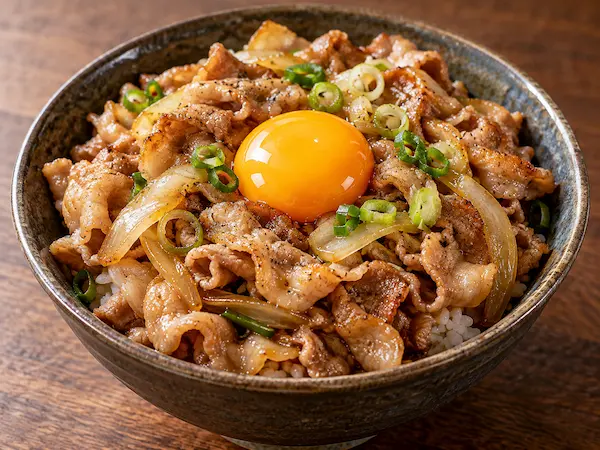
Chef Jung Ho-young’s butadon recipe is a Japanese-style pork rice bowl made by browning 200 g (7 oz) of thinly sliced pork belly, then quickly reducing it in a savory sauce made with soy sauce, cheongju, and cooking wine in a 1:1:2 ratio.
The key is to briefly boil the soy-based sauce with garlic and ginger over high heat, thoroughly brown the pork belly with onion and green onion, and only then add the sauce and reduce it quickly. Spoon the glazed pork belly over warm rice and top it with an egg yolk for a rich, savory bowl with a smooth, creamy finish. Ready in about 15 minutes, this butadon recipe makes an easy one-bowl meal when you want something simple but satisfying.
⏱️ Cooking Time: About 15 minutes
🍳 Difficulty: ★☆☆☆☆
✓ Ingredients (1 Serving)
🥣 Main Ingredients
- 200 g (7 oz) thinly sliced pork belly
- 1/4 onion
- 1/2 green onion
- 1 egg yolk
- 200 g (7 oz) cooked rice
🧂 Sauce & Seasonings
- 50 ml (1.7 fl oz) soy sauce
- 50 ml (1.7 fl oz) cheongju (clear rice wine)
- 100 ml (3.4 fl oz) cooking wine
- 1/2 tbsp minced garlic
- 1/2 tbsp minced ginger
- A little black pepper
(Measurement guide: 1 tbsp = 15 ml, 1 tsp = 5 ml, 1 Korean paper cup = 180 ml / 6.1 fl oz)
✓ How to Make Butadon
- Make the soy sauce mixture: Add 50 ml (1.7 fl oz) soy sauce, 50 ml (1.7 fl oz) cheongju, and 100 ml (3.4 fl oz) cooking wine to a small saucepan in a 1:1:2 ratio. Add 1/2 tbsp minced garlic and 1/2 tbsp minced ginger. Bring to a quick boil over high heat, then immediately turn off the heat and set aside.
- Prepare the pork and vegetables: If the 200 g (7 oz) thinly sliced pork belly pieces are too large, cut them into easier-to-eat pieces. Thinly slice 1/4 onion. Cut 1/2 green onion in half lengthwise, then slice it crosswise.
- Brown the pork and vegetables: Heat a skillet, then add the pork belly, onion, and green onion. Stir-fry together with a little black pepper until the pork is fully cooked and nicely browned.
- Add and reduce the sauce: Once the pork is completely cooked, add 4–6 tbsp of the prepared sauce to the skillet. Cook quickly over high heat, reducing the sauce as you stir so the pork and vegetables become evenly coated and glossy.
- Assemble the rice bowl: Spread 200 g (7 oz) warm cooked rice evenly in a bowl. Spoon the glazed pork belly and vegetables generously over the rice, then place 1 egg yolk in the center to finish.
✓ Key Tips for Success
- Fully cook and brown the pork before adding the sauce: Adding the sauce before the thin pork belly is completely cooked can cause more moisture to release from the meat, making the texture tougher and the sauce thinner. Brown the pork first and let some of its fat render, then add the sauce and reduce it quickly so the seasoning coats the meat instead of remaining watery.
- Do not over-reduce the sauce: The goal of briefly boiling the sauce is to soften the alcohol aroma from the cheongju and cooking wine while bringing out the flavor of the garlic and ginger. Turn off the heat as soon as it reaches a quick boil so too much liquid does not evaporate and make the sauce overly salty.
✓ Serving Tips
- Break the egg yolk and gently mix it into the pork and rice. Its creamy texture softens the savory soy sauce while adding extra richness to the bowl.
- If you like, add a small amount of shichimi togarashi (Japanese seven-spice chili seasoning) or fresh wasabi. Either one adds a sharper, spicier finish that balances the richness of the pork belly.
- Serve with a cold lager or sparkling water. The refreshing drink pairs well with the sweet-savory sauce and makes the dish suitable both as a full meal and as a casual evening dish.
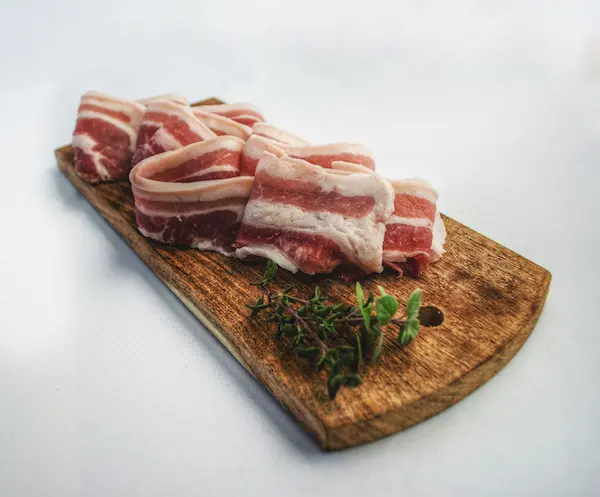
✓ How to Choose Good Pork Belly
- [Meat and fat color]: Look for pork with a clear light pink to reddish-pink color. The fat should be milky white, firm, and evenly textured.
- [Firmness and surface condition]: Fresh pork should feel springy when lightly pressed and quickly return to its original shape. Avoid meat with excessive surface moisture, pooled liquid, or stickiness.
- [Distribution of fat and lean meat]: Choose pork belly with fairly even layers of lean meat and fat. The grain should not look excessively coarse or dry.
✓ Pork Belly Nutrition per 100 g (3.5 oz)
| Nutrient | Amount per 100 g (3.5 oz) |
|---|---|
| Calories | 372.00 kcal |
| Carbohydrates | 0.00 g |
| Protein | 13.90 g |
| Fat | 33.31 g |
| Sodium | 56.00 mg |
Based on 100 g of raw pork belly. Actual nutrition values may vary depending on the breed, cut, product, and cooking method.
Source: Ministry of Food and Drug Safety Food Nutrition Database – Raw Ingredient Foods
✓ Frequently Asked Questions (FAQ)
Q1. Why should I brown the pork belly before adding the sauce?
If the sauce is added before the pork is fully cooked, more juices and moisture can escape from the meat, making the pork tougher and diluting the seasoning. Browning the pork first allows the sauce to reduce quickly and form a glossy coating on the surface.
Q2. Why does my pork rice bowl have a strong pork smell after cooking?
The aroma can remain stronger if the black pepper is omitted or if the garlic and ginger are not properly infused into the sauce. Bring the sauce to a quick boil and brown the pork thoroughly before adding the sauce.
Q3. Can I use thinly sliced beef belly or brisket instead of pork belly?
Yes. Thinly sliced beef belly or brisket can be cooked using the same method, and both pair well with the sweet-savory soy sauce.
After making this recipe, I found that the soy sauce, cheongju, and cooking wine mixture coated the browned pork belly with a glossy finish and gave it a savory flavor with a subtle sweetness. The garlic and ginger blended naturally with the richness of the pork, while breaking the egg yolk over the rice made the bold soy sauce taste noticeably smoother.
The combination of savory pork belly and creamy egg yolk also worked well as a simple family dinner. If you want to make a Japanese-style pork rice bowl without a complicated sauce, brown the pork first, then quickly reduce it with the 1:1:2 soy sauce mixture to make this easy butadon recipe.
If you found this recipe helpful, save or bookmark it for later and share it with someone who might enjoy it.
I’ll continue sharing approachable recipes and practical cooking tips that are easy to follow at home. 😊
If there is a dish you have been curious about or a recipe you would like to see featured, feel free to leave a comment. 😊
※ This recipe was adapted from a recipe introduced on the YouTube channel “정호영의 오늘도 요리”. I prepared the dish myself and wrote this post based on the cooking process and results.