
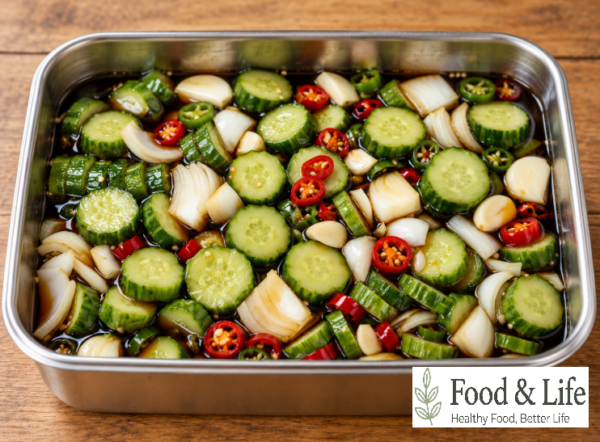
When you want a crisp, sweet-and-tangy side dish, Oi Yangpa Jangajji (Korean soy-pickled cucumber and onion) is a refreshing option that pairs especially well with rich meals.
The key to this recipe is lightly washing Korean white cucumbers in vinegar water, packing them with onion, chili peppers, and garlic, then immediately pouring the hot pickling brine over the vegetables. After turning off the heat, vinegar and soju are stirred into the brine to preserve their fresh flavor, and the pickles are cooled completely before refrigerating for 1–2 days. During this time, the cucumbers and onions absorb the sweet, tangy, and savory soy brine evenly.
The crunchy cucumber and onion pair with the sweet-and-sour, pleasantly salty brine to make an easy Korean side dish that goes particularly well with grilled meats and other rich foods.
⏱️ Cooking Time: About 20 minutes
🍳 Difficulty: ★☆☆☆☆
✓ Ingredients
🥣 Main Ingredients
- 8 Korean white cucumbers
- 2 onions
- 3 red chili peppers
- 3 Cheongyang chili peppers
- 15 whole garlic cloves
🧂 Pickling Brine
- Vinegar, a generous amount, for washing the cucumbers
- 500 ml (16.9 fl oz) water
- 500 ml (16.9 fl oz) regular soy sauce
- 1 1/2 Korean paper cups sugar (270 ml by volume)
- 1 1/2 Korean paper cups vinegar (270 ml / 9.1 fl oz)
- 1 Korean paper cup soju (180 ml / 6.1 fl oz)
(Measurement guide: 1 tbsp = 15 ml, 1 tsp = 5 ml, 1 Korean paper cup = 180 ml / 6.1 fl oz)
✓ How to Make Cucumber and Onion Jangajji
- Wash the cucumbers in vinegar water: Fill a large bowl with enough water to submerge all 8 Korean white cucumbers and add a generous amount of vinegar. Gently rub and wash the cucumbers clean. Avoid scrubbing them with salt, as damaging the surface can make them soften more easily during pickling.
- Trim and slice the cucumbers: Cut off the bitter ends of the washed cucumbers, then slice them into thick 1 cm (0.4-inch) rounds so they retain a satisfying crunch.
- Prepare the remaining vegetables: Cut 2 onions into bite-size chunks. Thinly slice 3 red chili peppers and 3 Cheongyang chili peppers into rounds, then cut 15 whole garlic cloves into thick slices.
- Pack the vegetables into a container: Place the cucumber, onion, chili peppers, and sliced garlic evenly into a large heat-safe storage container that has been sterilized with boiling water.
- Boil the pickling brine: Add 500 ml (16.9 fl oz) water, 500 ml (16.9 fl oz) regular soy sauce, and 1 1/2 Korean paper cups sugar (270 ml by volume) to a pot. Bring to a boil over high heat. Once boiling, reduce to medium heat, simmer for about 1 minute, then immediately turn off the heat.
- Add the vinegar and soju: Right after turning off the heat, pour in 1 1/2 Korean paper cups vinegar (270 ml / 9.1 fl oz) and 1 Korean paper cup soju (180 ml / 6.1 fl oz). Mix well. Adding them after the heat is turned off helps preserve the vinegar’s bright acidity, while the soju is used in this recipe to help reduce unwanted surface growth during storage.
- Pour the brine while hot: Immediately pour the hot pickling brine over the vegetables in the container. The hot brine helps the cucumber retain a firm, crisp texture as it pickles.
- Cool and refrigerate: Leave the container uncovered at room temperature until completely cool. Close the lid, refrigerate, and let the pickles mature for 1–2 days before serving.
✓ Key Tips for Success
- Pour the brine over the cucumbers while it is still hot: If the brine is completely cooled before pouring, the cucumbers can gradually soften as they sit. Pouring the brine over them while hot helps the cucumber skin and outer flesh firm up quickly, helping the pickles stay crisp for longer.
- Add the vinegar and soju after turning off the heat: If the vinegar is boiled from the beginning, some of its bright acidity can dissipate with the heat. Add the vinegar and soju immediately after turning off the burner so the tangy flavor remains fresh and the soju can serve its intended role in the original recipe.
✓ Serving Tips
- Serve with rich grilled dishes: These pickles pair especially well with golden grilled pork belly, grilled beef, or Korean savory pancakes, adding a crisp and refreshing contrast to richer foods.
- Serve with rice in cold water or barley tea: Add cold rice to chilled water or barley tea, then enjoy it with pieces of crisp cucumber pickle and sliced garlic for a simple, refreshing meal.
✓ How to Choose a Good Cucumber
- Shape and thickness: Choose cucumbers that are relatively straight and evenly thick from one end to the other.
- Firmness: Look for cucumbers with a glossy surface that feel firm rather than soft when gently squeezed.
- Stem condition: Choose cucumbers with fresh green stems that are not wilted or dried out.
Source: Nongsaro Agricultural Technology Portal – How to Choose Good Cucumbers
✓ Cucumber Nutrition per 100 g (3.5 oz)
| Nutrient | Amount per 100 g (3.5 oz) |
|---|---|
| Calories | 13.00 kcal |
| Carbohydrates | 2.79 g |
| Protein | 1.06 g |
| Fat | 0.05 g |
| Sodium | 3.00 mg |
Based on raw Dadagi cucumber per 100 g (3.5 oz). Actual nutrition values may vary depending on variety, part used, product, and preparation method.
Source: Ministry of Food and Drug Safety Food Nutrition Database – Raw Ingredients
✓ Frequently Asked Questions (FAQ)
Q1. Won’t pouring hot brine directly over the cucumbers cook them and make them soft?
In this recipe, the cucumbers do not become fully cooked. The hot brine quickly firms the outer surface, helping them maintain a crisp texture as they pickle.
Q2. Why does a white film sometimes form on the surface of jangajji?
In the original recipe, this is associated with omitting the soju or leaving the container sealed at room temperature for too long, which can allow unwanted microorganisms to grow on the surface.
Q3. Can I use brewed soy sauce or Korean soup soy sauce instead of regular soy sauce?
Brewed soy sauce can be used instead of regular soy sauce. Korean soup soy sauce, or guk-ganjang, is not recommended because its higher saltiness can make the pickles overly salty.
After washing the cucumbers in vinegar water, packing them with onion, chili peppers, and garlic, and pouring the hot brine directly over everything, I let the pickles mature in the refrigerator for 1–2 days. The cucumbers and onions stayed nicely crisp while absorbing the sweet, tangy, and savory soy brine evenly. Adding the vinegar and soju after turning off the heat also kept the acidity fresh without overpowering the soy sauce flavor.
I usually find pickles less enjoyable when the vegetables become too soft or the seasoning is overly strong, but this version kept a satisfying bite in the thick-cut cucumber and onion. My family especially enjoyed the bright, tangy flavor alongside grilled pork belly.
If you want to make crisp Korean cucumber and onion pickles, boil the brine, pour it over the vegetables while still hot, cool everything completely, then refrigerate for 1–2 days. Try this recipe when you need a refreshing side dish for grilled meat, Korean pancakes, or other rich foods.
Save or bookmark this recipe for later, and share it with someone who enjoys Korean home cooking.
I’ll continue sharing approachable recipes and practical cooking tips that are easy to follow at home. 😊
If there is a dish you have been curious about or a recipe you would like to see next, feel free to leave a comment. 😊