
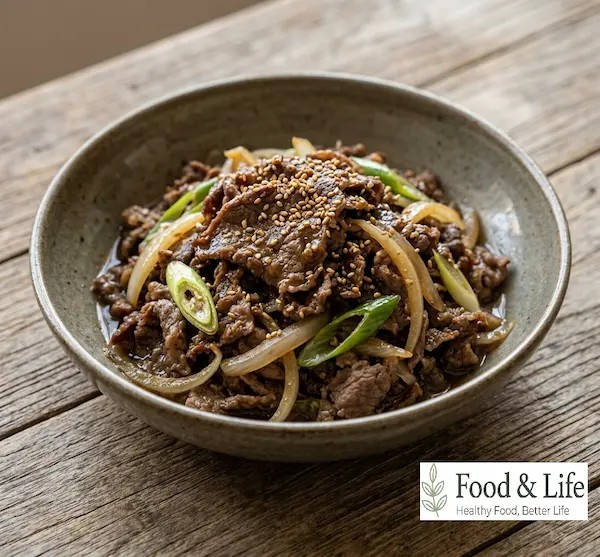
If you want to make beef bulgogi without spending hours marinating the meat, this quick method inspired by Ryu Soo-young uses a pear beverage in the sauce so you can cook the beef right away.
This Korean beef bulgogi recipe combines 600 g (21.2 oz) thinly sliced beef with 10 tbsp soy sauce, 1 can of pear beverage (238 ml / 8.0 fl oz), 2 tbsp sugar, and 2 tbsp corn syrup for a simple sweet-and-savory sauce. Separate the beef slices one by one so they are evenly coated, sauté the onion first, then quickly cook the beef over high heat to keep it tender.
The result is juicy, tender beef coated in a flavorful soy-based sauce. Serve it with rice as a side dish or spoon it over warm rice for an easy bulgogi rice bowl.
⏱️ Cooking Time: About 15 minutes
🍳 Difficulty: ★☆☆☆☆
✓ Ingredients
🥣 Main Ingredients
- 600 g (21.2 oz) thinly sliced beef for bulgogi
- 1 onion
- 1 green onion
- Sesame seeds, as needed
🧂 Sauce & Seasonings
- 10 tbsp soy sauce
- 1 can pear beverage (238 ml / 8.0 fl oz)
- 2 tbsp sugar
- 2 tbsp corn syrup
- 3 tbsp sesame oil
- 2 tbsp vinegar
- 1.5 tbsp minced garlic
- 0.5 tsp salt
- 1 swirl cooking oil
- A little sesame oil
Measurement guide: 1 tbsp = 15 ml, 1 tsp = 5 ml, 1 Korean paper cup = 180 ml (6.1 fl oz)
✓ How to Make Korean Beef Bulgogi
- Mix the sauce: Add 10 tbsp soy sauce, 1 can pear beverage (238 ml / 8.0 fl oz), 2 tbsp sugar, 2 tbsp corn syrup, 3 tbsp sesame oil, 2 tbsp vinegar, 1.5 tbsp minced garlic, and 0.5 tsp salt to a sealable container. Close the lid tightly and shake well until the sugar dissolves and the sauce is evenly combined.
- Coat the beef: Instead of adding the 600 g (21.2 oz) beef in one clump, separate the thin slices one by one and place them into the sauce. Gently press the beef down so every piece comes into contact with the seasoning.
- Add the vegetables: Thinly slice the onion and cut the green onion diagonally. Place them on top of the beef and gently press them down so they come into contact with the sauce.
- Sauté the onion first: Heat a skillet and add 1 swirl of cooking oil. Remove the onion from the container and sauté it first until it becomes slightly translucent, bringing out its sweetness and aroma.
- Cook the beef: Once the onion is slightly translucent, add the seasoned beef and cook quickly over high heat until no pink remains. If you prefer bulgogi with more sauce, pour in some of the remaining seasoning liquid from the container while cooking.
- Finish and serve: Once the beef is cooked, turn off the heat. Add a little sesame oil and sesame seeds, toss everything together, and transfer to a serving plate.
✓ Key Tips for Success
- Separate the beef slices before seasoning: If the thinly sliced beef goes into the sauce in one large clump, the seasoning will not coat it evenly and the pieces can stick together during cooking. Separate each slice so the sauce reaches the entire surface.
- Use a well-heated skillet and cook quickly over high heat: Cooking the beef too slowly over low heat can cause excess moisture to come out of both the meat and vegetables. Sauté the onion first, then cook the beef quickly over high heat just until the pink color disappears.
✓ Serving Tips
- Add dangmyeon glass noodles: Soak dangmyeon (Korean sweet potato glass noodles) in advance, then add them with some of the remaining sauce when the beef is about halfway cooked. This gives you a saucier, bulgogi hot pot-style dish.
- Serve with mushrooms: Enoki, shiitake, or oyster mushrooms add another layer of texture alongside the tender beef.
- Make a bulgogi rice bowl: Spoon the beef and some of the remaining sauce generously over warm rice for a simple one-bowl meal.
✓ How to Choose Good Beef
- Lean meat color: Look for beef with a bright red color rather than meat that appears excessively dark.
- Fat color and distribution: Choose beef with bright white fat rather than yellowed fat, ideally with the fat naturally distributed through the lean meat.
- Firm texture: Check that the surface of the meat is not overly soft or mushy and that the beef feels firm and springy.
✓ Beef Nutrition per 100 g (3.5 oz)
| Nutrient | Amount per 100 g (3.5 oz) |
|---|---|
| Calories | 162.00 kcal |
| Carbohydrates | 0.00 g |
| Protein | 23.00 g |
| Fat | 6.92 g |
| Sodium | 50.00 mg |
Based on 100 g of raw Korean Hanwoo beef, Grade 1, round cut. Actual nutrition may vary depending on breed, cut, product, and cooking method.
Source: Ministry of Food and Drug Safety Food Nutrition Database – Raw Food Ingredients
✓ Frequently Asked Questions (FAQ)
Q1. Do I need to marinate beef bulgogi for several hours?
No. In this recipe, the thinly sliced beef is separated piece by piece, thoroughly coated with the sauce, and cooked immediately, so no long marinating time is required.
Q2. Why does my bulgogi release so much liquid and turn tough?
If the skillet is not hot enough and the beef cooks for too long, both the meat and vegetables can release excess moisture. Heat the skillet well and cook the beef quickly over high heat until the pink color disappears.
Q3. Will 2 tablespoons of vinegar make the bulgogi taste sour?
In this recipe, the vinegar is mixed with 10 tbsp soy sauce, 1 can of pear beverage (238 ml / 8.0 fl oz), 2 tbsp sugar, 2 tbsp corn syrup, and the other seasonings. Because everything is combined and cooked together, the vinegar blends into the overall sauce rather than standing out as a strong sour flavor.
This quick Korean beef bulgogi is a practical option for busy days because you can season and cook the beef immediately without a long marinating process. The pear beverage-based soy sauce coats the thin beef evenly, giving it a sweet-and-savory flavor while keeping the meat tender and juicy.
For saucier bulgogi, add a little more of the remaining seasoning liquid and serve it over warm rice. If you prefer a cleaner, less saucy version, cook the beef and vegetables quickly over high heat.
Save or bookmark this Korean beef bulgogi recipe so you can easily find it when you need a quick dinner idea. Share it with someone who enjoys Korean food.
More easy-to-follow recipes and practical cooking tips are coming soon. 😊
If there is a dish you would like to see featured, feel free to leave a comment. 😊