
Making japchae for holidays, birthdays, or special gatherings can feel like a lot of work when you think about prepping each ingredient separately and boiling the glass noodles in another pot.
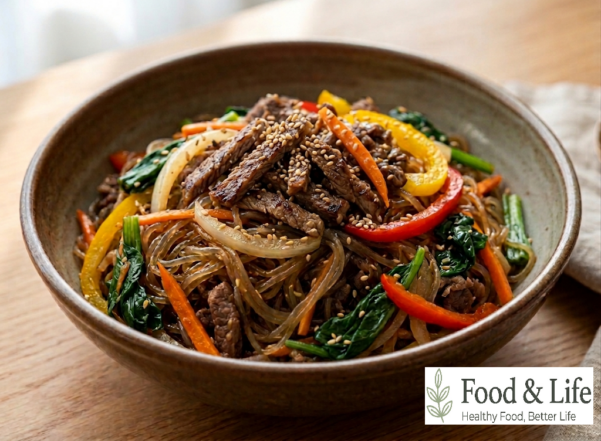
This beef japchae recipe simplifies the process by soaking the Korean glass noodles first, then simmering them directly in a soy-based sauce so they absorb the seasoning evenly. Tossing the noodles with sesame oil while they are still hot helps keep them glossy and pleasantly chewy. Add seasoned beef and crisp-tender vegetables, and you have a colorful Korean dish that works beautifully for holiday meals, birthday celebrations, or entertaining guests.
Make a delicious plate of japchae with glossy noodles, tender beef, and plenty of colorful vegetables in every bite.
⏱️ Cooking Time: About 30 minutes
🍳 Difficulty: ★★☆☆☆
✓ Ingredients
🥣 Main Ingredients
- 400 g (14.1 oz) beef for japchae, such as rump or eye of round, thinly sliced
- 300 g (10.6 oz) Korean glass noodles (dangmyeon)
- 170 g (6 oz) spinach
- 1 bell pepper (1/2 red and 1/2 yellow)
- 1/2 onion
- 1/2 carrot
- 1 stalk green onion
🧂 Seasonings & Sauce
For the Beef Marinade
- 2 tbsp minced garlic
- 2 tbsp Mirim (Korean cooking wine)
- 1 tbsp sugar
- 2 tbsp brewed soy sauce
- 1 tbsp sesame oil
- 5 shakes ground black pepper
For the Glass Noodles
- 300 ml (10.1 fl oz) water
- 5 tbsp soy sauce
- 2 tbsp oyster sauce
- 4 tbsp allulose
- 1 tbsp cooking oil
For Coating the Noodles
- 3 tbsp sesame oil
For Finishing
- 1 tbsp sesame seeds
(Measurement guide: 1 tbsp = 15 ml, 1 tsp = 5 ml, 1 Korean paper cup = 180 ml / 6.1 fl oz)
✓ How to Make Beef Japchae
- Soak the glass noodles: Place 300 g (10.6 oz) dried Korean glass noodles in lukewarm water and soak for about 20 minutes.
- Marinate the beef: Pat 400 g (14.1 oz) beef dry with paper towels to remove excess moisture. Add 2 tbsp minced garlic, 2 tbsp Mirim, 1 tbsp sugar, 2 tbsp brewed soy sauce, 1 tbsp sesame oil, and 5 shakes of ground black pepper. Mix well and let the beef marinate.
- Prepare the vegetables: Julienne the onion, carrot, and bell pepper into evenly sized strips. Split the green onion lengthwise and cut it into 3–4 cm (1.2–1.6 inch) pieces. Wash the spinach thoroughly.
- Stir-fry the vegetables first: Heat 2 tbsp cooking oil in a skillet over high heat. Add the onion, carrot, and bell pepper and stir-fry. Once the carrot begins to turn slightly translucent, add the spinach and cook only until it just starts to wilt. Transfer the vegetables to a large plate and spread them out to cool. Do not season the vegetables separately, and cook them quickly over high heat to keep them crisp and prevent excess moisture from being released.
- Cook the beef: In the same skillet, without adding more oil, add the marinated beef and stir-fry until nearly cooked through. Add the prepared green onion and cook briefly, just until it softens slightly. Remove from the skillet and set aside.
- Simmer the glass noodles in the sauce: Add 300 ml (10.1 fl oz) water, 5 tbsp soy sauce, 2 tbsp oyster sauce, 4 tbsp allulose, and 1 tbsp cooking oil to the skillet. Bring the mixture to a vigorous boil, then add the soaked glass noodles. Cook over high heat as the liquid reduces. Adding the cooking oil while the sauce is boiling helps the noodles cook through while maintaining their pleasantly chewy texture.
- Reduce the remaining liquid over low heat: When only a small amount of sauce remains, reduce the heat to low. Continue stirring so the noodles do not stick to the pan, cooking until all the liquid has evaporated while the noodles remain moist. Turn off the heat.
- Coat immediately with sesame oil: As soon as the heat is turned off, add 3 tbsp sesame oil to the hot noodles and toss thoroughly. Coating the noodles while they are still hot creates a layer of oil on the surface that helps prevent them from sticking together in a dense clump.
- Combine and finish: Add the cooked vegetables, beef, and green onion to the sesame oil-coated noodles. Sprinkle with 1 tbsp sesame seeds and gently toss everything together until evenly combined.
✓ Key Tips for Success
- As soon as the sauce has reduced completely, turn off the heat and immediately toss the hot noodles with 3 tbsp sesame oil. This helps keep the dangmyeon glossy and chewy instead of becoming swollen or sticking together as it sits.
- Do not salt the vegetables. Stir-fry them quickly over high heat, then spread them out to cool so they do not release excess moisture.
✓ Serving Tips
- Thinly slice 2–3 shiitake mushrooms and cook them together with the beef. They will absorb the beef marinade and add deeper savory flavor to the japchae.
- Store leftover japchae in an airtight container in the refrigerator. Reheat it in the microwave or briefly stir-fry it in a dry skillet without additional oil until the noodles are soft again.
✓ How to Choose Good Beef
- Color: Look for beef with bright red lean meat and fat that is milky white or light cream in color.
- Texture and firmness: Choose beef that looks moist with a fine, tight grain. When lightly pressed with a finger, the meat should spring back.
- Surface condition: Select cuts with a natural sheen and without excessive liquid pooling on the surface.
✓ Beef Rump Nutrition per 100 g (3.5 oz)
| Nutrient | Amount per 100 g (3.5 oz) |
|---|---|
| Calories | 166.00 kcal |
| Carbohydrates | 0.00 g |
| Protein | 23.08 g |
| Fat | 7.29 g |
| Sodium | 51.00 mg |
Based on 100 g (3.5 oz) of raw Grade 1 Korean Hanwoo beef rump. Actual nutritional values may vary depending on breed, cut, product, and cooking method.
Source: Ministry of Food and Drug Safety Food Nutrition Database – Raw Food Ingredients
✓ Frequently Asked Questions (FAQ)
Q1. Can I cook the glass noodles directly in the sauce instead of boiling them separately?
Yes. After soaking the noodles in lukewarm water for 20 minutes, simmer them directly in the boiling sauce. The noodles will absorb the seasoning evenly as they cook and become tender and pleasantly chewy.
Q2. Why does liquid sometimes collect at the bottom of japchae after it sits?
This can happen when the vegetables are salted before cooking or stir-fried too long over low heat, causing them to release moisture. Cook the vegetables quickly over high heat without seasoning them, then spread them out to cool.
Q3. Can I substitute sugar or oligosaccharide syrup for allulose?
Yes. Oligosaccharide syrup or honey can be substituted in the same amount, 4 tbsp. If using sugar, which tastes sweeter, adjust the amount to about 2 tbsp to balance the flavor.
You can make glossy, chewy beef japchae without boiling the glass noodles separately. The key is to simmer the soaked noodles directly in the sauce and coat them with sesame oil while they are still hot. Combined with tender beef and crisp vegetables, it makes a generous dish for holidays, birthdays, and other special occasions.
Save or bookmark this recipe for the next time you want to make japchae, and share it with someone who enjoys Korean food.
I’ll continue sharing approachable recipes and practical cooking tips that are easy to follow at home. 😊
If there’s a dish you’ve been curious about or a recipe you’d like to see next, feel free to leave a comment. 😊