
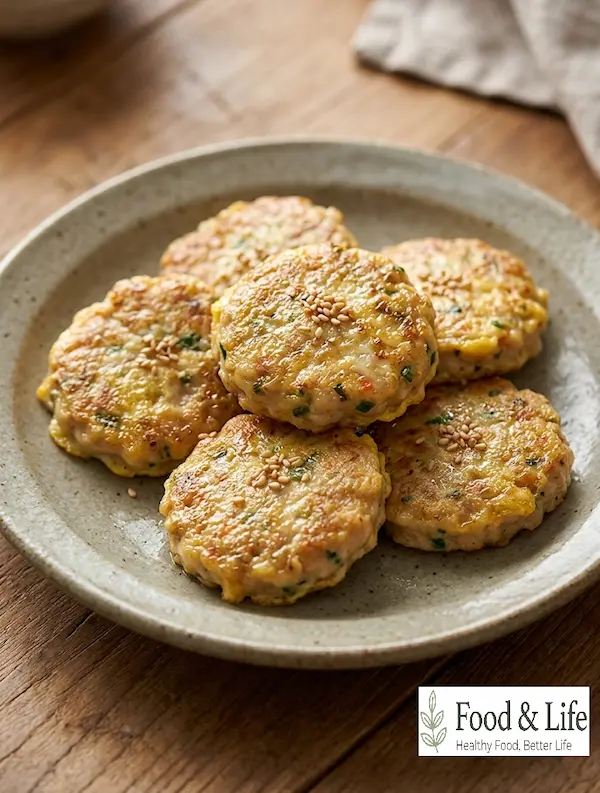
The key to making Donggeurangttaeng (Korean meat patties) that stay moist and hold their shape is to combine ground pork and ground beef in a 2:1 ratio and remove as much moisture as possible from the tofu before mixing the filling.
Using 500 g (17.6 oz) ground pork shoulder and 250 g (8.8 oz) ground beef with 300 g (10.6 oz) tofu and finely chopped vegetables creates a mixture that stays tender without falling apart during cooking. Once shaped, the patties are lightly coated with flour and beaten egg, then slowly pan-fried over low heat so the outside turns golden while the meat cooks evenly all the way through.
This classic Donggeurangttaeng recipe is especially useful for Korean holiday meals, everyday side dishes, or lunchboxes. The steps below cover everything from the meat ratio and moisture control to shaping and pan-frying.
⏱️ Cooking Time: About 30 minutes
🍳 Difficulty: ★★☆☆☆
✓ Ingredients
🥣 Main Ingredients
- Ground pork shoulder 500 g (17.6 oz)
- Ground beef 250 g (8.8 oz)
- Tofu 300 g (10.6 oz)
- 1/4 onion
- Garlic chives 50 g (1.8 oz)
- Carrot 40 g (1.4 oz)
- 1 Cheongyang chili pepper
- Flour, as needed
- Beaten egg, as needed
🧂 Seasonings
- Minced garlic 1 tbsp
- Sugar 2/3 tbsp
- Soy sauce 2 tbsp
- Seasoned salt 1/3 tbsp
- Black pepper, a little
- Sesame oil 2 tbsp
(Measurement guide: 1 tbsp = 15 ml, 1 tsp = 5 ml, 1 Korean paper cup = 180 ml / 6.1 fl oz)
✓ How to Make Donggeurangttaeng
- Drain the tofu thoroughly: Place 300 g (10.6 oz) tofu in a clean kitchen cloth and squeeze firmly with both hands until as much moisture as possible has been removed. Transfer the drained tofu to a large bowl.
- Finely chop the vegetables: Finely chop 1/4 onion, 50 g (1.8 oz) garlic chives, 40 g (1.4 oz) carrot, and 1 Cheongyang chili pepper. Chop them very small so they blend evenly into the meat mixture, then add them to the bowl with the tofu.
- Add the seasonings and meat: Add 1 tbsp minced garlic, 2/3 tbsp sugar, 2 tbsp soy sauce, 1/3 tbsp seasoned salt, a little black pepper, and 2 tbsp sesame oil. Add 500 g (17.6 oz) ground pork and 250 g (8.8 oz) ground beef, then knead everything thoroughly by hand until the mixture becomes sticky and cohesive.
- Shape the patties: Take a suitable amount of the mixture and roll it between your palms. Shape it into a thick, round, flattened bite-size patty.
- Coat and pan-fry: Lightly coat each patty with flour and shake off the excess. Dip it in beaten egg, then place it in a lightly oiled, preheated skillet. Cook slowly over low heat, turning as needed, until both sides are golden and the meat is cooked through.
✓ Key Tips for Success
- Remove as much moisture as possible from the tofu: If the tofu is not drained thoroughly, the meat mixture can become too wet, causing the patties to crack or fall apart while cooking. Excess moisture can also make the oil splatter more. Use a clean kitchen cloth to squeeze the tofu firmly until very little liquid remains.
- Use a 2:1 pork-to-beef ratio and cook over low heat: Using only beef can make the patties somewhat dry, so combining 500 g pork with 250 g beef helps balance tenderness with rich beef flavor. High heat can burn the egg coating before the ground meat inside is fully cooked, so cook the patties gently over low or medium-low heat to keep them moist and evenly cooked.
✓ Serving Tips
- Donggeurangttaeng tastes best served hot straight from the skillet, when the egg-coated outside is golden and savory and the inside is still moist and juicy.
✓ How to Choose Good Pork
- Color and appearance: Choose pork that is a clear light pink to reddish-pink rather than unusually pale or overly dark red. The surface should have a fresh, moist sheen.
- Color and firmness of the fat: The fat around the lean meat should be firm and milky white. Avoid pork with yellowed or excessively soft fat.
- Firm texture: Fresh pork should feel firm rather than soft or mushy when pressed. Also avoid packages with an excessive amount of bloody liquid or meat juices collected at the bottom.
✓ Pork Shoulder Nutrition per 100 g (3.5 oz)
| Nutrient | Amount per 100 g (3.5 oz) |
|---|---|
| Calories | 161.00 kcal |
| Carbohydrates | 0.00 g |
| Protein | 20.56 g |
| Fat | 7.92 g |
| Sodium | 50.00 mg |
Based on 100 g of raw pork shoulder. Actual nutrition values may vary depending on breed, cut, product, and preparation method.
Source: Ministry of Food and Drug Safety Food Nutrition Database – Raw Food Ingredients
✓ Frequently Asked Questions (FAQ)
Q1. What heat should I use so Donggeurangttaeng cooks evenly without burning?
Cook the patties gently over medium-low or low heat. This allows the ground meat and vegetables inside to cook through while keeping the egg coating from browning too quickly or burning.
Q2. Why does my Donggeurangttaeng fall apart or cause a lot of oil splatter?
The tofu may still contain too much moisture, making the mixture loose and wet. Squeeze the tofu thoroughly in a clean kitchen cloth, then knead the meat mixture until it becomes sticky and holds together well before shaping.
Q3. Why mix both pork and beef in Donggeurangttaeng?
The pork adds tenderness and richness, while the beef contributes a deeper meaty flavor. Using 500 g pork and 250 g beef gives this recipe its 2:1 ratio and helps keep the patties moist rather than overly dry.
Using a 2:1 ratio of pork to beef and thoroughly draining the tofu gives Donggeurangttaeng a golden exterior with a moist, tender center. The finely chopped Cheongyang chili also helps balance the richness of the meat, while thoroughly kneading the mixture and cooking it slowly over low heat helps the patties hold their shape.
If your Korean meat patties tend to fall apart or brown before the centers are cooked, remember these three points: drain the tofu thoroughly, use a 2:1 pork-to-beef ratio, and cook over low heat. Donggeurangttaeng works just as well for Korean holiday meals as it does for everyday rice dishes or lunchboxes.
Save or bookmark this recipe for later, and share it with someone who enjoys Korean food.
I’ll continue sharing approachable recipes and practical cooking tips that are easy to follow at home. 😊
If there is a dish you have been curious about or a recipe you would like to see next, feel free to leave a comment. 😊