
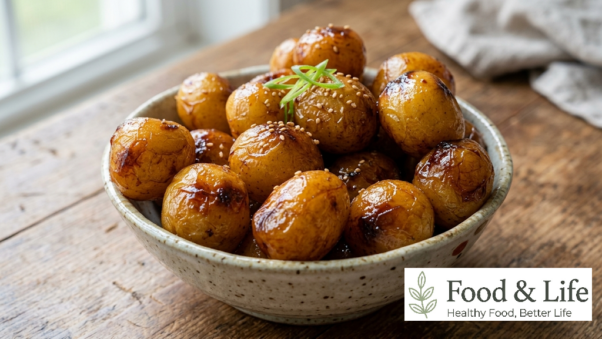
Because Korean soy-braised baby potatoes are cooked whole with the skins on, the key is getting the seasoning to penetrate the potatoes while keeping the skins tender rather than tough.
For this Algamja Jorim (Korean Soy-Braised Baby Potatoes), the baby potatoes are first briefly blanched in water with salt and vinegar. They are then slowly braised over medium heat in soy sauce, amber starch syrup, and 15 ml (1 tbsp) of cooking oil. Once only a small amount of braising liquid remains, the reserved brown sugar is added and the potatoes are briefly tossed over high heat to create an appetizing glossy coating.
The savory soy sauce and gentle sweetness soak into the moist potato centers, creating a hearty Korean side dish that pairs perfectly with steamed rice.
⏱️ Cooking Time: About 40 minutes
🍳 Difficulty: ★★☆☆☆
✓ Ingredients
🥣 Main Ingredient
- 1 kg (35.3 oz) baby potatoes
🧂 Sauce & Seasonings
- 30 ml (2 tbsp) salt
- 50 ml (1.7 fl oz) vinegar
- 1 L (33.8 fl oz) water
- 200 ml (6.8 fl oz) regular soy sauce
- 75 ml (5 tbsp) amber starch syrup
- 50 ml (1.7 fl oz) Mirim
- 30 ml (2 tbsp) brown sugar
- 15 ml (1 tbsp) neutral cooking oil
- 15 ml (1 tbsp) sesame oil
(Measurement guide: 1 tbsp = 15 ml, 1 tsp = 5 ml, 1 Korean paper cup = 180 ml / 6.1 fl oz)
✓ How to Make Korean Soy-Braised Baby Potatoes
- Clean the potatoes: Wearing rubber gloves or using a vegetable brush, gently scrub the surface of 1 kg (35.3 oz) baby potatoes to remove all dirt and debris.
- Blanch the potatoes: Place the cleaned baby potatoes in a pot and add enough water to cover them. Add 30 ml (2 tbsp) salt and 50 ml (1.7 fl oz) vinegar. As soon as the water begins to boil, remove the potatoes and rinse them under cold water. A brief blanch helps remove the earthy smell and slightly astringent taste from the skins.
- Add the braising sauce and simmer: Return the blanched potatoes to the pot. Add 1 L (33.8 fl oz) water, 200 ml (6.8 fl oz) regular soy sauce, 75 ml (5 tbsp) amber starch syrup, 50 ml (1.7 fl oz) Mirim, 15 ml (1 tbsp) brown sugar, and 15 ml (1 tbsp) neutral cooking oil. Simmer gently over medium heat. When the braising liquid has reduced by about half, turn the potatoes so the seasoning can absorb evenly on all sides.
- Create the sweet glossy coating: When the braising liquid has reduced until only a shallow layer remains at the bottom of the pot, add the remaining 15 ml (1 tbsp) brown sugar. Toss the potatoes briefly over high heat. As the sugar melts and caramelizes, it creates a glossy, syrupy coating on the surface.
- Finish with sesame oil: Turn off the heat, drizzle 15 ml (1 tbsp) sesame oil over the potatoes, and gently toss using the residual heat to finish.
✓ Key Tips for Success
- Add exactly 1 tbsp of cooking oil to the braising liquid: When baby potatoes are braised with their skins on, leaving out the oil can cause moisture to evaporate too quickly, making the skins tough and separate from the soft centers. Adding 15 ml (1 tbsp) neutral cooking oil at the beginning creates a light oil coating that helps keep the skins tender and pleasantly chewy.
- Divide the brown sugar into two additions: If all 30 ml (2 tbsp) brown sugar is added at the beginning, the exterior can darken and firm up before the potatoes become tender inside. Add only 15 ml (1 tbsp) at the start, then add the remaining 15 ml (1 tbsp) when the braising liquid is almost gone and briefly toss over high heat for a glossy, slightly sticky finish.
✓ Serving Tips
- Add a spicy kick: If you prefer a little heat, add shishito-style Korean peppers (kkwari-gochu) or whole garlic cloves when the braising liquid has reduced by about half, then continue simmering.
- Finish with sesame seeds: Sprinkle toasted sesame seeds over the potatoes along with the sesame oil at the end for an extra nutty aroma and a neat presentation.
✓ How to Choose Good Potatoes
- Shape and firmness: Choose baby potatoes that feel firm, have minimal blemishes, and feel relatively heavy for their size.
- Skin condition: Look for potatoes with thin, smooth skins and only a few shallow eyes.
- Color: Choose potatoes with a clean yellow-brown color and no green areas on the surface to avoid the bitter taste associated with solanine.
Source: Republic of Korea Policy Briefing – Ingredient Guide
✓ Potato Nutrition per 100 g (3.5 oz)
| Nutrient | Amount per 100 g (3.5 oz) |
|---|---|
| Calories | 70.00 kcal |
| Carbohydrates | 16.07 g |
| Protein | 1.93 g |
| Fat | 0.03 g |
| Sodium | 1.00 mg |
Based on raw Sumi potatoes per 100 g (3.5 oz). Actual nutrition values may vary depending on variety, part used, product, and cooking method.
Source: Ministry of Food and Drug Safety Food Nutrition Database
✓ Frequently Asked Questions (FAQ)
Q1. Why are baby potatoes blanched with salt and vinegar before braising?
Because the potatoes are cooked and eaten with their skins on, a brief blanch helps remove the earthy smell and slight astringency from the surface. Using salt and vinegar in the blanching water also helps clean up the flavor of the skins before braising.
Q2. Why do the potatoes break apart while braising?
This can happen if too much cooking oil is added or if the potatoes are constantly stirred over high heat. Use exactly 15 ml (1 tbsp) cooking oil, keep the heat at medium, and gently shake the pot or spoon the braising liquid over the potatoes instead of stirring aggressively.
Q3. Can I use clear starch syrup or oligosaccharide syrup instead of amber starch syrup?
Yes. Clear starch syrup or rice syrup can be used instead. Amber starch syrup gives the potatoes a deeper, more appetizing braised color. If using oligosaccharide syrup, add it near the end when most of the braising liquid has reduced, since prolonged heating can weaken its sweetness.
After briefly blanching the baby potatoes and slowly simmering them over medium heat in the braising sauce with cooking oil, the skins stayed tender instead of separating from the soft potato centers, and the potatoes kept their shape well. Adding the reserved brown sugar at the end and briefly tossing everything over high heat helped the savory-sweet soy sauce and starch syrup coat the potatoes evenly while creating an appetizing glossy finish.
I have sometimes found soy-braised baby potatoes disappointing when the skins turn tough or the seasoning stays only on the outside. With this method, the moist potato centers and pleasantly chewy skins worked naturally together. My family also enjoyed the balance of savory soy sauce and gentle sweetness with steamed rice.
If you want to make glossy Korean soy-braised baby potatoes with tender skins, simmer them slowly with exactly 15 ml (1 tbsp) of cooking oil, then add the reserved brown sugar and finish briefly over high heat. Give this method a try the next time you want a dependable Korean side dish to serve with warm rice.
Save or bookmark this recipe for later, and share it with someone who enjoys Korean home cooking.
I’ll continue sharing approachable recipes and practical cooking tips that are easy to follow at home. 😊
If there is a dish you have been curious about or a recipe you would like to see next, feel free to leave a comment. 😊