
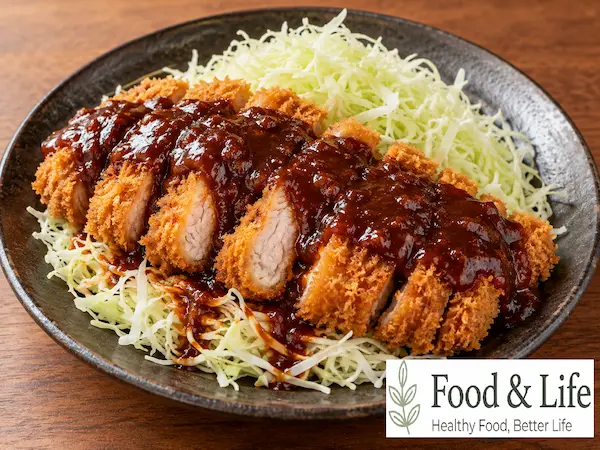
If you want to make crispy Japanese tonkatsu at home with a richer, more distinctive sauce, Miso Katsu is a great option. This Nagoya-style dish pairs crunchy pork cutlets with a thick red miso sauce for a deeply savory, sweet-and-salty flavor.
The key to this Miso Katsu recipe is preparing the pork loin with a fork and the back of a knife, then frying it at 170°C (338°F) for about 2–3 minutes and resting it upright for 2 minutes to help keep the coating crisp. For the sauce, water, sugar, mirin, Cheongha, and Hondashi are brought to a boil first. The heat is then turned off before the red miso is dissolved into the mixture, and the sauce is simmered over low heat for about 10 minutes until thickened. Served with finely shredded cabbage and warm white rice, the crispy tonkatsu and rich red miso sauce make a satisfying Nagoya-style meal.
⏱️ Cooking Time: About 30 minutes
🍳 Difficulty: ★★★☆☆
✓ Ingredients (Serves 2)
🥣 Main Ingredients
- 500 g (17.6 oz) pork loin
- Salt, as needed for seasoning the pork
- 1 egg
- All-purpose flour, as needed
- Panko breadcrumbs, as needed
- Cabbage, as desired
- Cooking oil for deep-frying, as needed
🧂 Sauce & Seasonings
- 160 ml (5.4 fl oz) water
- 4 tbsp sugar
- 3 tbsp mirin
- 2 tbsp Cheongha
- 1/2 tsp Hondashi
- 4 tbsp red miso (aka miso)
(Measurement guide: 1 tbsp = 15 ml (0.5 fl oz), 1 tsp = 5 ml, 1 Korean paper cup = 180 ml (6.1 fl oz))
✓ How to Make Miso Katsu
- Prepare the pork loin: Prick the 500 g (17.6 oz) pork loin evenly with a fork to help prevent it from curling while frying. Lightly pound the entire surface with the back of a knife to tenderize it. Season both sides with salt, wrap the pork in paper towels, and leave it at room temperature so excess moisture can be drawn out.
- Prepare the cabbage: Finely shred as much cabbage as you like and set it aside.
- Cook the base for the miso sauce: Add 160 ml (5.4 fl oz) water, 4 tbsp sugar, 3 tbsp mirin, 2 tbsp Cheongha, and 1/2 tsp Hondashi to a saucepan. Stir and bring the mixture to a boil, then turn off the heat.
- Finish the red miso sauce: With the heat off, add 4 tbsp red miso and stir until completely dissolved with no lumps remaining. Turn the heat back on and simmer over low heat for about 10 minutes, until the sauce becomes thick.
- Bread the pork: While heating enough cooking oil for deep-frying to 170°C (338°F), lightly coat the prepared pork loin with flour. Dip it into 1 beaten egg, then coat evenly with panko breadcrumbs.
- Fry the tonkatsu: Carefully lower the breaded pork into the 170°C (338°F) oil. Do not move it immediately. Once the coating has set, turn the pork as needed and fry for about 2–3 minutes, until golden brown.
- Rest the tonkatsu upright: Do not lay the freshly fried tonkatsu flat. Stand it upright on a wire rack or draining rack and let it rest for 2 minutes. This helps reduce oil pooling underneath and keeps the breading crisp.
- Warm the serving plate and sauce: While the tonkatsu rests, warm the serving plate and the miso sauce separately for about 1 minute 30 seconds. If you do not have a heated iron plate, a regular serving plate works as well.
- Assemble the Miso Katsu: Slice the rested tonkatsu into easy-to-eat strips. Arrange it over the shredded cabbage on a plate or heated iron plate, then generously spoon the warm red miso sauce over the top.
✓ Key Tips for Success
- Keep the breading from falling off: If you move the tonkatsu repeatedly right after placing it in 170°C (338°F) oil, the coating can come loose before it has had time to set. Leave it undisturbed at first, then turn it only after the breading has firmed up.
- Rest the tonkatsu so it stays crisp: Laying freshly fried tonkatsu flat can allow oil to collect underneath. Resting it upright on a rack for 2 minutes helps maintain a crisp surface before the sauce is added.
✓ Serving Tips
- Finely shredded cabbage adds a crisp, fresh contrast to the rich miso sauce and fried pork.
- Serve Miso Katsu with warm white rice to enjoy the savory umami of the red miso together with the sweetness from the sugar and mirin.
✓ How to Choose Good Pork Loin
- Color: Choose pork loin with a light reddish-pink or bright pink color. Avoid meat that looks excessively pale or unusually dark.
- Firmness and surface condition: Look for meat with firm texture, a natural sheen, and minimal liquid collected inside the package.
- Condition of the fat: The fat along the edge of the pork loin should be white and firm, without yellow discoloration.
Source: Rural Development Administration · Korea Policy Briefing – How to Choose Good Pork
✓ Pork Loin Nutrition per 100 g (3.5 oz)
| Nutrient | Amount per 100 g (3.5 oz) |
|---|---|
| Calories | 142.00 kcal |
| Carbohydrates | 0.00 g |
| Protein | 23.33 g |
| Fat | 4.58 g |
| Sodium | 42.00 mg |
Based on 100 g of raw pork loin. Actual nutrition values may vary depending on breed, cut, product, and cooking method.
Source: Ministry of Food and Drug Safety K-FIND Food Nutrition Database – Raw Pork Loin
✓ Frequently Asked Questions (FAQ)
Q1. When should I add the red miso to Miso Katsu sauce?
Bring the water, sugar, mirin, Cheongha, and Hondashi mixture to a boil first, then turn off the heat. Add 4 tbsp red miso and stir until completely dissolved before returning the saucepan to low heat and simmering for about 10 minutes.
Q2. Why does the breading fall off when I fry tonkatsu?
Moving the pork too soon after placing it in the hot oil can cause the coating to separate before it has set. After adding the tonkatsu to 170°C (338°F) oil, leave it undisturbed at first and turn it only once the breading has firmed up.
Q3. Can I substitute anchovy Dashida for Hondashi?
Yes, anchovy Dashida can be used instead of Hondashi. However, saltiness and flavor can vary between products, so check the package instructions when deciding how much to use.
Golden, crispy pork loin covered with a deep reddish-brown miso sauce makes Miso Katsu look as rich as it tastes. The panko coating stays crunchy while the pork inside remains thick and tender, creating a clear contrast in texture.
The red miso brings a deep, savory flavor, while sugar and mirin add sweetness that balances its saltiness. Finely shredded cabbage provides a fresh crunch between bites of fried pork and rich sauce.
If you enjoy tonkatsu but want to try it with a different sauce, this Nagoya-style Miso Katsu recipe is an easy way to change things up. Crispy pork loin, thick red miso sauce, shredded cabbage, and warm rice come together naturally as a complete family meal.
Save or bookmark this recipe so you can easily find it again later, and share it if you found it helpful.
I’ll continue sharing approachable recipes and practical cooking tips that are easy to follow at home. 😊
If there is a dish you would like to see next, feel free to leave a comment. 😊