
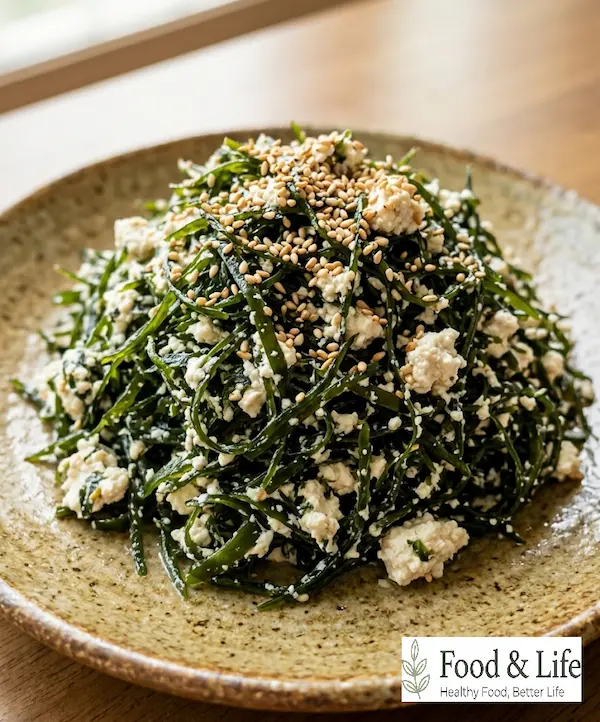
The key to making Korean hijiki tofu salad with a clean flavor and pleasantly crisp texture is to wash the hijiki thoroughly with flour, blanch it for only about 20 seconds, and remove as much moisture as possible from both the hijiki and tofu.
After blanching 300 g (10.6 oz) of hijiki, rinse it immediately in cold water and squeeze out the excess moisture. The 200 g (7 oz) of tofu should also be thoroughly drained using cheesecloth or paper towels. Season everything with 1/3 tbsp seasoned salt, 1/2 tbsp minced garlic, 1 tbsp sesame oil, and 1 tbsp sesame seeds for a simple hijiki tofu salad with crisp seaweed and soft, creamy tofu.
Ready in about 15 minutes, this lightly seasoned Korean seaweed side dish is a good option when you want something savory, nutty, and not heavily seasoned.
⏱️ Cooking Time: About 15 minutes
🍳 Difficulty: ★☆☆☆☆
✓ Ingredients
🥣 Main Ingredients
- 300 g (10.6 oz) hijiki
- 200 g (7 oz) tofu
- 1 tbsp flour, for washing the hijiki
🧂 Seasonings
- 1/3 tbsp seasoned salt
- 1/2 tbsp minced garlic
- 1 tbsp sesame oil
- 1 tbsp sesame seeds
(Measurement guide: 1 tbsp = 15 ml, 1 tsp = 5 ml, 1 Korean paper cup = 180 ml)
✓ How to Make Hijiki Tofu Salad
- Wash the hijiki: Place 300 g (10.6 oz) hijiki and 1 tbsp flour in a bowl. Add water and rub the hijiki firmly with your hands to remove any debris. Rinse thoroughly under cold running water 3–4 times, then drain in a colander.
- Blanch and cut the hijiki: Bring plenty of water to a boil in a pot. Add 1 tbsp salt and the cleaned hijiki, then blanch for 20 seconds. Immediately rinse under cold water to stop the cooking, squeeze out the excess moisture thoroughly, and cut into easy-to-eat lengths.
- Drain and mash the tofu: Wrap 200 g (7 oz) tofu in cheesecloth or paper towels and squeeze out as much moisture as possible. Transfer it to a bowl and mash finely.
- Season and mix: Add the well-drained hijiki and mashed tofu to a bowl. Add 1/3 tbsp seasoned salt, 1/2 tbsp minced garlic, 1 tbsp sesame oil, and 1 tbsp sesame seeds. Gently mix everything together until evenly combined.
✓ Key Tips for Success
- Remove as much moisture as possible from the tofu: Water left in the tofu will gradually seep out, dilute the seasoning, and make the finished dish watery. Use cheesecloth and squeeze firmly to remove as much liquid as possible.
- Keep the blanching time to about 20 seconds: Overcooking hijiki can make it too soft and take away its characteristic crisp, pleasantly firm texture. Once the hijiki changes from brown to green in the boiling water, remove it promptly and cool it in cold water.
✓ Serving Tips
- Grind about half of the sesame seeds before adding them. The finer sesame adds a deeper nutty flavor that pairs especially well with the mild tofu.
- Because this dish has a mild, clean flavor, it pairs well with more strongly seasoned dishes such as spicy pork stir-fry or kimchi jjigae.
✓ How to Choose Fresh Hijiki
- Color and shine: Look for hijiki with a natural sheen and a deep brown to dark brown color.
- Stems and fronds: Choose hijiki with evenly thick, springy stems and intact fronds that are not mushy or falling apart.
- Aroma: Fresh hijiki should have a clean, fresh ocean aroma without a sour or unpleasantly fishy smell.
✓ Hijiki Nutrition per 100 g (3.5 oz)
| Nutrient | Amount per 100 g (3.5 oz) |
|---|---|
| Calories | 16.00 kcal |
| Carbohydrates | 5.00 g |
| Protein | 1.90 g |
| Fat | 0.40 g |
| Sodium | – |
Values are based on 100 g (3.5 oz) of raw hijiki. Actual nutrition may vary depending on the variety, part used, product, and cooking method.
Source: Korean Ministry of Food and Drug Safety Food Nutrition Database
✓ Frequently Asked Questions (FAQ)
Q1. How long should I blanch hijiki to keep it crisp?
Blanch the hijiki in boiling water for about 20 seconds, just until its color changes from brown to green. Rinse it immediately in cold water to help preserve its pleasantly firm texture.
Q2. Why does water collect at the bottom of the dish after it sits?
This usually happens when the tofu or blanched hijiki has not been drained thoroughly enough. Squeeze as much moisture as possible from both ingredients before seasoning and mixing them together.
Q3. Can I use Korean soup soy sauce or regular soy sauce instead of seasoned salt?
Using soy sauce adds extra liquid and can darken the white tofu. For this recipe, seasoned salt works better for keeping the seasoning clean and the tofu’s light color intact.
When I blanched the hijiki for about 20 seconds and thoroughly removed the moisture from both the hijiki and tofu, the seaweed kept its characteristic crisp texture while the tofu remained soft and smooth.
The seasoned salt kept the flavor simple, while sesame oil and sesame seeds added a nutty aroma without overpowering the natural ocean flavor of the hijiki. The different textures of the crisp hijiki and soft tofu also worked especially well together without excess liquid collecting at the bottom of the dish.
If your hijiki tofu salad tends to taste overly fishy or becomes watery after mixing, try blanching the hijiki for just 20 seconds and thoroughly removing the moisture from both the hijiki and tofu. It is an easy way to prepare a mild, savory Korean seaweed side dish in about 15 minutes.
Save or bookmark this recipe so you can easily find it again, and share it with someone who enjoys Korean food.
I’ll continue sharing easy-to-follow recipes and practical cooking tips. 😊
If there is a dish you would like to see next, feel free to leave a comment. 😊