
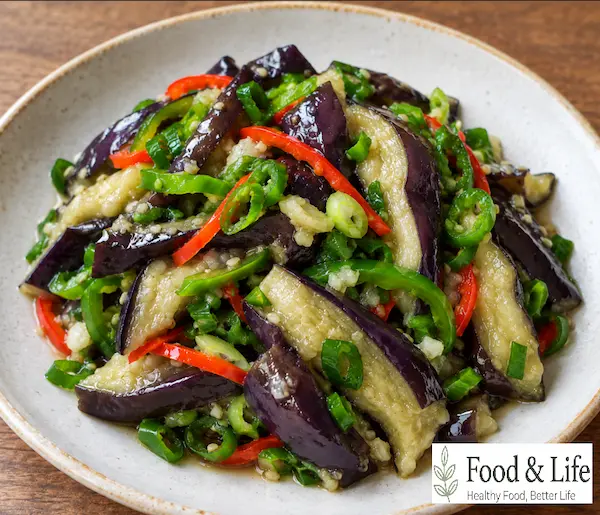
The key to making Gaji Namul tender without turning mushy is to steam the eggplant for 5 minutes in a hot steamer, let it cool slightly, and then squeeze out the excess moisture thoroughly.
After steaming 3 eggplants, tear them into strips along the grain and remove as much moisture as possible. Then season them with 1 tbsp Korean soup soy sauce (gukganjang), 1/3 tbsp anchovy fish sauce, 1/2 tbsp minced garlic, and 1 tbsp perilla oil. This helps the seasoning cling evenly to the eggplant instead of becoming watery.
Cheongyang chili pepper, red chili pepper, and green onion add a gentle heat, while the perilla oil brings a rich, nutty aroma that pairs well with the soft yet slightly chewy texture of the eggplant. Ready in about 15 minutes, this Gaji Namul recipe makes an easy Korean side dish for everyday meals.
⏱️ Cooking Time: About 15 minutes
🍳 Difficulty: ★☆☆☆☆
✓ Ingredients
🥣 Main Ingredients
- 3 eggplants
- Green part of 1 green onion
- 1 Cheongyang chili pepper
- 1 red chili pepper
🧂 Seasonings
- 1 tbsp Korean soup soy sauce (gukganjang)
- 1/3 tbsp anchovy fish sauce
- 1/2 tbsp minced garlic
- 1 tbsp sesame seeds
- 1 tbsp perilla oil
(Measurement guide: 1 tbsp = 15 ml, 1 tsp = 5 ml, 1 Korean paper cup = 180 ml)
✓ How to Make Gaji Namul
- Prepare the eggplant: Rinse 3 eggplants thoroughly under running water. Cut each one in half lengthwise, then cut into 4 sections.
- Steam for 5 minutes: Add water to a steamer and bring it to a boil. Once steam is rising strongly, place the prepared eggplant in the steamer, cover, and steam for 5 minutes.
- Cool and tear into strips: Remove the steamed eggplant after 5 minutes and let it cool slightly. Tear it into strips by hand, following the natural grain of the eggplant.
- Squeeze out the moisture: Firmly squeeze the torn eggplant with your hands to remove as much excess moisture as possible. Transfer it to a bowl.
- Slice the aromatics: Thinly slice the green part of 1 green onion, 1 Cheongyang chili pepper, and 1 red chili pepper.
- Season and mix: Add the squeezed eggplant, sliced green onion, Cheongyang chili, and red chili to a bowl. Add 1 tbsp Korean soup soy sauce, 1/3 tbsp anchovy fish sauce, 1/2 tbsp minced garlic, 1 tbsp sesame seeds, and 1 tbsp perilla oil. Gently mix everything by hand until evenly coated.
✓ Key Tips for Success
- Stick to the 5-minute steaming time: Add the eggplant only after the water is fully boiling and the steamer is producing plenty of steam. Steaming for 5 minutes helps keep the flesh tender without making it overly soft or mushy.
- Squeeze out the moisture thoroughly: If you only squeeze the eggplant lightly, more liquid can seep out later and dilute the seasoning. Firmly squeezing out the moisture gives the finished dish a firmer, slightly chewy texture.
✓ Serving Tips
- Serve the seasoned eggplant over freshly cooked warm rice with a fried egg and a small spoonful of gochujang for an easy bibimbap-style meal.
- If serving children or anyone sensitive to spicy food, leave out the Cheongyang chili pepper for a milder, nutty flavor.
✓ How to Choose Fresh Eggplant
- Shape and surface: Choose eggplants with an even shape and smooth skin without scratches, dents, or damaged areas.
- Color and shine: Look for eggplants with a deep, vivid dark-purple color and a glossy surface that is evenly colored.
- Firmness and stem: The eggplant should feel firm and springy when gently pressed. Choose one with a fresh-looking stem end and sharp, well-defined points around the calyx.
Source: Rural Development Administration Nongsaro Agricultural Technology Portal
✓ Eggplant Nutrition per 100 g (3.5 oz)
| Nutrient | Amount per 100 g (3.5 oz) |
|---|---|
| Calories | 19.00 kcal |
| Carbohydrates | 4.36 g |
| Protein | 1.13 g |
| Fat | 0.03 g |
| Sodium | 0.00 mg |
Values are based on 100 g of raw eggplant from the Korean Ministry of Food and Drug Safety database for raw ingredients. Actual nutrition may vary depending on the variety, part used, product, and cooking method.
Source: Korean Ministry of Food and Drug Safety Food Nutrition Database – Raw Ingredients
✓ Frequently Asked Questions (FAQ)
Q1. How long should I steam eggplant for Gaji Namul?
Steam the eggplant for 5 minutes once the water is boiling and the steamer is producing plenty of steam. Steaming it much longer can make the flesh too soft and reduce the texture.
Q2. Why does my Gaji Namul become watery after seasoning?
This usually happens when the steamed eggplant is not squeezed thoroughly enough after cooling. Any remaining moisture can seep out later and dilute the seasoning.
Q3. Can I use sesame oil instead of perilla oil?
Yes. You can substitute sesame oil and still get a rich, nutty flavor. However, perilla oil pairs especially well with the natural flavor and moisture of the eggplant in this recipe.
When I followed this recipe and steamed the eggplant for exactly 5 minutes before squeezing out the moisture thoroughly, the flesh stayed tender without becoming mushy and kept a pleasantly chewy texture.
The savory umami from the Korean soup soy sauce and anchovy fish sauce pairs well with the nutty aroma of perilla oil, while the Cheongyang chili and red chili add a mild, pleasant heat. The result is a flavorful Korean vegetable side dish that goes especially well with warm rice without becoming overly watery.
If your Gaji Namul usually releases too much liquid or turns too soft, try steaming the eggplant for 5 minutes and squeezing out the moisture thoroughly before seasoning. It is a simple way to prepare a clean, savory eggplant side dish in a short amount of time.
Save or bookmark this recipe so you can easily find it again, and share it with someone who enjoys Korean food.
I’ll continue sharing easy-to-follow recipes and practical cooking tips. 😊
If there is a dish you would like to see next, feel free to leave a comment. 😊