
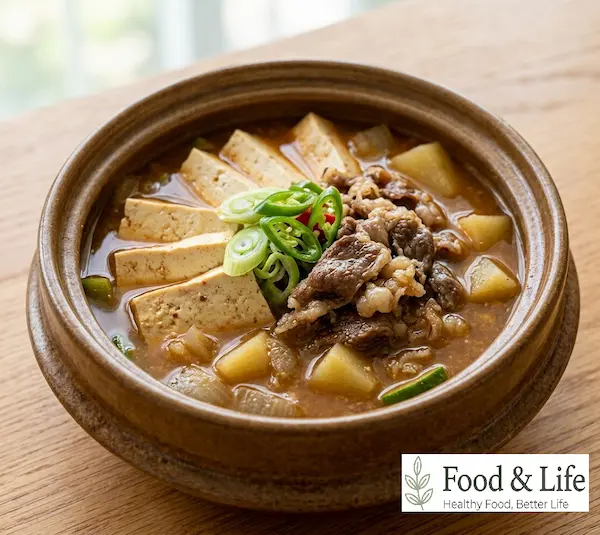
This Chadolbagi Doenjang Jjigae recipe comes from actor Ryu Soo-young and uses a simple 3:1 ratio of doenjang to ssamjang for a rich, savory broth. The key is to mix 3 heaping tbsp doenjang with 1 heaping tbsp ssamjang in 1 L (33.8 fl oz) water, simmer the vegetables for 10 minutes, then add the thinly sliced beef at the end and cook it for only 3 minutes.
There is no need to prepare a separate anchovy broth. Potato, onion, Korean zucchini, and green onion are simmered first to build flavor directly in the stew, while 1/2 tbsp vinegar helps give the broth a cleaner finish.
Finally, 200 g (7 oz) chadolbagi, tofu, and Cheongyang chili peppers are added for a short final simmer. Cooking the beef for only 3 minutes keeps it tender while allowing its rich, savory flavor to blend naturally into the doenjang broth. With the deep flavor of fermented soybean paste, spicy Cheongyang peppers, and tender beef, this comforting Korean stew can be ready in about 20 minutes.
⏱️ Cooking Time: About 20 minutes
🍳 Difficulty: ★☆☆☆☆
✓ Ingredients
🥣 Main Ingredients
- 200 g (7 oz) chadolbagi (thinly sliced Korean beef brisket)
- 1 potato
- 1 onion
- 1/3 Korean zucchini (aehobak)
- 1 green onion
- 1/2 block tofu
- 3 Cheongyang chili peppers
🧂 Seasonings & Broth
- 1 L (33.8 fl oz) water
- 1 tbsp minced garlic
- 1/5 tbsp coarse salt
- 3 heaping tbsp doenjang (Korean fermented soybean paste)
- 1 heaping tbsp ssamjang
- 1/2 tbsp vinegar
(Measurement guide: 1 tbsp = 15 ml, 1 tsp = 5 ml, 1 Korean paper cup = 180 ml / 6.1 fl oz)
✓ How to Make Chadolbagi Doenjang Jjigae
- Prep the ingredients: Cut the potato, onion, and 1/3 Korean zucchini into pieces about the size of the first joint of your thumb. Cut the green onion into 1 cm (0.4-inch) pieces, slice the 3 Cheongyang chili peppers into thin rounds, and cut the tofu into 0.5 cm (0.2-inch) slices.
- Boil the vegetables and seasonings: Pour 1 L (33.8 fl oz) water into a pot. Add the potato, onion, Korean zucchini, green onion, 1 tbsp minced garlic, 1/5 tbsp coarse salt, 3 heaping tbsp doenjang, and 1 heaping tbsp ssamjang. Bring to a boil over high heat.
- Add vinegar and simmer the vegetables: Once the broth reaches a vigorous boil, reduce the heat to medium and add 1/2 tbsp vinegar. Cover and simmer for 10 minutes so the flavor of the vegetables fully infuses the broth.
- Add the beef and tofu: Add 200 g (7 oz) chadolbagi, the sliced tofu, and the Cheongyang chili peppers. Bring the stew back to a boil over high heat, then cover, reduce to medium heat, and cook for another 3 minutes.
✓ Key Tips for Success
- Add the chadolbagi at the end: If the very thin slices of beef are stir-fried first or simmered with the vegetables for too long, the meat can become tough and release too much fat into the broth. Simmer the vegetables for the full 10 minutes first, then add the beef during the final stage and cook it for only 3 minutes over medium heat. This keeps the meat tender while adding just enough rich beef flavor to the stew.
- Add the vinegar after the broth boils: In this recipe, the vinegar is added once the stew reaches a boil. As it continues to cook, the sharp acidity becomes less noticeable while helping balance the strong flavor of the fermented pastes. Cover and simmer for 10 minutes over medium heat to develop a deep, full-bodied broth without making a separate stock.
✓ Serving Tips
- Serve with freshly steamed white rice. Spoon the tender potato, tofu, and chadolbagi over the rice, then add 2–3 spoonfuls of the broth and mix together.
- Crisp baechu kimchi or fresh geotjeori kimchi pairs well with the rich beef and helps balance the hearty flavor of the stew.
- Add rice to any leftover broth and bring it back to a simmer until slightly thickened for a comforting bowl of doenjang sulbap.
✓ How to Choose Good Chadolbagi
- Color and appearance: Choose beef with bright red lean meat and a moist, glossy surface that does not look dry.
- Fat color and distribution: The fat should be firm and milky white, with an even distribution along the grain of the meat.
- Texture: Look for meat with a fine, rather than coarse, grain and a firm, springy texture when touched.
✓ Chadolbagi Nutrition per 100 g (3.5 oz)
| Nutrient | Amount per 100 g (3.5 oz) |
|---|---|
| Calories | 408.00 kcal |
| Carbohydrates | 0.00 g |
| Protein | 16.45 g |
| Fat | 35.94 g |
| Sodium | 66.00 mg |
Values are based on 100 g (3.5 oz) of raw Grade 1 Hanwoo beef brisket (chadolbagi). Actual nutrition may vary depending on the breed, cut, product, and cooking method.
Source: Ministry of Food and Drug Safety Food Nutrition Database
✓ Frequently Asked Questions (FAQ)
Q1. Why is chadolbagi added at the end instead of at the beginning?
Because the beef is sliced very thinly, simmering it for too long can make it tough and release too much fat into the broth. Simmer the vegetables for 10 minutes first, then add the beef at the end and cook it for only 3 minutes for a tender, shabu-shabu-like texture and a cleaner-tasting broth.
Q2. Why does my doenjang jjigae taste too heavy or too salty?
This can happen if there is too little water for the amount of doenjang or if the broth is reduced too much over high heat. For this recipe, keep the ratio of 1 L (33.8 fl oz) water to 3 heaping tbsp doenjang and 1 heaping tbsp ssamjang, then add 1/2 tbsp vinegar to help create a more balanced flavor.
Q3. Will adding vinegar make the stew taste sour?
The sharp acidity of the vinegar becomes much milder as the stew cooks, so the broth should not have a strong sour taste. Adding a small amount once the broth boils helps clean up the flavor and bring out the savory notes of the doenjang and vegetables.
Using a 3:1 ratio of doenjang to ssamjang in 1 L (33.8 fl oz) water and simmering the vegetables for 10 minutes creates a rich, savory broth even without a separate stock. Adding 1/2 tbsp vinegar keeps the fermented paste flavor from becoming too heavy and works especially well with the potato, Korean zucchini, and tofu.
The chadolbagi goes in at the very end and cooks for only 3 minutes, helping the thinly sliced beef stay tender instead of becoming tough. Its rich beef flavor blends into the doenjang broth and makes this stew especially satisfying with hot steamed rice.
For Ryu Soo-young’s Chadolbagi Doenjang Jjigae, remember three key points: a 3:1 ratio of doenjang to ssamjang, 10 minutes for the vegetables, and just 3 minutes for the beef. Follow those steps and you can make a rich yet clean-tasting Korean soybean paste stew without preparing a separate broth.
Save or bookmark this recipe so you can easily find it later, and share it with someone who enjoys Korean food.
More easy-to-follow recipes and practical cooking tips will be shared regularly. If there is another Korean dish or recipe you would like to see, feel free to leave a comment.